
How To Meditate: A Beginners Guide to Meditation

What Are The Benefits Of Meditation?
Meditation is a great way to focus your attention and be more mindful of your thoughts and feelings. By practicing mindfulness, you can take a moment to appreciate the present moment and let go of any negative thoughts or feelings.
Though there are many different meditation techniques, they all share a positive impact on mental and physical health.
Here's we have a list of the benefits:
Better Focus & Concentration
Improve self-esteem and self-awareness
Reduce stress
Manage anxiety or depression
Fight addiction
Control pain
Make you more kind or loving
Meditation can provide many benefits, both physical and mental. Meditation can help you improve your health from every angle, from physical to mental and emotional.
Guided meditation may work for you if you're interested in enhancing your concentration, reducing stress, or dealing with addiction, depression, or chronic pain.
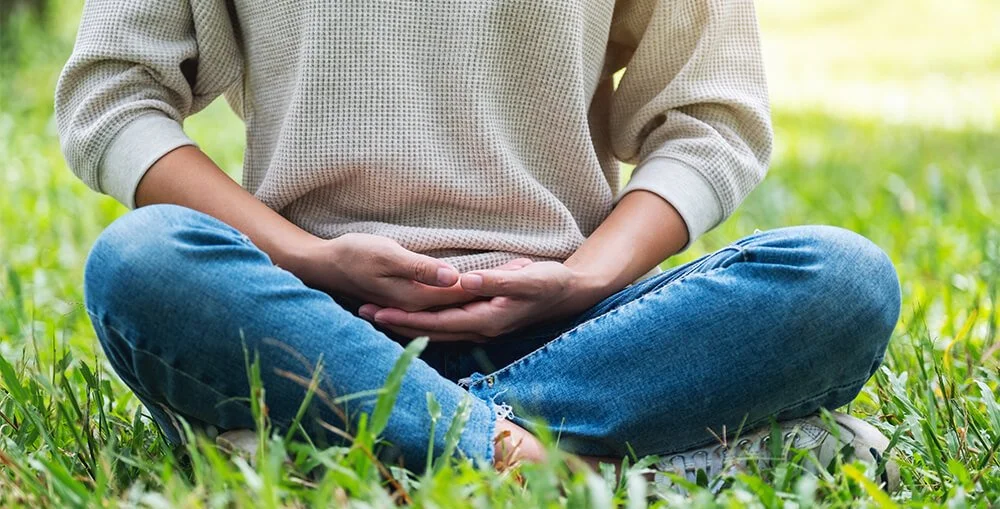
Explore the transformative power of mindfulness, a practice rooted in being fully present and engaged in the moment.
How Do I Start Meditating?
There are many different ways to meditate, but the basic principle is to focus your attention on something and allow yourself to be aware of your thoughts and feelings without judgment.
You can try meditating on your own or with a guided meditation app like Headspace, Calm, or even YouTube, where you will find a large selection of guided meditations for beginners.
If you're a beginner, it's often helpful to remember that meditation isn't about sitting and being silent.
Start a meditation practice by putting a timer to the side, try to meditate for at least 10 minutes to start, try to sit still and become mindful of the sensations of your body.
You will find your mind will begin to wander, which is very typical, and you will need to return your attention to the centre of mindfulness. Learning how to meditate can take some time, but it's worth it to explore different types of meditation and find what works best for you.
How Do You Make Meditation A Habit?
The first step is to find a comfortable place to sit. You can use a meditation cushion or sit in a chair with your feet on the ground. Then, close your eyes and focus on your breath. Once you find a comfortable position, you can begin to meditate.
Start by meditating for just a few minutes each day. Gradually increase the time you meditate as it becomes easier. If your mind starts to wander, focus on your breath again.
Over time, you will develop deeper concentration and be able to meditate for more extended periods. With regular practice, you can make meditation a habit.
How Long Should I Meditate If I'm A Beginner?
Meditation aims to focus and connect with your inner thoughts and emotions. It is recommended that beginners practice regular meditation for at least 10 minutes a day.
Breath meditation is an excellent place to start, as it helps to focus and slow down the mind.
The idea of meditation is to be in the moment and be aware of your surroundings and thoughts. The practice of meditation can be done anywhere and at any time.
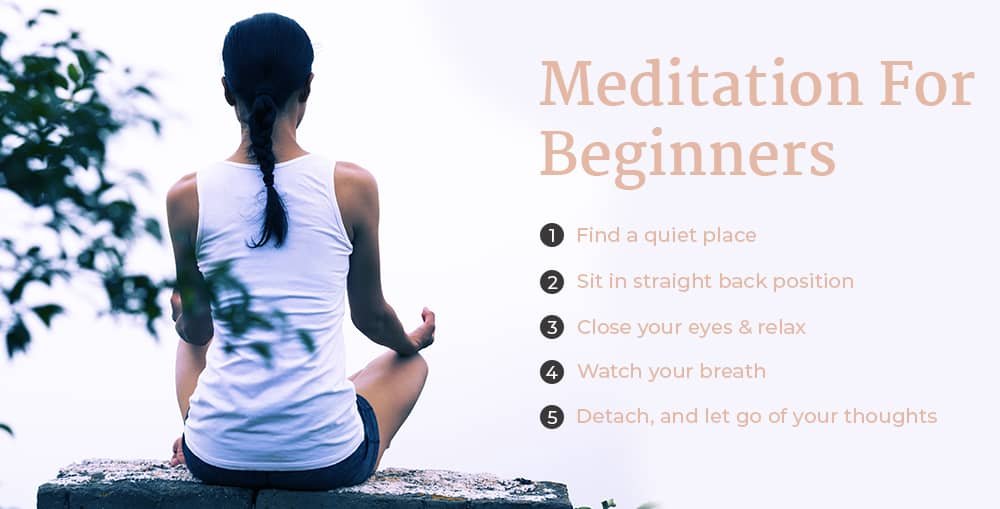
Be consistent and do not be hard on yourself, practice makes perfect
Are There Different Types Of Meditation?
As our world becomes busier, meditation has shown substantial results regarding stress. Evidence has also shown that meditation can be a practical means of treating illnesses such as depression, heart disease, and chronic physical pain.
Below I have put together six popular meditation types and techniques you may be interested in giving a go.

-
Basic mindfulness meditation is the process of allowing your full awareness to be present and is one of the most common forms of meditation people will experience as they learn to meditate.
Being mindful means being conscious of your current surroundings and your actions without being too reactive to your surroundings.
Mindful meditation can be done anywhere. Some folks prefer to sit in a quiet place and entirely focus on their breathing, whereas others prefer to practice mindful self-talk while on the move.
During mindfulness meditation, you pay attention to your thoughts and emotions but do not create judgments about them. -
Transcendental meditation may sound highbrow, but it is, in fact, a simple technique.
You choose a mantra, a word, a phrase, or a sound and repeat it for 20 minutes twice a day, and it is best practiced as sitting meditation. For best results, this position is recommended with your eyes closed.
Adopting meditating in this manner allows your mind and body to relax and create a sense of peace and calm completely. -
Guided meditation, also called guided imagery or visualization, is a good meditation in which you form mental images or situations you find relaxing.
Someone instructs you at every step of the process; hence it is led by an expert or teacher.
It is ordinarily recommended that you use as many senses as possible, including sight, sound, and touch, with each element as a means of making a relaxing location more tranquil. -
Chakra is a word in the Sanskrit language and relates to an energy source. Chakra refers to the swirling centers of the dedicated body and emotional energy within the body, often relating to the colour of each chakra and its associated body part.
There are believed to be seven chakras. Each chakra is located at one particular part of the spine and has a corresponding colour.
Chakra meditation is a form of meditation that focuses on relaxation techniques that help bring balance and well-being to the chakras.
Some of these techniques include visually picturing each chakra in the body and its corresponding colour, occasionally lighting incense or using crystals colour-coded to each chakra to help guide a novice through the meditation. -
Historical yoga practice stretches back to ancient India. Yoga classes vary widely in type and intensity, but all involve a series of physical postures and controlled breathing techniques intended to help individuals control their emotions and increase flexibility.
Performing poses requires a series of sequential movements, which requires participants' strength and concentration to engage fully.
Practitioners are hence advised to focus less on distractions and remain more in the moment. You should consider several factors when deciding what kind of meditation you'd like to pursue. If you're unfamiliar with yoga, consult your doctor about which type of meditation may be right for you. -
Walking meditation is designed to bring your body and thoughts in sync when you're on the move. It is also an excellent way to train the mind.
Even if you're not a fan of walking, the benefits can be that we not only get to exercise our body but taking a walk while contemplating daily life allows you to indulge yourself with fresh enjoyment and a tranquil state of mind.
The term "walking mediation" used to describe the exercise does not signify that you will end up shutting your eyes, wandering aimlessly, and move at a comfortable pace.
But it is more about the journey, as you stroll mindfully, allowing you to open your eyes, becoming aware of the enviroment around as you walk at a pace that matches your unique preference in that moment.

Remember to stay patient, and find the right time for you to meditate
What Are The Basic Steps To Meditating?
You're likely to find these steps more challenging than you could at first imagine, and perhaps they'll require a great deal of practice to perform consistently to master them, but try not to get too stressed out; start small and work closely with what you're feeling.
These steps offer a basic outline for meditation for beginners; remember, the goal of meditation is to train your mind to live more in each present moment.
When starting, it is best to sit to meditate, pick the right time to meditate and put meditation into your daily routine.
Step One: Focus on your breath - Concentrate on your breathing. Exhale gradually and breathe deeply. Breathe shallowly and slowly, and exhale similarly. Take in a deep breath, then let it out. Do so one last time.
Step Two: Do A quick body scan - Now, we turn to body structure by visualizing the head, the eyes, the mouth, the nose, the neck, the shoulders, the arms, the hands, and each finger. Visualize the chest, the legs, the feet, and all the toes. Allocate a minute for this.
Step Three: Notice your mind wandering - Next, observe and bring your attention to the mental stimuli and bodily sensations we experience, such as noises and sensations, any itch or irritation. Explore your surroundings for a moment.
Step Four: Remember: The practice is a process - Whenever your thoughts wander, be compassionate with yourself instead of becoming discouraged. Soon enough, you should be able to meditate anywhere, irrespective of environment or circumstance. Strengthening your mind when it does wander will take time, but with each practice, you can focus back.
If you were looking for more visual meditation instructions, then searching on Youtube is a powerful tool and putting in the search "guided meditation for a complete beginner" will provide you will a large selection to find that virtual meditation teacher.
If you have any further doubts or questions regarding this subject or another treatment, contact one of our experienced Acupuncturists or Registered Massage Therapists here at West End Wellness Clinic. You can either give us a call or make an appointment.
Disclaimer: Please remember this article is for informational purposes only and should not replace professional medical advice. Please consult a healthcare provider or someone with the correct qualifications before starting any new exercise or treatment program.