
5 Easy Ways to Relax When Your Body Feels Stuck in Stress
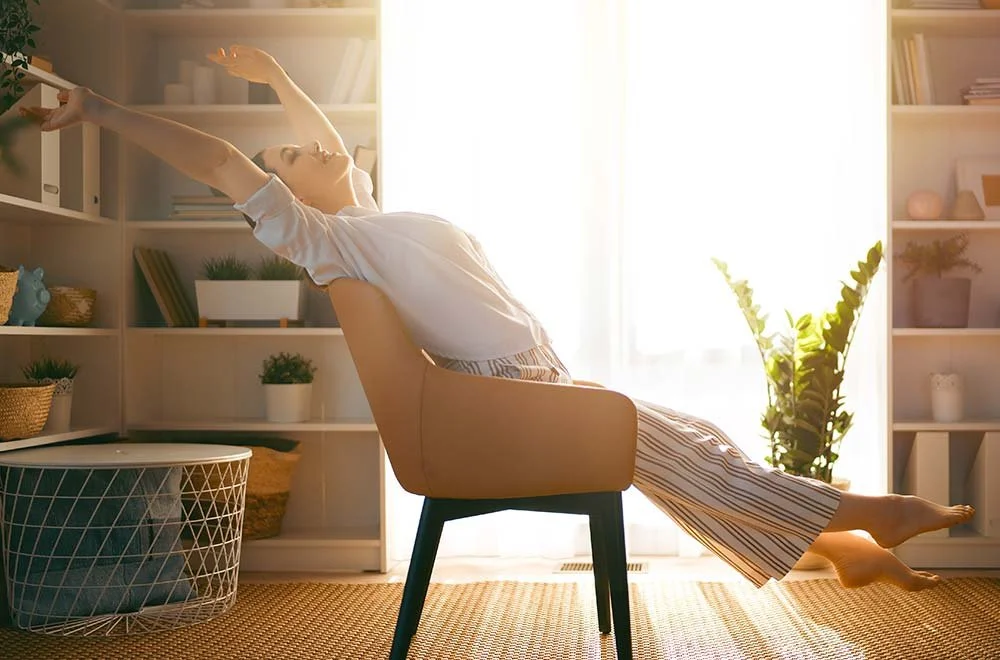
Table of Contents Show
Quick Summary
If your body feels tense even when you try to relax, you are not alone. Many people carry stress in their muscles, breathing, and sleep patterns without fully realizing it. At our clinic in Vancouver, we often see how long workdays, busy schedules, and constant stimulation can keep the nervous system stuck in “alert mode.”
The good news is that the body responds well to small, supportive habits. In this article, we share five simple ways to help your body settle, from slow breathing and gentle movement to stepping outside for natural light. These small shifts can help calm your nervous system and make it easier for your body to relax again.
TL;DR – Simple Ways To Help Your Body Relax
Stress often shows up in the body as tight muscles, headaches, poor sleep, or shallow breathing.
Chronic stress can keep the nervous system stuck in alert mode.
Slow breathing helps activate the body’s natural relaxation response.
Gentle movement releases tension in the neck, shoulders, and back.
Natural light and outdoor breaks help regulate the body’s internal clock.
Acupuncture and massage therapy support deeper relaxation and nervous system balance.
As wellness practioners we have loose count of our patients who have sat down in the treatment room and said, “I’m not even sure I’m that stressed… but my shoulders feel like rocks.”
The story may include long days at workm sitting at a desk for hours, commuting across the city or trying to keep up with family responsibilities and still find a little time to breathe.
None of which seem dramatic or overwhelming on its own. It is seen as just life moving quickly.
But the body has a way of holding onto that pressure the whole time.
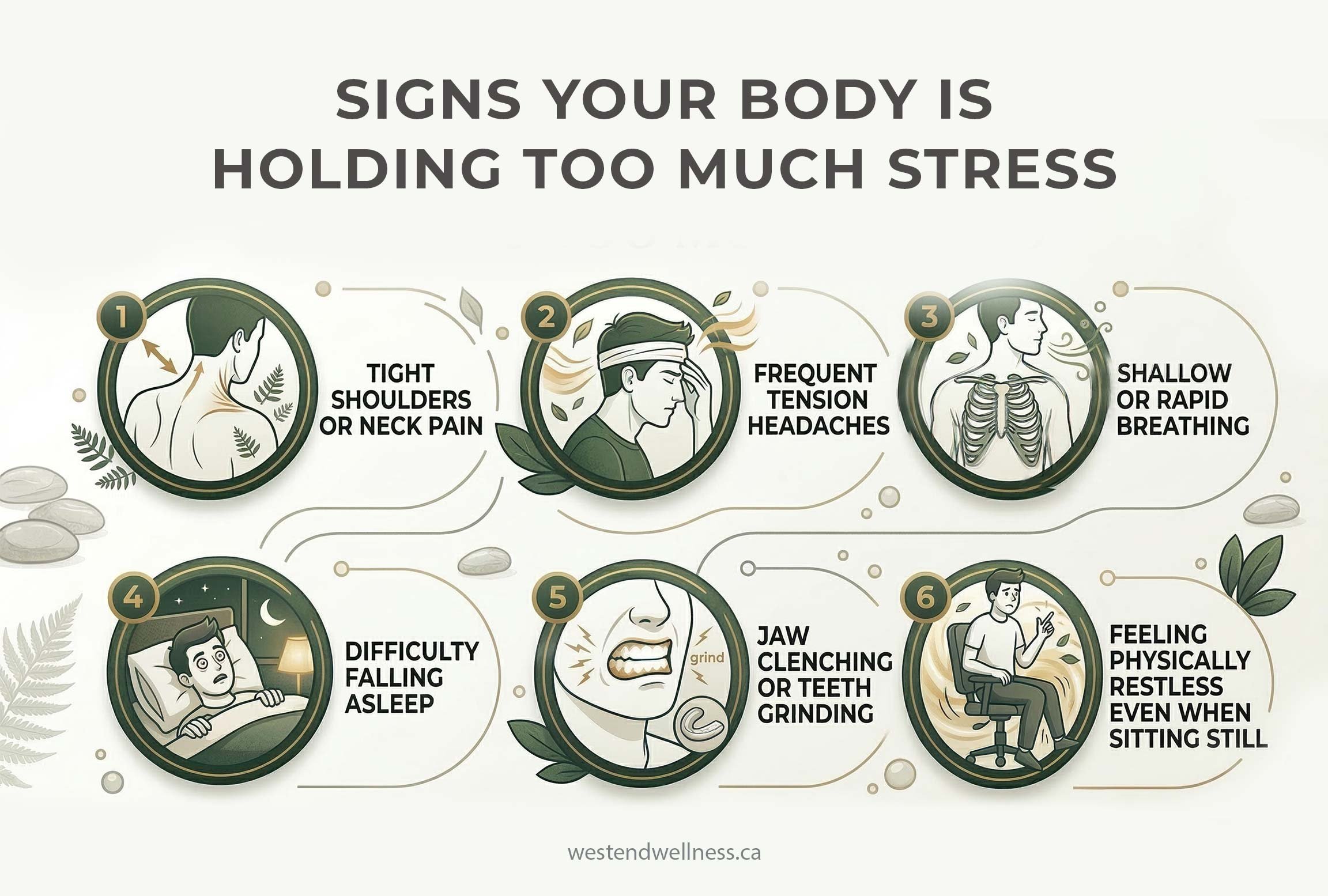
So this becomes a common thing we see often at our clinic in Vancouver. Many people assume stress lives mostly in the mind, but the body is usually the first place it shows up. Tight shoulders, tension headaches, restless sleep, jaw clenching, or that constant feeling that you can never quite switch off.
The nervous system is always working in the background.
Part of it keeps us alert and ready to respond to challenges. The other part allows the body to recover, repair, and settle into a state of rest.
When life stays busy for long stretches of time, the body can remain stuck in that alert mode. It is not that something is wrong with you. It simply means your nervous system has not been given enough signals that it is safe to slow down again.
The good news is that the body responds surprisingly well to small shifts. Gentle habits that encourage relaxation can help guide the nervous system back toward balance.
The ideas in this article are simple, but they are often the ones people overlook when life feels busy.
Why Stress Can Be Hard to Notice Until the Body Speaks Up
Stress does not always appear the way we expect it to.
Many people imagine stress as feeling overwhelmed, anxious, or mentally exhausted. But in reality, the body often carries tension quietly long before the mind labels it as stress.
You might notice that your shoulders feel tight by the end of the day, or that you wake up with a sore jaw from clenching your teeth at night. Some people begin having headaches more often. Others lie down to sleep and realize their body still feels wired.
None of these signs feel dramatic in the moment, so it is easy to brush them aside.
But they are often the body’s way of saying it has been holding tension for longer than it should.
At our clinic, we often see people who come in for neck pain or headaches and only later realize how much their nervous system has been working overtime.
Once they understand what their body has been trying to tell them, it becomes much easier to start supporting it in the right way.
1. Slow Your Breathing to Calm the Nervous System
Breathing is one of the fastest ways to influence the nervous system.
When stress increases, breathing patterns often change without us noticing. Many people begin taking shorter, shallower breaths, especially when they are focused on work or moving quickly through the day.
This type of breathing quietly keeps the body in a state of alertness.
Slowing the breath does the opposite. It sends a signal to the nervous system that the immediate pressure has passed and that the body can begin to relax.
This is one reason breathing exercises are often the first step we suggest to patients who feel tense or overwhelmed. They are simple, accessible, and can begin calming the body within minutes.
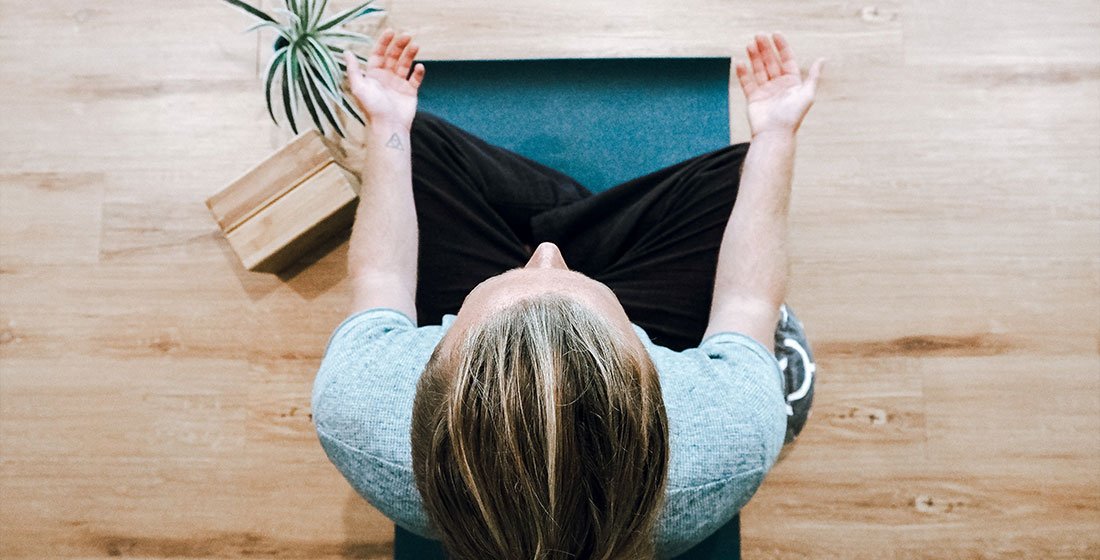
A gentle breathing pattern you can try is this:
Inhale through your nose for four seconds
Pause briefly
Exhale slowly for six seconds
That longer exhale is important. It helps activate the part of the nervous system responsible for rest and recovery. Even a minute or two of slow breathing can soften tension in the shoulders, relax the jaw, and help the body settle.
It may seem small, but it is often one of the easiest ways to begin shifting the body out of stress mode.
2. Move Your Body Gently
One of the first places stress settles in the body is the muscles.
Many people notice it in their shoulders or neck. Others feel it across the upper back or between the shoulder blades. The muscles slowly tighten as the day goes on, especially if you’re sitting at a desk or concentrating for long stretches of time.
At first it might just feel like stiffness. But over time that tension can build into headaches, neck discomfort, or a feeling that your shoulders are constantly creeping upward.
This happens because the body shifts into a protective posture when the nervous system feels under pressure. Muscles stay slightly contracted, almost as if they’re preparing for action.
The problem is that the body wasn’t designed to stay in that state all day.
Gentle movement helps interrupt that pattern.
When you move your shoulders, stretch your neck, or stand up and walk around, you encourage circulation to return to those areas. Blood flow increases, muscles soften, and the nervous system receives another signal that it can begin to relax.
Many people assume they need a full workout to release stress, but that isn’t always necessary. Small moments of movement throughout the day can make a noticeable difference.
You might try simple movements like:
Rolling your shoulders slowly forward and back
Stretching your neck gently from side To side
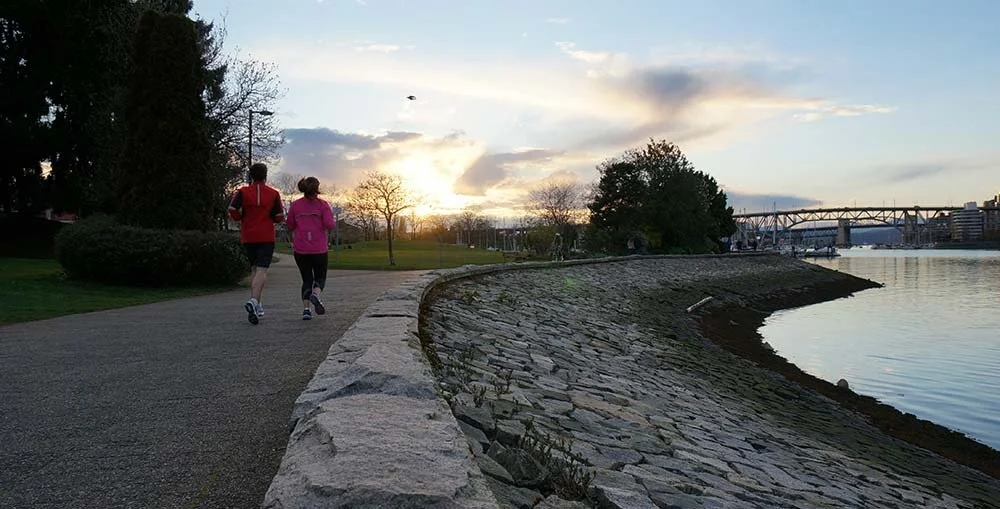
Taking A short walk around the block or through a nearby park like Stanley Park
These small resets remind the body that it does not need to stay locked in a tense position. Even a few minutes of movement can help the body release some of the stress it has been quietly holding.
3. Step Outside for Natural Light
Sometimes the most helpful reset is simply stepping outside.
Many people in Vancouver spend the majority of their day indoors. Offices, transit, coffee shops, and evening routines often happen under artificial light. Over time, the body can start to lose some of its natural rhythm.
Natural light plays an important role in regulating the body’s internal clock. It helps guide your circadian rhythm, which influences energy levels during the day and sleep at night.
When your body receives natural light, it sends signals to the brain that help regulate alertness, mood, and relaxation.
There is also something about being outdoors that naturally shifts our attention. Instead of focusing on emails, deadlines, or screens, the mind briefly reconnects with the surrounding environment.
At our clinic, we often suggest that patients take short outdoor breaks when stress begins to build during the day. It doesn’t need to be a long hike or a major outing.
Even a ten-minute walk outside can help your nervous system reset.
Fresh air, natural light, and gentle movement combine to create a small but meaningful shift in how the body feels. For many people, those few minutes outside are enough to release some of the tension that quietly builds during a busy day.
4. Create a Simple Evening Wind-Down Routine
One of the challenges many people face is that the body doesn’t automatically know when the day is finished.
Modern routines blur the line between work, activity, and rest. It’s common to answer emails in the evening, scroll through the phone in bed, or go from a busy day straight into trying to fall asleep.
The nervous system doesn’t always have a clear signal that it’s time to shift into rest.
That’s where a simple evening routine can help.
When the body begins to recognize the same calming pattern at the end of the day, it gradually learns that this is the moment when it can start slowing down. Muscles soften, breathing deepens, and the mind becomes less active.
The routine does not need to be complicated or time-consuming. Even a few small habits repeated consistently can create that signal.
Some people find it helpful to include things like:
Dimming the lights in the evening
Putting away phones or screens before bed
Reading for a few minutes
Gentle stretching to release muscle tension
Drinking a warm cup of tea
These quiet moments help create a transition between the activity of the day and the rest your body needs at night. Over time, the nervous system begins to associate these habits with relaxation, making it easier to unwind and fall asleep.
5. Support Your Body with Professional Care
Sometimes stress settles into the body in ways that are difficult to release on your own.
When tension builds over weeks or months, muscles can remain tight, circulation can become restricted, and the nervous system may stay in a heightened state of alertness.
At that point, it can be helpful to bring in additional support.
Professional treatments such as acupuncture and registered massage therapy are often used to help the body release deeper patterns of tension.
Massage therapy works directly with the muscles and connective tissues that have been holding stress. By improving circulation and restoring movement, it can help areas like the neck, shoulders, and back relax more fully.
Acupuncture works a little differently. It stimulates specific points on the body that encourage the nervous system to shift toward a calmer state while also improving circulation and balance throughout the body.
At our clinic, many patients come in because they feel like their body simply won’t relax anymore. After a few treatments, they often notice that their shoulders soften, their breathing becomes easier, and sleep improves.
Professional care doesn’t replace the small habits you build each day. Instead, it works alongside them, helping your body release tension while those daily routines continue to support long-term balance.
we’ll share practical relaxation tips that help release tension, support mental clarity, and create small moments of calm throughout your day.
Frequently Asked Questions
Why Is It Hard To Relax When You Feel Stressed?
When stress builds, the body activates its natural alert system, often called the fight-or-flight response. This response is designed to help you react quickly to challenges by increasing heart rate, tightening muscles, and sharpening focus.
The difficulty is that modern stress rarely turns off quickly. Work demands, long days, and constant notifications can keep the nervous system slightly activated even when the day is over.
When this happens, the body can struggle to shift back into its natural relaxation mode. That’s why small habits that calm the nervous system, like slow breathing or gentle movement, can be so helpful.
Can Acupuncture Help With Stress?
Many people find acupuncture helpful when stress has been building in the body for a while.
Acupuncture works by stimulating specific points that encourage the nervous system to shift toward a calmer state. At the same time, it helps improve circulation and release areas of tension that may have developed in the muscles.
At our clinic, we often see patients who come in feeling constantly tense or mentally “wired.” After a few treatments, they often notice their body relaxing more easily and their sleep improving as well.
What Are Signs That Your Body Is Holding Stress?
Stress often shows up in physical ways before we fully recognize it mentally. Some of the most common signs include:
Tight shoulders or neck pain
Frequent tension headaches
Jaw Clenching Or teeth Grinding
Difficulty Falling Or Staying Asleep
Fatigue Or Low Energy
Trouble Concentrating
These signals are often the body’s way of asking for a moment to slow down and release tension.
How Often Should You Practice Relaxation Techniques?
Relaxation habits do not need to take a large amount of time to be effective.
Even a few minutes of slow breathing, gentle stretching, or stepping outside during the day can help reset the nervous system. What tends to matter most is consistency.
Small moments of relaxation practiced regularly can help the body stay more balanced and prevent stress from building up over time.ch day can help. Consistency matters more than duration, and small habits practiced regularly can help the nervous system stay balanced.
Final Thoughts
Stress is a normal part of life. Most of us experience it during busy workweeks, long commutes, family responsibilities, or simply trying to keep up with everything happening around us.
What many people don’t realize is how quietly the body carries that stress. Tight shoulders, restless sleep, headaches, or shallow breathing are often the body’s way of asking for a moment to slow down.
The good news is that the body responds well to small changes.
Gentle movement, stepping outside for fresh air, slowing your breathing, or creating a calming evening routine can all help guide the nervous system back toward a more relaxed state. These habits don’t need to be perfect or time-consuming. Even small moments of care throughout the day can make a meaningful difference over time.
And when stress has been building for a while, having the right support can help the body release that tension more fully
At our clinic in Vancouver, we often see how acupuncture and registered massage therapy help people reconnect with that relaxed state again. Muscles soften, breathing becomes easier, and the nervous system finally gets the chance to reset.
If your body has been feeling tense or stuck in stress mode, you’re not alone. With the right support and a few simple habits, it’s possible to help your body find its way back to balance.
If you have any further doubts or questions regarding this subject or another treatment, contact one of our experienced Acupuncturists or Registered Massage Therapists here at West End Wellness Clinic. You can either give us a call or make an appointment.
Disclaimer: Please remember this article is for informational purposes only and should not replace professional medical advice. Please consult a healthcare provider or someone with the correct qualifications before starting any new exercise or treatment program.