
Beyond the Cramp: Acupuncture for "Hormonal Migraines"

Table of Contents Show
Quick Summary
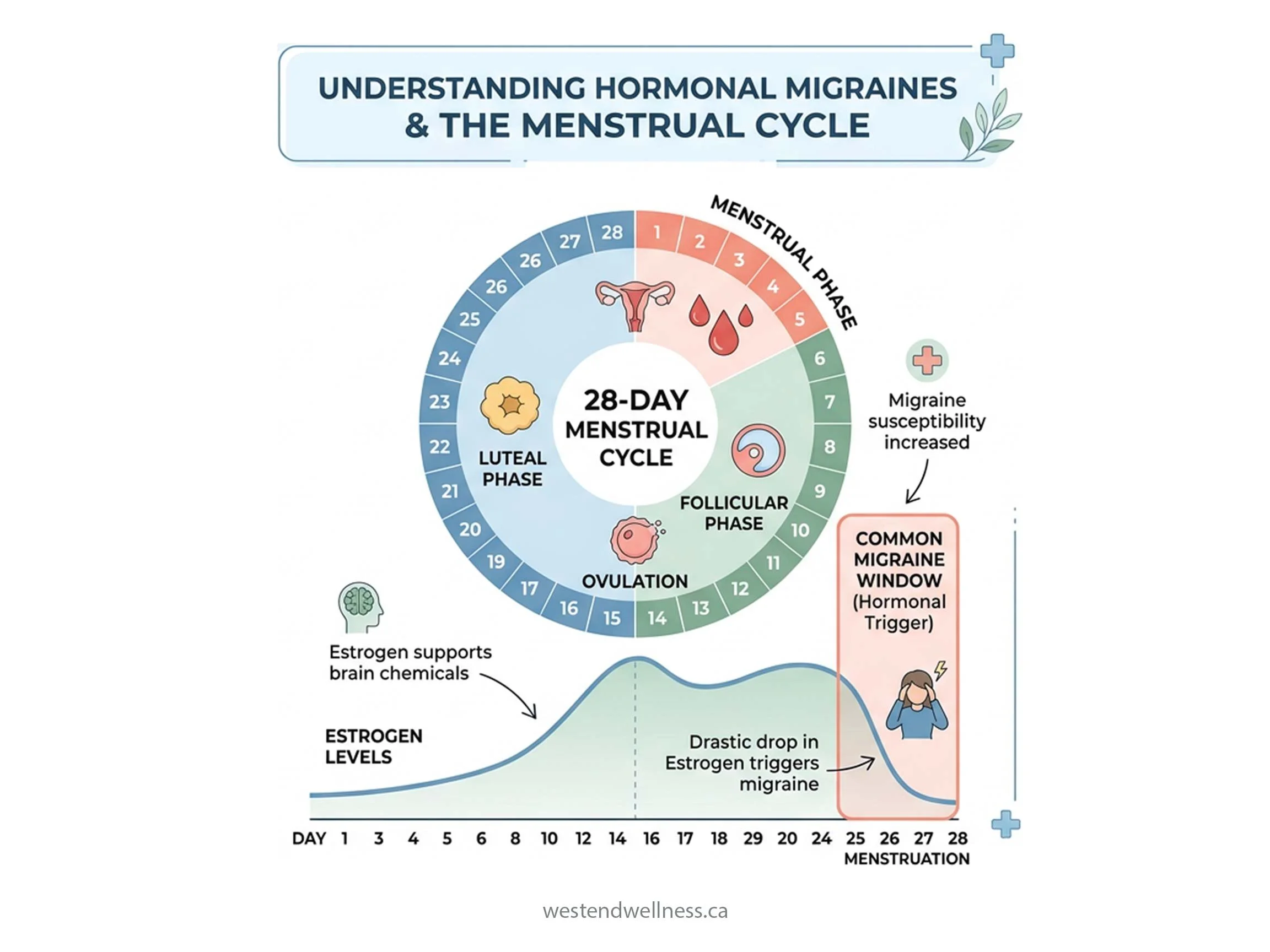
Hormonal migraines often appear in the days leading up to menstruation when estrogen levels drop. These shifts can affect the nervous system, alter serotonin levels, and trigger changes in blood vessel activity in the brain, leading to migraine pain. While many people learn to expect these headaches each month, they are not something you simply have to live with.
In this article, we explain why hormonal migraines follow such a predictable pattern and how acupuncture may help reduce their frequency and intensity. By supporting nervous system regulation and hormonal balance, acupuncture can help many people experience fewer migraine days and a more manageable menstrual cycle.
TL;DR – Acupuncture for Hormonal Migraines
Hormonal migraines often triggered by estrogen fluctuations during cycles.
Acupuncture helps regulate hormones linked to migraine triggers.
Stimulates natural painkillers and reduces inflammation.
Improves circulation and calms stress-related migraine triggers.
Natural option for managing recurring menstrual migraines.
Acupuncture may help migraines by stimulating endorphin release, improving circulation, reducing inflammation, and supporting hormonal balance that often contributes to migraine episodes.
For many women, hormonal migraines follow a frustrating pattern. The headache appears around the same time each month, often in the days leading up to a menstrual cycle.
At our clinic, we regularly meet patients who can almost predict when the migraine will arrive. They start to notice the early signs. A dull pressure behind the eyes. Sensitivity to light. The sense that a migraine day is just around the corner.
Over time, many women begin planning their schedules around these headaches. Important meetings get moved. Social plans are cancelled. What started as an occasional migraine slowly becomes something expected every month.
But hormonal migraines are not something you simply have to live with.
These headaches are linked to specific hormonal shifts in the body, particularly the drop in estrogen that occurs before menstruation. Understanding this pattern is the first step toward finding ways to reduce how often migraines appear and how intense they become.
At West End Wellness in downtown Vancouver, acupuncture is often used to help support nervous system regulation and hormonal balance for patients experiencing this monthly cycle of migraines.
The Body's Rhythm: Why the Migraine Arrives
Hormonal migraines don’t actually start in your head. They are the final step in a chain reaction that begins deep within your body’s natural monthly cycle.
In the days leading up to your period, your body undergoes a major internal shift: a sharp drop in estrogen. While this is a normal part of your rhythm, for many women, it acts like a "tripwire" for the nervous system.
Here is how that shift turns into a migraine:
-
Estrogen is more than just a reproductive hormone; it helps manage serotonin, the brain’s "feel-good" chemical that keeps your pain levels in check.
-
As your estrogen levels fall, your serotonin levels often dip along with them. This lowers your body’s natural defenses, making your brain much more sensitive to light, sound, and pressure.
-
In response to these changing signals, the blood vessels in your head begin to widen. This is called vasodilation, and it’s the physical cause of that throbbing, rhythmic pressure that makes you want to retreat to a dark, quiet room.

It isn't a random headache, and it isn't just "in your head." It is a physical reaction to a hormonal signal your body sends every month. The problem with standard painkillers is that they only try to quiet the noise after it has already started.
They don’t address the hormonal "cliff-edge" that caused the volume to be turned up in the first place.
How Acupuncture Interrupts the Cycle
Hormonal migraines are often tied to predictable changes in the body before menstruation. Acupuncture aims to support the systems involved in this process, particularly the nervous system and hormonal regulation.
Instead of only addressing the pain once a migraine begins, acupuncture focuses on calming the body and supporting balance before symptoms escalate.
There are two main ways acupuncture may help.
Supporting the Nervous System
In the days before menstruation, the body enters the luteal phase of the cycle. During this time, the nervous system can become more sensitive. Pain thresholds may drop, and the brain can become more reactive to stress or discomfort.
This heightened sensitivity is one reason migraines can appear during this phase of the cycle.
Acupuncture works by stimulating specific points that help calm the nervous system. These signals can encourage the body to shift into a more relaxed state, sometimes referred to as the parasympathetic or “rest and repair” response.
When the nervous system is less reactive, the brain may be less likely to amplify pain signals. For some people, this means migraines become less intense or occur less often.
Research has also explored acupuncture as a preventative approach for migraines. Studies published in JAMA Internal Medicine have found that acupuncture may reduce the frequency of episodic migraines for some patients.
Supporting Hormonal Balance
Traditional Chinese Medicine looks at hormones through the lens of energy flow within the body. One system often discussed in this context is the Liver system, which is believed to help regulate the movement and balance of hormones.
When the body is under stress or fatigue, this system may become less efficient at processing hormonal changes. As a result, the drop in estrogen before menstruation can feel more abrupt.
This sharper hormonal shift can increase the likelihood of migraines. Acupuncture treatments designed to support this regulatory process aim to encourage smoother hormonal transitions throughout the cycle.
When these hormonal changes occur more gradually, the body may be less likely to trigger the vascular changes associated with migraine pain.
Key Takeaways About Hormonal Migraines
If you’re looking for the simple explanation, here are the main points.
-
These migraines often happen when estrogen levels drop before menstruation. This hormonal shift can cause blood vessels in the brain to widen, which leads to the throbbing pain many people recognize as a migraine.
-
Changes in hormones can also affect serotonin levels, which help regulate pain signals in the brain. When these levels fluctuate, the brain may become more sensitive to discomfort.
-
Pain relievers can help reduce migraine pain once it starts. However, they usually don’t address the underlying hormonal and nervous system changes that trigger the migraine.
-
By supporting nervous system regulation and hormonal balance, acupuncture aims to reduce how often migraines occur. Many people notice that with consistent treatments, their migraines become shorter, less intense, or less frequent over time.
Ready to Break the Pattern?
Hormonal migraines are not a personality trait. They are a physiological pattern and patterns can be changed. If you're ready to stop working around your cycle and start working with it, our Acupuncture for Hormonal Balance programme is designed exactly for this.
Book a clinical consultation and let's map your cycle together.

This article explores the powerful role of acupuncture in hormone health for women and how this ancient practice can balance hormones, addressing issues from PMS to menopause.
Why Hormonal Migraines Change with Age
Hormonal migraines are often described as something that comes and goes with age. In reality, many women notice that the pattern simply changes over time.
Understanding how migraines appear during different stages of life can help guide treatment and support your body more effectively.
-
For many young women, migraines first appear not long after their menstrual cycles begin. During these early years, the body is still learning how to regulate hormonal changes, and estrogen levels may fluctuate more unpredictably.
These shifts can sometimes trigger headaches or migraines around the same time each month.
Acupuncture during this stage focuses on helping the nervous system stay calm and balanced while the body settles into its natural hormonal rhythm.
-
In your 20s and 30s, hormonal migraines can become influenced by other factors as well. Work demands, sleep patterns, stress, and lifestyle changes can all affect how the nervous system responds to hormonal shifts.
During this stage, migraines may appear when the body is under sustained pressure.
Acupuncture treatments often focus on supporting nervous system regulation and encouraging smoother hormonal transitions throughout the cycle.
-
Perimenopause is another time when hormonal migraines may become more noticeable. During this stage, estrogen levels can fluctuate more dramatically, sometimes rising and falling in irregular patterns.
These shifts can make the nervous system more sensitive and increase the likelihood of migraine attacks.
Acupuncture may help support the body during this transition by encouraging relaxation, improving circulation, and helping regulate the stress response.
What You Can Do Between Treatments
Acupuncture treatments work best when supported by healthy daily habits. A few simple strategies may help reduce the intensity of hormonal migraines.
| Support Strategy | How It May Help |
|---|---|
| Magnesium Support | Magnesium levels can dip before menstruation. Some people find magnesium supplements help support muscle relaxation and nervous system balance. Speak with your healthcare provider before starting any supplement. |
| Cool Compress | Applying a cool compress to the back of the neck may help ease migraine discomfort and provide temporary relief during an attack. |
| Stay Hydrated | Proper hydration supports circulation and may reduce headache triggers. Adding electrolytes may help when migraines are linked to dehydration. |
| Track Your Cycle | Keeping track of your menstrual cycle and migraine symptoms can reveal helpful patterns. Many people notice migraines appear at the same point in their cycle each month. |
Recognizing this pattern makes it easier to plan preventative care. If you're a parent reading this on behalf of your daughter, you're in the right place. Hormonal migraines can begin early, and they are absolutely treatable. Age is not a barrier to care.
FAQ
Can acupuncture really prevent hormonal migraines?
Yes. Unlike reactive painkillers that treat the headache after it has started, acupuncture is a proactive clinical intervention. It works by stabilizing the nervous system and regulating the vascular response to falling estrogen levels, effectively raising your pain threshold before the migraine is triggered.
When is the best time in my cycle to get acupuncture for migraines?
For maximum efficacy, we recommend timing sessions during your luteal phase, typically 3 to 5 days before your symptoms usually begin. This allows us to intercept the "estrogen drop" and prevent the rapid widening of blood vessels that leads to the pulsing pressure of a migraine.
How many sessions are needed to see a change in my migraine pattern?
While many patients feel a reduction in intensity after the first cycle, the results are cumulative. A clinical course of 4 to 6 sessions, timed specifically to your monthly cycle, is generally required to "retrain" the neurological and endocrine pathways and achieve lasting relief.
What is the difference between a tension headache and a hormonal migraine?
A tension headache is often a result of static loading or muscle tightness in the neck and shoulders. A hormonal migraine is a specific vascular and neurological event triggered by a sharp drop in estrogen. While acupuncture treats both, the protocols for hormonal migraines focus more heavily on endocrine regulation and serotonin stabilization.
A Full-Body Approach Worth Considering
Migraines rarely occur in isolation. For many women, headaches that appear around the menstrual cycle are often connected to other symptoms happening in the body at the same time.
If you also experience pelvic cramping or lower abdominal discomfort during your cycle, these symptoms may share the same underlying hormonal pattern. In these cases, supporting the body as a whole can often make a meaningful difference. Our guide on Acupuncture for Period Pain explores this connection in more detail.
Stress can also play a role. When stress levels rise, the body produces more cortisol, which can make hormonal fluctuations feel more intense and increase sensitivity in the nervous system.
That’s why many patients find that combining migraine treatment with supportive stress management strategies helps improve their overall results. When the nervous system is calmer and the body is better able to regulate hormonal changes, migraine patterns often become easier to manage.
If you have any further doubts or questions regarding this subject or another treatment, contact one of our experienced Acupuncturists or Registered Massage Therapists here at West End Wellness Clinic. You can either give us a call or make an appointment.
Disclaimer: Please remember this article is for informational purposes only and should not replace professional medical advice. Please consult a healthcare provider or someone with the correct qualifications before starting any new exercise or treatment program.