
Lymphatic Drainage Massage: Detoxify and Revitalize

Quick Summary
Feeling bloated, sluggish, or just off? This article unpacks how lymphatic drainage massage helps your body detox naturally, reduce swelling, and boost circulation.
You’ll learn what this gentle technique involves, how it supports your immune system, and who it’s best suited for. Whether you're dealing with post-surgery swelling, chronic fatigue, or just want to feel lighter and more energized, this guide gives you the what, why, and how, so you can decide if it’s the right fit for your wellness routine.
TL;DR – Lymphatic Drainage Massage in Vancouver
Lymphatic drainage massage supports your immune system and reduces swelling.
This gentle technique encourages the flow of lymph fluid to remove waste and toxins.
It’s helpful for post-surgical recovery, chronic fatigue, and puffiness.
Sessions promote relaxation while improving circulation and detoxification.
A safe, soothing therapy to support whole-body wellness naturally.
Let’s face it, “lymphatic drainage” doesn’t exactly roll off the tongue.
It sounds more like a biology lesson than something that could actually help you feel lighter, less puffy, and more energized. But if you’ve been feeling bloated, sluggish, or just off lately, your lymphatic system might be asking for a little attention.
At West End Wellness, we’ve seen how gentle, purposeful massage can support the body’s natural detox system. In this article, we’re going to walk you through what lymphatic drainage massage actually is, how it works, and who it’s best for. No fluff, no weird claims, just real talk about a therapy that might be more helpful than you think.
So if your body feels a bit “stuck” or you’re curious about how this massage differs from the usual deep-tissue approach, keep reading. Your lymph system might just thank you for it.
The lymphatic system, a part of the immune system, performs many crucial functions.
This network of tissues, vessels, and organs simultaneously moves watery fluids called lymph back into the circulatory system. It also wipes out bodily ruins and averts various illnesses and infections by transmitting white blood cells in the blood vessels.
What is Lymph Drainage?
Lymph drainage, also known as lymphatic drainage massage, is a gentle hands-on technique that helps encourage the natural movement of lymph fluid through your body. The lymphatic system is responsible for clearing out waste, toxins, and excess fluid, but it doesn’t have a pump like your heart. Instead, it relies on movement, breath, and sometimes a little outside help to keep things flowing.
When the system gets sluggish, whether from surgery, illness, stress, or a lack of activity, you might notice swelling, puffiness, or that heavy, tired feeling. That’s where this type of massage comes in. Through light, rhythmic strokes, we help guide lymph fluid toward your lymph nodes so your body can process and release it more efficiently.
It’s a gentle, supportive treatment that can leave you feeling lighter, clearer, and more balanced overall.
What does draining the lymph do?
Draining the lymph helps your body clear out waste, toxins, and extra fluid that can build up in your tissues. When the lymphatic system works well, this fluid moves smoothly through your body, helping reduce swelling and supporting your immune health.
Sometimes, the flow slows down due to illness, stress, surgery, or lack of movement. This can leave you feeling heavy, bloated, or run down. Manual lymph drainage helps restart that flow, guiding the fluid back toward the lymph nodes where it can be filtered and returned to your bloodstream.
The result is often a noticeable feeling of lightness, better circulation, and improved overall well-being.
What Is Lymph Drainage Good For?
Lymph drainage massage is often recommended to reduce swelling, improve circulation, and support the body’s natural detox process. It’s especially helpful if you’re recovering from surgery, illness, or simply feeling run-down and inflamed.
People often come in for lymph drainage when they’re dealing with:
Swollen Legs, Feet, or Hands
Bloating or Puffiness
Fatigue or Low Energy
Post-Surgical Swelling
Sinus Issues or Frequent Colds
Skin Concerns Like Dryness or Breakouts
This gentle treatment helps your body clear out what it doesn’t need, leaving you feeling lighter, clearer, and refreshed. It’s also a great way to support your immune system and give your body a reset when things feel a little off.
Health Conditions Lymphatic Drainage May Support
Lymphatic drainage massage isn’t just about relaxation; it can also be supportive in managing various health concerns. While it's not a cure, this gentle therapy helps reduce swelling, improve circulation, and ease discomfort in areas where the lymphatic system may be struggling.
Below are some common conditions where lymphatic drainage has been shown to provide relief or comfort. These examples highlight how the treatment can be integrated into broader wellness or recovery plans.
-
CVI occurs when the veins in the legs have trouble moving blood back to the heart, leading to swelling and discomfort. Lymphatic drainage massage can help reduce fluid buildup in the legs and support better circulation.
-
As inflammation builds up, lymph flow may slow down or become impaired. Lymphatic massage can gently reduce swelling and stiffness in affected joints, offering short-term relief during flare-ups.
-
Often seen after surgery or cancer treatment, lymphedema is a buildup of lymph fluid, usually in the arms or legs. Manual drainage techniques help stimulate flow and ease swelling.
-
Following procedures like breast cancer surgery, where lymph nodes are removed, clients may experience swelling and fluid retention. Lymphatic drainage can help manage these symptoms and support recovery.
-
This chronic condition causes a buildup of fat and fluid in the legs or arms. While not a cure, lymphatic drainage can reduce discomfort and help manage symptoms.
-
Many individuals experience tightness or puffiness after a mastectomy. Gentle drainage techniques can improve comfort and mobility during healing.
-
For those living with lupus or multiple sclerosis, lymphatic massage can support circulation and reduce inflammation-related fatigue or swelling.
-
Some clients with IBS, bloating, or abdominal heaviness find that lymphatic massage helps stimulate digestive function and ease pressure in the belly.
-
Hormonal changes from PMS or menopause can cause water retention. Lymphatic drainage offers a natural way to reduce bloating and feel more balanced.
Benefits of Lymphatic Drainage Massage Therapy
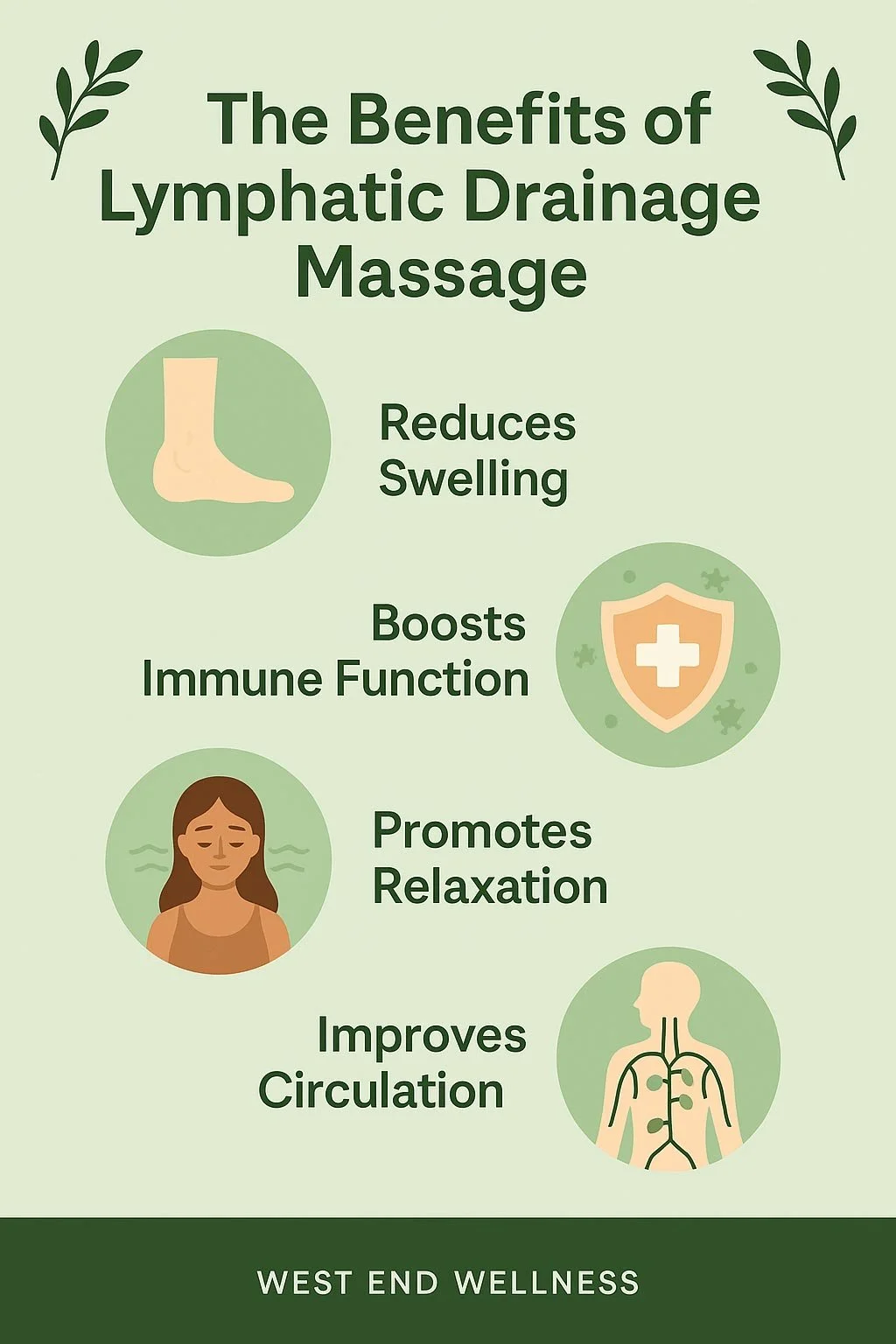
Lymphatic drainage massage offers more than just a moment of relaxation. It’s a gentle and intentional therapy that helps your body do what it’s naturally meant to: clear out waste, reduce fluid retention, and restore balance.
Many clients leave their sessions feeling lighter, clearer, and more in tune with their bodies. Here are some of the key benefits you may notice:
-
Whether it’s your legs, face, or abdomen, this treatment helps move excess fluid out of your tissues and reduce that uncomfortable, swollen feeling.
-
By stimulating the flow of lymph and blood, your body can more effectively remove waste and transport nutrients where they’re needed.
-
Since your lymphatic system is a key part of your immune defense, keeping it flowing can help your body respond to illness and inflammation more efficiently.
-
The light, rhythmic movements used in this massage help activate your parasympathetic nervous system—your body’s rest-and-repair mode—leading to deep relaxation and stress relief.
-
Lymphatic drainage is commonly recommended after certain surgeries to reduce swelling, speed up healing, and ease discomfort in the recovery phase.
-
Improved circulation and reduced inflammation can support a clearer complexion and even help calm flare-ups from acne, dryness, or irritation.
What Does The Lymphatic System Do?
Think of your lymphatic system as your body’s inner cleanup and transport crew. It’s made up of a network of vessels and lymph nodes that carry a fluid called lymph. This fluid contains water, waste, proteins, and immune cells that help defend your body against illness.
Lymph nodes act like checkpoints. As lymph moves through your body, these nodes filter out harmful substances before the fluid returns to your bloodstream. You’ll find larger clusters of lymph nodes in areas like your neck, armpits, and groin.
The lymphatic system has three main jobs:
It helps balance fluid levels in your body, making sure tissues don’t get too swollen or dry.
It’s a key part of your immune system, helping to detect and fight off infections.
It aids in digestion by absorbing fats and fat-soluble nutrients in the gut.
The system itself is made up of:
Lymph vessels carry fluid away from the tissues.
Lymph fluid, which circulates white blood cells, nutrients, and waste.
Lymphatic ducts return filtered lymph to your bloodstream. The right lymphatic duct drains the upper right part of the body, while the thoracic duct handles the rest.
When this system is working well, you likely don’t notice it. But when it slows down, you may feel swollen, sluggish, or run down. That’s when manual lymph drainage can help support your body’s natural rhythm and bring things back into balance.

How Is Lymphatic Drainage Massage Supposed To Work?
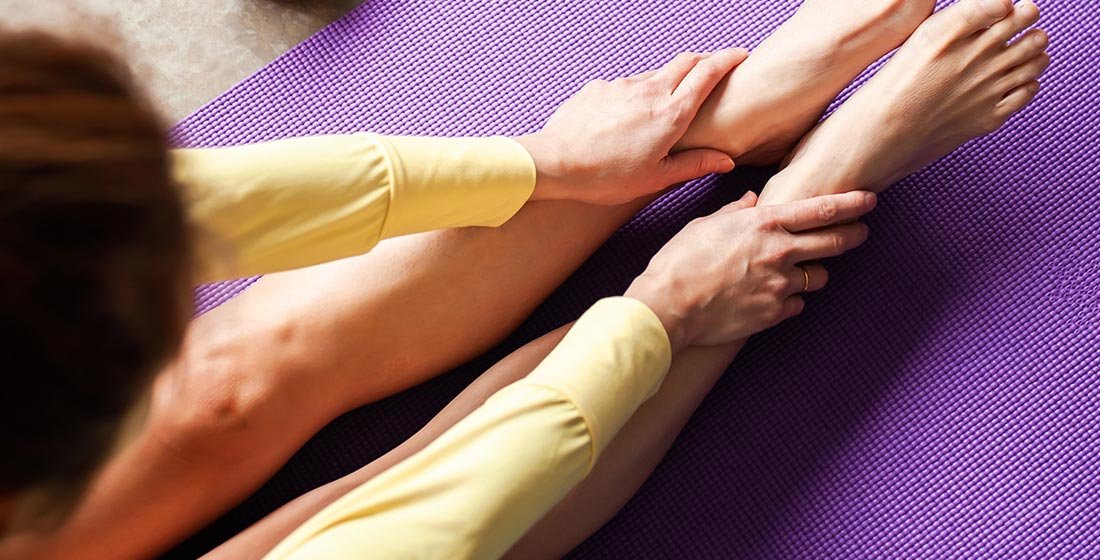
Lymphatic drainage massage helps your body move lymph fluid through the lymphatic system. Since this system doesn't have a built-in pump like the heart, it depends on muscle movement, breathing, and gentle stimulation to stay active.
During a session, your massage therapist uses slow, repetitive movements such as light stretching, gentle pressure, and sweeping strokes. These techniques are done without oils so the therapist can maintain the right level of contact with your skin and guide the fluid effectively.
By encouraging this natural flow, the massage can help reduce swelling, support circulation, and leave you feeling lighter and more at ease.
FAQ
How can I tell if I need lymphatic drainage?
You might benefit from lymphatic drainage massage if you're experiencing symptoms such as persistent swelling in your arms or legs, a feeling of heaviness or tightness, restricted range of motion, recurring infections, or hardening and thickening of the skin. These signs can indicate that your lymphatic system isn't functioning optimally.
How do you know if your lymphatic system is clogged?
A sluggish or congested lymphatic system may manifest through various symptoms, including fatigue, stiffness, muscle and joint pain, bloating, fluid retention, headaches, and skin issues like dryness or rashes. If you're experiencing these signs, it could suggest that your lymphatic system isn't effectively clearing waste and toxins from your body.
How soon do you see results from lymphatic drainage massage?
Many individuals report feeling lighter and more energized immediately after a lymphatic drainage massage. Visible reductions in swelling or puffiness can often be noticed within a few days. However, multiple sessions over several weeks may be necessary for chronic conditions like lymphedema to achieve significant and lasting improvements.
Do you lose weight with lymphatic drainage?
Lymphatic drainage massage is not a weight loss treatment. While it can help reduce water retention and bloating, leading to temporary weight fluctuations, it doesn't result in fat loss. Sustainable weight loss requires a combination of diet, exercise, and lifestyle changes.

Curious about lymphatic drainage massage? This gentle therapy may help you feel lighter, reduce swelling, and support your immune system. Our latest article explains how it works, who it’s for, and why it matters. A quick, helpful read for anyone looking to support recovery and overall health.
Final Thoughts
We hope this guide has helped you better understand what lymphatic drainage massage is, how it works, and why it matters for your health. From supporting your immune system to reducing swelling and helping you feel more balanced, this gentle therapy offers real benefits for both recovery and daily well-being.
At West End Wellness, our trained practitioners take the time to listen, personalize each session, and create a space where your body can truly reset. If you're feeling sluggish, swollen, or simply in need of a reset, lymphatic drainage might be the support your system has been waiting for.
If you have any further doubts or questions regarding this subject or another treatment, contact one of our experienced Acupuncturists or Registered Massage Therapists here at West End Wellness Clinic. You can either give us a call or make an appointment.
Disclaimer: Please remember this article is for informational purposes only and should not replace professional medical advice. Please consult a healthcare provider or someone with the correct qualifications before starting any new exercise or treatment program.