
Beyond the Burn: Managing Post-Exercise Discomfort

Table of Contents Show
Quick Summary
Most athletes accept muscle soreness and fatigue as an inevitable tax on their training, but from a clinical perspective, these sensations are complex physiological signals. Whether it is the acute heaviness immediately following a session or the Delayed Onset Muscle Soreness (DOMS) that peaks forty-eight hours later, your body is navigating a delicate cycle of inflammation and repair.
This article explores the mechanics of post-exercise discomfort, identifying the difference between productive recovery and the 'red flags' of an impending injury. We’ll examine how metabolic waste and fascial restrictions contribute to lasting fatigue and why a targeted clinical reset is the most effective way to restore tissue elasticity. Instead of simply pushing through the pain, learn how to interpret your body’s signals to optimize your performance and maintain your training consistency.
TL;DR: Solving Muscle Soreness & Fatigue
The Cause: Post-exercise discomfort is driven by microscopic muscle fibre damage and the accumulation of metabolic byproducts that trigger an inflammatory response.
The Identification: Distinguishing between DOMS (symmetrical, dull ache) and Acute Injury (sharp, localized, or joint-related pain) is critical for safety.
The Ischemic Cycle: Persistent fatigue often stems from restricted blood flow in tight tissues. Professional massage breaks this cycle, manually flushing the area with oxygenated blood.
The Strategy: A combination of active recovery (light movement) and clinical manual therapy provides a faster return to baseline than passive rest alone.
Hey there, fitness enthusiasts! We've all been there, feeling that satisfying burn in our muscles after a kickass workout session. But sometimes, that burn turns into muscle soreness that just won't quit. Don't worry, though! We've got your back.
At West End Wellness, located in downtown Vancouver, we offer Registered Massage Therapy and Acupuncture services that can help you conquer muscle soreness and get back to your A-game.
So, let's dive into the world of muscle soreness and find out how to tackle it like a pro!
Understanding muscle soreness and its effects
My friends, muscle soreness is a lovely reminder that you've pushed your body to new limits. Those microscopic tears in your muscle fibres result from intense workouts.
Yep, those tears cause some inflammation, leading to pain, stiffness, and discomfort. But here's the thing—muscle soreness is actually a good sign!
It means your muscles are growing stronger and bigger. So, embrace the soreness as a badge of honour!

Types of workouts that cause muscle soreness
Ah, the types of workouts that make you feel the burn! Eccentric exercises are the culprits behind that satisfying soreness.
Picture yourself lowering weights with precision or conquering those downhill runs like a champ. These movements put extra stress on your muscle fibres, causing those tiny tears that lead to muscle soreness.
But wait, there's more! Trying new activities, targeting those smaller, often-forgotten muscles, or pushing yourself harder than usual can also leave you feeling sore the next day. So, remember to take it slow and gradually increase the intensity and duration of your workouts.
Our massage therapist at West End Wellness can guide you through a personalized plan to effectively manage muscle soreness. Check out our Vancouver Sports Massage Therapist page for more information.
Differentiating between types of muscle soreness
Let's clear up some confusion, folks! There are different types of muscle soreness, and knowing the difference is essential.
Delayed onset muscle soreness (DOMS) is the one we're talking about here. It usually kicks in a few hours or even days after your workout.
You'll feel it as a widespread soreness in the muscles you worked so hard. On the other hand, acute muscle soreness is that immediate burning sensation during exercise, indicating you've reached your limit. It's like your muscles are shouting, "Hey, take a breather!"
Now, here's a personal anecdote for you. Remember that time I tried a new intense workout routine? My muscles were on fire the next day! But then I noticed a sharp pain in my shoulder whenever I lifted my arm. Uh-oh, that's not DOMS, that's an injury.
If you experience specific pain during certain movements or if the soreness lingers for more than a week, it's time to consult a healthcare professional or physical therapist for some expert advice.
We care about your well-being, so don't hesitate to seek guidance when needed.

Exercising with muscle soreness: finding the balance
You might be wondering, "Can I still exercise with sore muscles?" Absolutely! But it's all about finding that sweet spot, my friends. You can engage in light physical activity if your muscles are just mildly sore and not hindering your daily activities.
Take a leisurely walk, hop on a recumbent bike, or try some gentle yoga stretches. These low-impact exercises promote blood flow, delivering nutrients and oxygen to your muscles and aiding in recovery.
Now, let me share a personal story with you. Last week, after an intense leg day at the gym, I woke up with sore quads that made walking downstairs a challenge.
But instead of slacking off, I decided to do a light leg workout with higher repetitions and lower weights. Surprisingly, it helped alleviate some of the soreness without causing further damage.
So remember, a little movement can go a long way toward your recovery.
How to treat delayed onset muscle soreness (DOMS)
Okay, folks, let's get to the juicy part—how to treat DOMS and say goodbye to muscle soreness. Here are some tried-and-true strategies that have worked wonders for many:
-
We've mentioned this before, but it's worth repeating. Keep your muscles active with gentle exercises like walking or cycling. Just remember not to overexert yourself. Listen to your body and take it easy.
-
When dealing with muscle soreness, it's important to avoid working the same muscles that are already feeling the burn. Instead, focus on different exercises that target different muscle groups. This allows your sore muscles to recover while you continue staying active.
-
Dehydration can worsen muscle soreness, so make sure to drink enough water throughout the day. Hydration is key for your overall muscle health. Sip that H2O and keep those muscles happy.
-
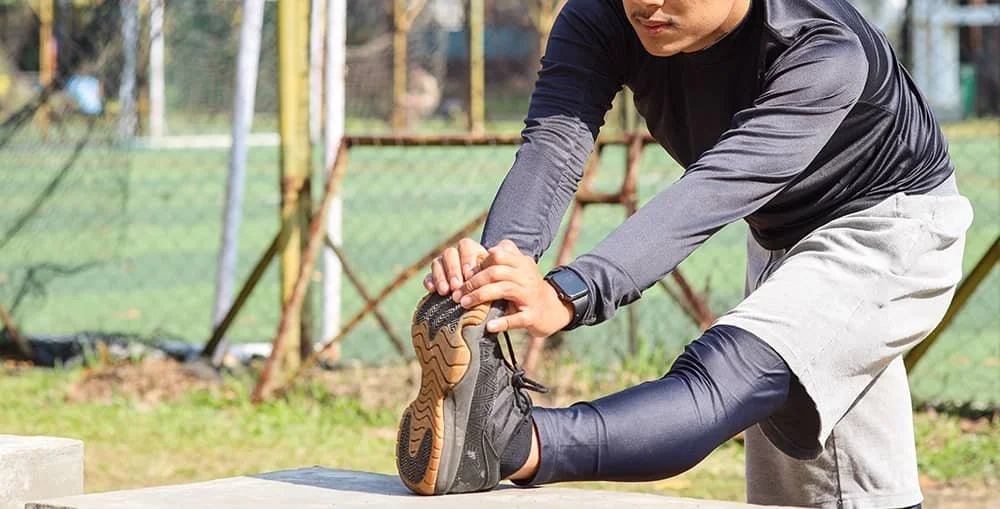
Stretching can work wonders for sore muscles, improving flexibility and relieving tension. Just be gentle and listen to your body. If stretching causes additional pain, skip it for now. You want that sweet relief, not extra discomfort.
-
Protein is the superhero of muscle recovery. Make sure to include protein-rich foods in your meals to provide your muscles with the building blocks they need. Lean meat, fish, eggs, dairy products, legumes, and tofu are great options.
-
Ah, the joy of self-care! Grab a foam roller or a massage gun and treat yourself to a soothing session. But remember, gentle pressure is key here. You don't want to turn your self-massage into a painful experience. Let those sore muscles relax and recover.
-
Sleep is magical, my friends. During those precious hours of shut-eye, your muscles repair and regenerate. So, make sure to prioritize sleep and give your body the rest it deserves.
-
Topical creams and gels can provide temporary relief from muscle soreness, but they're not a long-term solution. It's better to address the root cause of the soreness rather than relying solely on topical treatments.
Preventing muscle soreness
Now that we've tackled how to treat DOMS, let's talk about prevention. After all, an ounce of prevention is worth a pound of cure. Here are some tips to minimize the occurrence of muscle soreness:
-
Avoid jumping into high-intensity workouts right off the bat. Take it slow and allow your muscles to adapt to new challenges. Progress gradually to minimize the risk of excessive soreness.
-
Give your muscles some love by warming them up before each workout. Engage in dynamic stretches, light cardio, or foam rolling to prepare your muscles for action. And don't forget to cool down afterward with some static stretches to promote muscle recovery.
-
Consistency is key when it comes to your fitness routine. Keep those muscles active and regularly engaged in building strength and endurance. This helps your muscles adapt and become more resistant to soreness.
-
Pay attention to what your body tells you. If you're feeling fatigued or overly sore, taking a rest day or opting for a lighter workout is okay. Pushing through excessive fatigue can lead to injuries and prolonged soreness.
-
Proper nutrition and hydration are essential for muscle health. Fuel your body with a balanced diet and drink enough water to support optimal muscle function and recovery.
Remember, muscle soreness is a sign of progress and growth. Embrace it, treat it with care, and use it as motivation to keep pushing yourself. But always prioritize your well-being and seek professional guidance if you're unsure or experiencing prolonged pain.
At West End Wellness, we're here to support you on your fitness journey. Our experienced team of Registered Massage Therapists and Acupuncturists can provide personalized treatments and advice to help you conquer muscle soreness and reach your goals. Let's turn that soreness into strength, one step at a time!
So, what are you waiting for?
Lace up those sneakers, listen to your favourite workout playlist, and let's conquer those sore muscles together!

A proper warm-up does more than prevent injury. It helps your body move better, feel stronger, and recover faster. This article explains why warming up matters, especially if you’re stiff, busy, or jumping straight into workouts without thinking twice.
FAQ
What is the main cause of muscle soreness and fatigue after a workout?
Post-exercise discomfort is primarily caused by micro-tears in the muscle fibres and the subsequent inflammatory response required to repair them.
This process, known as Delayed Onset Muscle Soreness (DOMS), is often exacerbated by a lack of circulation, which allows metabolic byproducts to linger in the tissue.
Is post-exercise discomfort a sign of a good workout?
Not necessarily. While some soreness indicates that you’ve challenged your muscles, extreme fatigue or sharp pain can be a sign of mechanical overcompensation or impending injury.
A healthy recovery should feel like a dull, symmetrical ache that improves with light movement.
How can I reduce muscle soreness and fatigue faster?
The most effective method is active recovery. By combining low-intensity movement with clinical manual therapy, you manually break the Ischemic Cycle.
Techniques like Myofascial Release help flush out metabolic waste and restore the tissue elasticity needed for your next session.
If you have any further doubts or questions regarding this subject or another treatment, contact one of our experienced Acupuncturists or Registered Massage Therapists here at West End Wellness Clinic. You can either give us a call or make an appointment.
Disclaimer: Please remember this article is for informational purposes only and should not replace professional medical advice. Please consult a healthcare provider or someone with the correct qualifications before starting any new exercise or treatment program.