Can Acupuncture & Sound Healing Calm Your Nervous System?
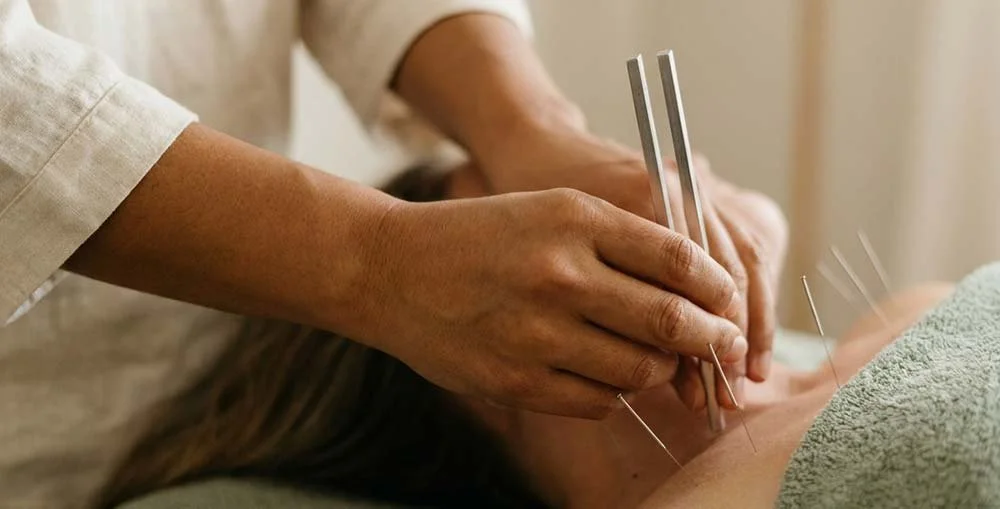
Table of Contents Show
Quick Summary
Some days the tightness in your chest has nothing to do with your muscles. It is the week you have had, or the transition you are midway through. This article looks at acupuncture and sound healing, a combined treatment now offered by our acupuncturist Leonie Bedet, and why Vancouver clients are booking it alongside therapy, not instead of it.
You will learn what happens in your nervous system during a session, who tends to book one, and what a first appointment looks like. If your usual coping tools have stopped working, this is worth a few minutes of your attention.
TL;DR – Acupuncture & Sound Healing
Acupuncture and sound healing combine needles with tuning forks
Each therapy is well studied; the combination less so
May support nervous system relaxation; research is still developing
Differs from a group sound bath in key ways
A complement to therapy, not a replacement for it
Picture the walk from the Seawall back up into the West End on a grey Tuesday. Your legs are fine. Your mind will not quiet down.
If you have spent months managing anxiety, grinding through burnout, or sitting with a grief that will not resolve on schedule, you already know that talk alone does not always reach the whole problem. The insight can be right there, and the body still will not let go.
Most people wait for a full breakdown before trying something new. There is a gentler option available earlier than that.
Acupuncture and sound healing will not replace the work you are doing in therapy. They give your nervous system a way to catch up.
What Is Acupuncture and Sound Healing?
Acupuncture and sound healing are two therapies delivered in one session. Fine needles are placed at specific points along the body's meridians, the pathways traditional Chinese medicine says carry Qi, the body's life force. While the needles rest, a practitioner introduces sound using tuning forks and, often, a crystal or Tibetan singing bowl.
Practitioners sometimes call this pairing sonopuncture, since the sound is directed at or near the same acupuncture points the needles are already working. Sound adds a sensory layer to the session. The tones and vibrations may encourage relaxation and help some people settle more deeply while the needles are in place.
Acupuncture has centuries of clinical use behind it, and modern research continues to study how it works. Sound healing is newer to Western clinics. Early research on sound and relaxation suggests possible benefits for tension, mood, and stress, though the evidence base is still developing and many studies are small or preliminary.
Combined, the two therapies are meant to work on the same goal from two directions at once, the physical body and the nervous system's response to stress.
Why Combine Acupuncture With Sound?
The reasoning behind pairing them is practical as much as clinical. Lying still with needles in place already encourages a slower, quieter state. Adding sound gives the mind something gentle to settle around during that time, rather than the silence some people find harder to sit with.
Leonie offers this pairing because clients often describe the combined session as feeling different from acupuncture alone, not because the science has settled on exactly why. We would rather be upfront about that distinction than oversell the mechanism behind it. Sessions are built around your reason for coming in, not a fixed script, so the sound work sits alongside whichever points fit the day.
Some clients start with acupuncture alone and add sound later once they know what a session feels like for them. Others ask for the combined version from the first visit. Either way is a reasonable place to start.
What Happens in Your Nervous System During a Session?
Chronic stress keeps your sympathetic nervous system, the fight-or-flight branch, running longer than it should. Over time, this shows up as a racing mind at bedtime, a short fuse, or the sense that you can never fully power down.
Acupuncture is understood to activate the parasympathetic nervous system, the branch responsible for rest and digestion. Needling specific points signals the body that it is safe to stand down from alert mode.
Sound works on a different channel. Research on sound and frequency shows it can shift brain activity into slower Alpha and Theta wave states, the same patterns associated with deep meditation. Sound also appears to quiet the default mode network, the part of the brain responsible for rumination and looping worry.
Layer these together, and you get a session aimed at the vagus nerve and the whole rest-and-digest system, not just a quiet room and a nap. That is the physiological argument for combining them rather than choosing one.
Who Tends to Book This Session?
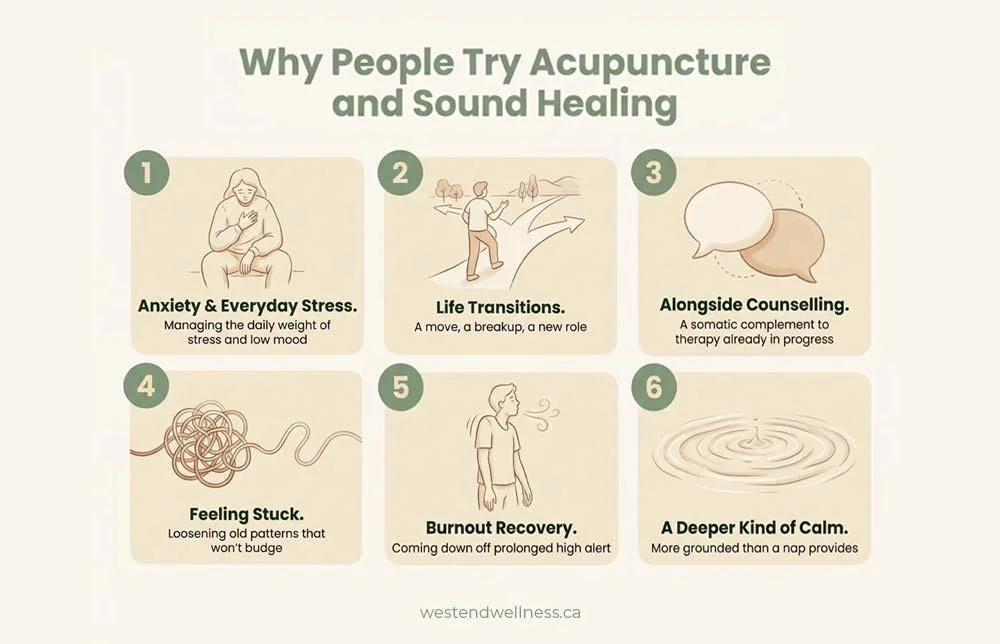
There is no single condition this treatment is built for. It tends to draw people navigating a specific kind of internal weather, not a diagnosis. Common reasons clients book a combined session include:
Managing the day-to-day weight of anxiety, low mood, or chronic stress
Moving through a major life change, a breakup, a move, a new role
Wanting a somatic complement to work already happening in counselling
Feeling stuck, emotionally or in old patterns that will not budge
Recovering from burnout and needing to come down off high alert
Simply wanting a deeper, more grounded kind of calm than a nap provides
If any of those sound familiar, you are the exact person this session was designed around. It is worth saying plainly that this is a wellness treatment, not a mental health intervention. If you are in crisis, please reach out to a crisis line or your care provider first.
This is a support to add alongside your existing care, not a replacement for it.
How Combining Acupuncture and Sound Supports You
This is where the clinical case meets the practical one. Acupuncture's effect on pain, tension, and nervous system regulation is well documented. Sound healing adds a second layer of relaxation that many clients say helps them process what talk therapy has already surfaced.
Our acupuncturist Leonie Bedet offers this combined treatment at West End Wellness. Sessions are built around your reason for coming in, not a fixed script, so the sound work might sit alongside points chosen for tension, sleep, or emotional regulation depending on the day.
| Stage | What Happens | Why It Helps |
|---|---|---|
| Before | A brief check-in on what brought you in, including anything happening in counselling or elsewhere that's relevant to the session. | Lets Leonie choose points and sound tools that match your actual reason for coming in, not a generic protocol. |
| During | Fine needles are placed first. Once they're settled, tuning forks and a singing bowl are introduced while you rest for 30 to 45 minutes. | The needles open the treatment, the sound extends and deepens the nervous system response. |
| After | A few quiet minutes to reorient before you leave, plus notes on what you might feel over the next day. | Most people feel noticeably calm right after, and knowing what's normal afterward helps you plan the rest of your day. |
This is complementary support, not a treatment for depression or trauma on its own, and it works best alongside the professional care you already have in place, whether that is counselling, medical care, or both. Leonie will always ask about that context first, since it shapes how she builds the session.

Ever heard of fire cupping but not sure what it actually does? This article clears up the mystery. Fire cupping is a traditional therapy that uses heat and suction to help with muscle pain, tension, and sluggish circulation. It’s especially helpful if you feel stiff, tired, or stuck in your recovery.
What You Can Do Between Sessions
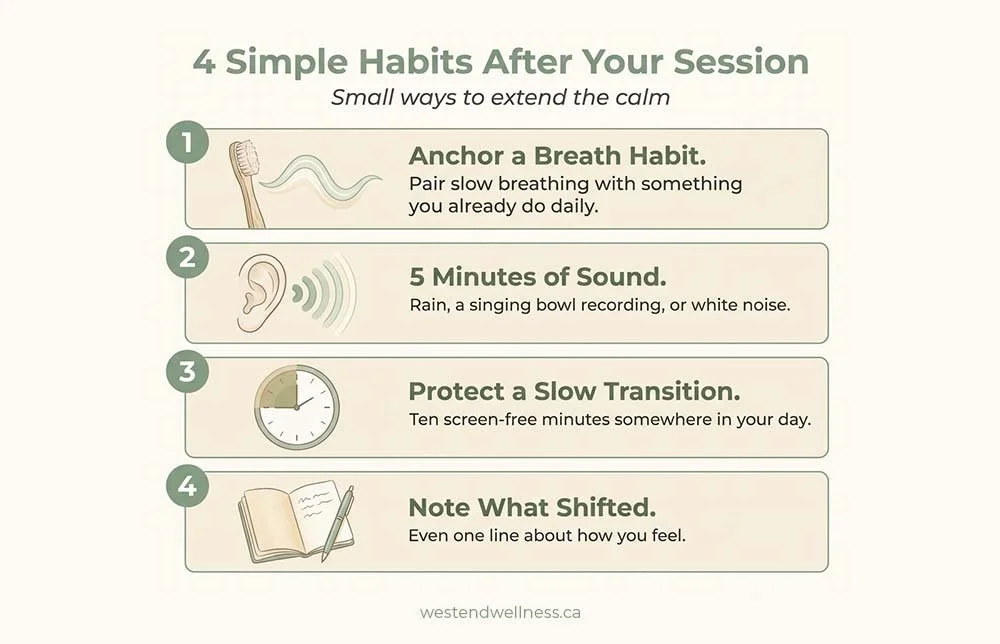
The work does not stop the moment you leave the table. Your nervous system is more receptive right after a session, which makes the days that follow a good window for small, repeatable habits.
Anchor a short breathing practice to something you already do daily, like brushing your teeth
Spend five minutes with a grounding sound, rain, a singing bowl recording, or even white noise
Protect one slow transition in your day, even ten minutes without a screen
Keep a short note of what shifted after your session, even one line
None of these replace the session itself. They extend it, the same way stretching extends what a massage does for a sore muscle. Clients who pair a session with even one of these habits tend to report the calm lasting longer, rather than fading by the next commute.
Pick one habit to start, not all four at once. Small and repeated beats ambitious and abandoned by Thursday.
If you have been running on empty, doing the emotional work but still feeling wound tight in your body, you are not doing it wrong. Some kinds of stress live below where words can reach.
Acupuncture and sound healing offer a gentle, evidence-informed way to meet that part of the work directly. Leonie Bedet offers this combined treatment at West End Wellness downtown.
If you would like to ask a few questions before booking, or find out whether it is a fit alongside what you are already doing, our team is happy to help.
None of these replace the session itself. They extend it, the same way stretching extends what a massage does for a sore muscle. Some people find the calm lasts longer when they pair a session with even one habit, though individual responses vary.
Pick one to start, not all four at once. Small and repeated beats ambitious and abandoned by Thursday.
Common Questions About Acupuncture & Sound Healing
Are acupuncture and sound healing a substitute for therapy or counselling?
Acupuncture and sound healing are complementary wellness treatments, not a replacement for therapy, counselling, or medical care.
It works alongside those supports by helping regulate the nervous system, which can make the emotional processing happening in therapy feel more manageable. If you are currently in crisis, contact a crisis line or your care provider directly rather than relying on this treatment alone.
What does a combined acupuncture and sound healing session actually feel like?
Most clients describe a combined session as deeply relaxing, often more so than acupuncture alone.
Fine needles are placed first, then tuning forks and a singing bowl are introduced while you rest for roughly 30 to 45 minutes. Many people feel a heaviness or warmth spread through the body, and some briefly fall asleep on the table.
How many sessions before I notice a difference?
Many clients notice a shift in sleep or overall calm after their first session, though lasting change tends to build over three to four visits.
Chronic stress, burnout, and long-standing tension usually respond better to a short series than a single appointment. Your acupuncturist can suggest a realistic starting number based on what brought you in.
Final Thoughts
A quick recap: acupuncture and sound healing pair fine needles with tuning forks and a singing bowl in one session. The research behind each therapy on its own is more established than the research on this specific combination, and that is worth knowing going in.
What it offers is a calmer, more supported hour, not a diagnosis or a cure.
Leonie Bedet offers this combined treatment at West End Wellness downtown. If you would like to ask a few questions before booking, including whether it is a good fit alongside counselling or other care you are receiving, our team is happy to help.
If you have any further doubts or questions regarding this subject or another treatment, contact one of our experienced Acupuncturists or Registered Massage Therapists here at West End Wellness Clinic. You can either give us a call or make an appointment.
Disclaimer: Please remember this article is for informational purposes only and should not replace professional medical advice. Please consult a healthcare provider or someone with the correct qualifications before starting any new exercise or treatment program.