Longevity for Vancouver Athletes: Recovery & Injury Prevention
Table of Contents Show
Quick Summary
Staying active in Vancouver isn’t just about training harder. It’s about building a body that can move well, recover efficiently, and stay injury-free over time. This article explores how Registered Massage Therapy (RMT) and acupuncture work together to support long-term athletic performance and recovery, helping reduce tension, improve mobility, and regulate the nervous system.
You will learn why small, consistent habits like recovery work, sleep, and movement quality matter more than pushing through pain. If you want to keep running, cycling, or hiking for years to come, this guide shows how a proactive, longevity-focused approach can keep your body strong and reliable.
TL;DR – Longevity for Vancouver Athletes
Shift your mindset: Stop waiting for injuries. Start building durability.
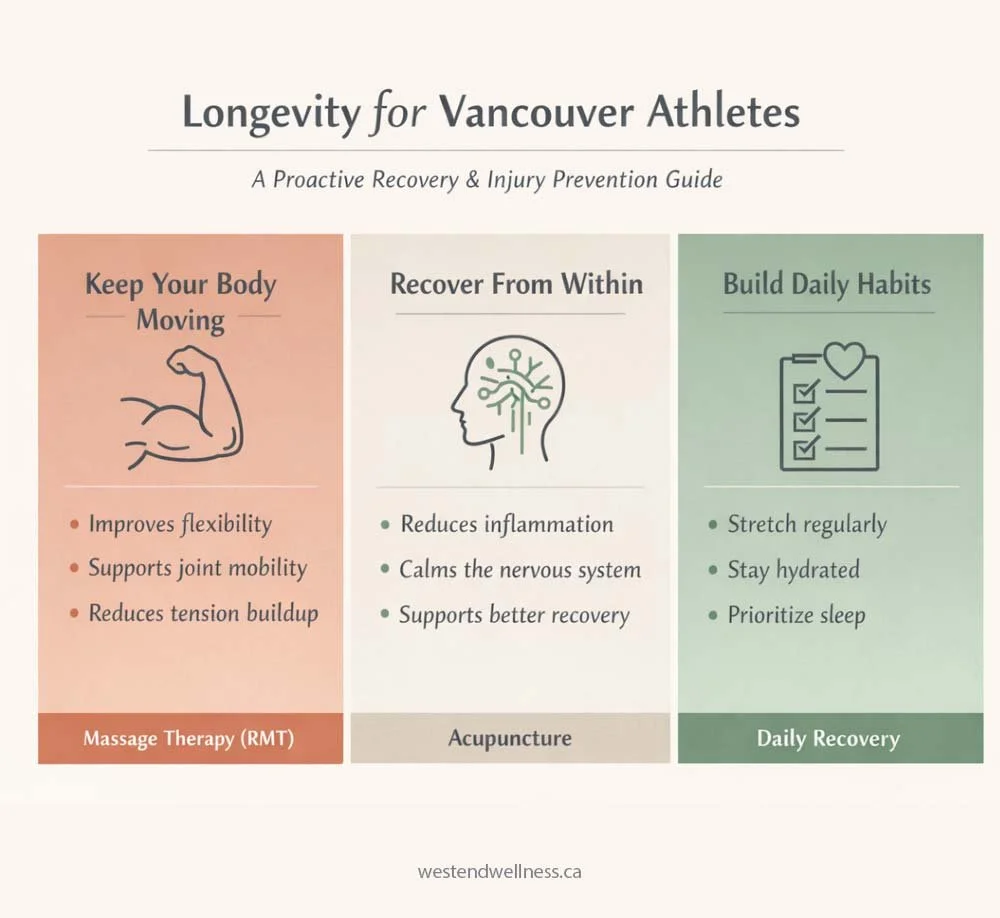
RMT supports movement: Keeps muscles flexible, improves range, and prevents compensation patterns.
Acupuncture supports recovery: Regulates the nervous system, reduces inflammation, and improves sleep.
Better together: Structural + internal recovery leads to fewer injuries and faster bounce-back.
Consistency wins: Small habits like mobility work, hydration, and sleep protect long-term performance.
Local reality: Vancouver’s climate and activity swings make proactive care even more important.
Bottom line: Treat your body like something you plan to use for decades, not just this season.
You know the moment.
You’re tying your shoes at the trailhead. The air is cool. Maybe there’s a bit of mist hanging over the trees. Runners pass by, cyclists roll through the parking lot, and someone is stretching before heading out on the path. Vancouver has a way of pulling people outside.
For many people here, movement becomes part of daily life. A morning run. A weekend hike. A ride along the seawall. Over time, the goal quietly shifts. It’s no longer about one race or one season.
It’s about staying in the game.
The athletes who keep moving year after year tend to think differently. They don’t wait for pain before paying attention to their bodies. They treat recovery and maintenance as part of their routine, not something they do after an injury.
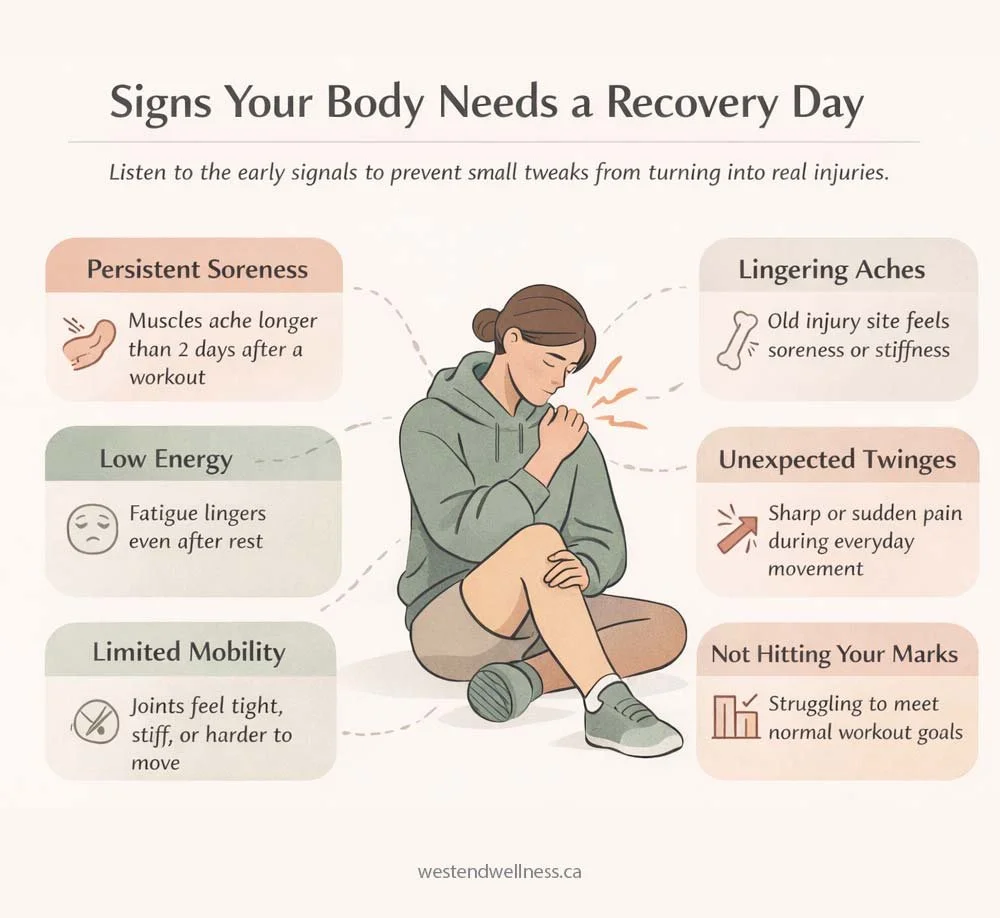
Most injuries don’t come from one bad session. They build slowly from small restrictions, poor recovery, and missed signals.
That’s the mindset behind longevity for Vancouver athletes. Small, proactive habits that help your body keep showing up. The first place to start is with the body’s mechanics.
Why Fluid Movement Matters More Than Fixing Pain
Most people book a massage when something hurts. A tight calf after a run. A shoulder that won’t loosen after a long ride. A low back that starts complaining after a few weeks of training.
Pain gets our attention.
But athletes who stay active for decades usually think about their bodies differently. They don’t wait for something to break. They focus on keeping things moving well in the first place.
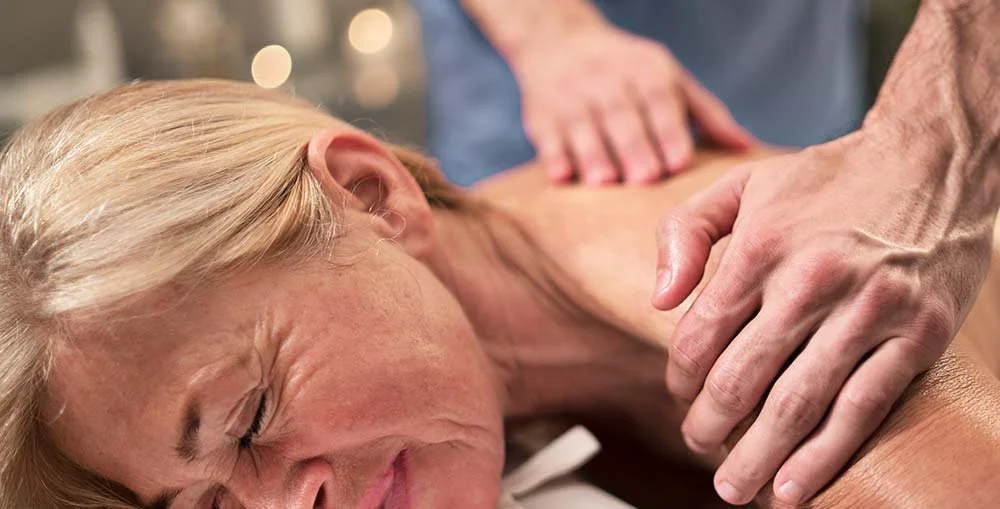
That’s where Registered Massage Therapy (RMT) becomes part of a proactive routine.
What Happens Inside Your Muscles
Your muscles are wrapped in a web of connective tissue called fascia. When fascia stays elastic, muscles glide smoothly and joints move freely. When it becomes tight or restricted, the body starts to compensate.
| Healthy Movement | Restricted Movement |
|---|---|
| Muscles glide smoothly | Muscles pull against each other |
| Joints move through full range | Range of motion becomes limited |
| Efficient movement | Compensation patterns develop |
| Lower injury risk | Small strains begin to appear |
What RMT Helps Maintain
Regular massage therapy helps reset the system before those patterns turn into injuries.
Benefits athletes often notice:
Improved range of motion
Reduced muscle tension
Better circulation for recovery
Less buildup of fascia restriction
Smoother movement patterns
You can think of it like a software update for your muscles. Your body adapts to stress quickly. If something tightens, the system finds a workaround. At first that feels fine. But over time, the system begins to lag.
Massage therapy helps clear those small glitches before they turn into bigger problems.
A Common Example We See
After his first marathon, one local runner came in barely able to walk down stairs. His calves and quads were tight and heavy.
After a focused sports massage working through his legs and IT bands, his recovery shifted quickly. Within a few days he was moving normally again and already thinking about his next race.
Massage became part of his post race routine from that point forward. That’s the quiet advantage of proactive care.
When your muscles move well, everything else becomes easier. Your stride feels smoother. Your posture holds longer. Your body wastes less energy fighting tightness.
But movement is only one piece of longevity. Because some of the most important recovery happens inside the body.
Supporting Recovery From the Inside: The Role of Acupuncture
When people think about recovery, they usually picture sore muscles.
Tight calves after a long run, heavy legs after a long ride around the sea wall or a stiff back after a weekend hike on one of vancouer beautiful trails.
But a large part of athletic recovery happens somewhere you can’t see.
Inside the body, training creates small amounts of inflammation and nervous system stress. This response is normal. In fact, it’s part of how the body gets stronger. The challenge comes when the body struggles to return to balance.
That’s where acupuncture can help.
What Acupuncture Helps Regulate
Acupuncture works by stimulating points that communicate with the nervous system. This can help the body shift from a constant alert state into recovery mode.
Many athletes notice improvements in:
Reduced inflammation
Better sleep quality
Faster recovery between training sessions
Improved circulation to tired muscles
A calmer nervous system after intense training
You can think of inflammation as the slow rust of the body. A little is normal, but when it builds up over time, joints and muscles begin to feel stiff, heavy, or irritated.
Acupuncture helps the body clear that buildup more efficiently.
Why This Matters for Vancouver Athletes
Vancouver’s climate creates a unique rhythm for training. Winter tends to mean damp air, colder mornings, and longer indoor sessions. Muscles stay tighter and joints can feel stiff in the colder months.
Then spring arrives and activity ramps up quickly. Running season starts. Cycling miles increase. Hiking trails reopen.
That sudden shift from winter training to higher intensity outdoor activity is when many athletes start to feel small issues creeping in. Acupuncture can help smooth that transition by calming the nervous system and supporting recovery as training volume increases.
A Real Example
One client came in feeling run down after months of pushing through a demanding work schedule and regular training. Sleep was inconsistent and recovery felt slower each week.
After a few acupuncture sessions focused on nervous system balance and circulation, the change was noticeable. Sleep improved, energy felt steadier, and training started to feel manageable again.
He described it simply: “My body finally feels like it can reset.”
Remember, Massage therapy helps keep the body moving well while Acupuncture helps the body recover and regulate internally. Together, they create a strong foundation for athletes who want to keep moving year after year, this leads to longevity.
Because the habits that protect athletes long term are often surprisingly small.
Movement
Internal Recovery
Daily Habits

We explain how myofascial release therapy targets the body’s connective tissue (fascia) to ease tension, improve mobility, and restore comfort.
The Small Wins That Keep You Moving for Years
Athletes often look for the big breakthrough. The perfect training plan. The best gear. The next performance trick.
But longevity usually comes down to something much simpler. Small habits done consistently.
The runners and cyclists who stay active into their 50s, 60s, and beyond rarely rely on one dramatic solution. Instead, they build small recovery habits into everyday life.
These habits don’t take much time. But they quietly protect the body over thousands of training sessions.
-
You don’t need a full yoga session to help your body recover.
Just five minutes of targeted movement can help muscles relax and restore range of motion after training.
A simple reset could include:
Hip flexor stretch after running
Calf stretching after cycling
Gentle spinal rotation after long desk hours
Shoulder mobility after swimming or lifting
The goal isn’t intensity. It’s simply reminding the body that it can move freely.
Those small resets help prevent stiffness from building day after day.
-
This surprises many athletes.
Even though Vancouver has a cooler climate, athletes still lose a significant amount of fluid during training.
Cyclists, runners, and hikers often underestimate hydration because they aren’t sweating as obviously as they would in hotter climates.
But dehydration can still affect:
Muscle performance
Joint lubrication
Recovery time
Energy levels
A good habit is to hydrate steadily throughout the day, not just during workouts.
Your body performs best when hydration is consistent, not reactive.
-
If there’s one recovery tool that beats every supplement or training hack, it’s sleep.
During deep sleep, the body repairs muscle tissue, regulates hormones, and resets the nervous system.
Athletes who sleep well often notice:
Faster muscle recovery
Better coordination
Lower injury risk
Improved focus during training
Many people underestimate how much sleep affects physical performance.
Yet it’s one of the most powerful recovery tools available and it’s completely free.
None of these habits feel dramatic in the moment, but over months and years, they make a noticeable difference. Small recovery practices protect joints, reduce tension, and help your body adapt to training instead of slowly breaking down.
That’s what longevity really looks like, not pushing harder, just taking care of the body so it can keep showing up.
Frequently Asked Questions for Vancouver Athletes
I’m not a professional athlete. Is this approach still for me?
If you’re hiking the Chief, running the Seawall, or squeezing in workouts between work and life, you’re already an athlete.
Longevity care isn’t just for Olympians. It’s for anyone who wants to keep moving without pain years from now. Whether that means weekend hikes or playing with your kids, proactive care helps your body stay ready for it.
Why do my joints feel more stiff in Vancouver’s climate?
You’re not imagining it.
Vancouver’s damp, cooler weather can make joints feel heavier or more restricted, especially if you’ve had past injuries.
From a traditional acupuncture perspective, this is often linked to what’s called “dampness” in the body. Treatments can help support circulation and reduce that lingering stiffness. At the same time, regular massage therapy helps keep joints moving by supporting the surrounding muscles and encouraging better fluid movement.
Are RMT and acupuncture only for injuries, or can they help my training?
They’re one of the best things you can add to your training. Think of them as recovery accelerators.
Massage therapy helps release tension and improve circulation, which supports faster muscle recovery after workouts. Acupuncture works a bit differently. It helps shift your body out of training mode and into recovery mode by calming the nervous system. Together, they help your body recover better between sessions, so you can train more consistently.
Do I need a doctor’s referral to start at West End Wellness?
No referral needed.
You can book directly for both massage therapy and acupuncture. We also offer direct billing for most extended health plans, which makes it easier to include these treatments as part of your regular routine.
Your Future Self Will Thank You
You’re back at the trailhead. Or maybe it’s the seawall. Same routine. Same rhythm. But this time, your body feels good. Not perfect. Just… reliable.
That’s really the goal.
Longevity isn’t about pushing harder every year. It’s about giving your body what it needs so it can keep showing up. Runs feel smoother. Rides feel stronger. Recovery doesn’t drag on for days.
And more importantly, you’re still doing the things you enjoy.
The difference usually comes down to small, consistent choices. Taking care of tight muscles before they become injuries. Supporting recovery before burnout sets in. Paying attention early, not later.
If your body has been sending small signals, this is a good time to listen.
Whether that means booking a session for Registered Massage Therapy in Vancouver or trying Acupuncture in Downtown Vancouver, think of it as a performance check-in, not a fix.
Because the goal isn’t just to get through this season. It’s to still be out there years from now.
If you have any further doubts or questions regarding this subject or another treatment, contact one of our experienced Acupuncturists or Registered Massage Therapists here at West End Wellness Clinic. You can either give us a call or make an appointment.
Disclaimer: Please remember this article is for informational purposes only and should not replace professional medical advice. Please consult a healthcare provider or someone with the correct qualifications before starting any new exercise or treatment program.