
Can Reflexology & Acupuncture Work Together for Pelvic Health?
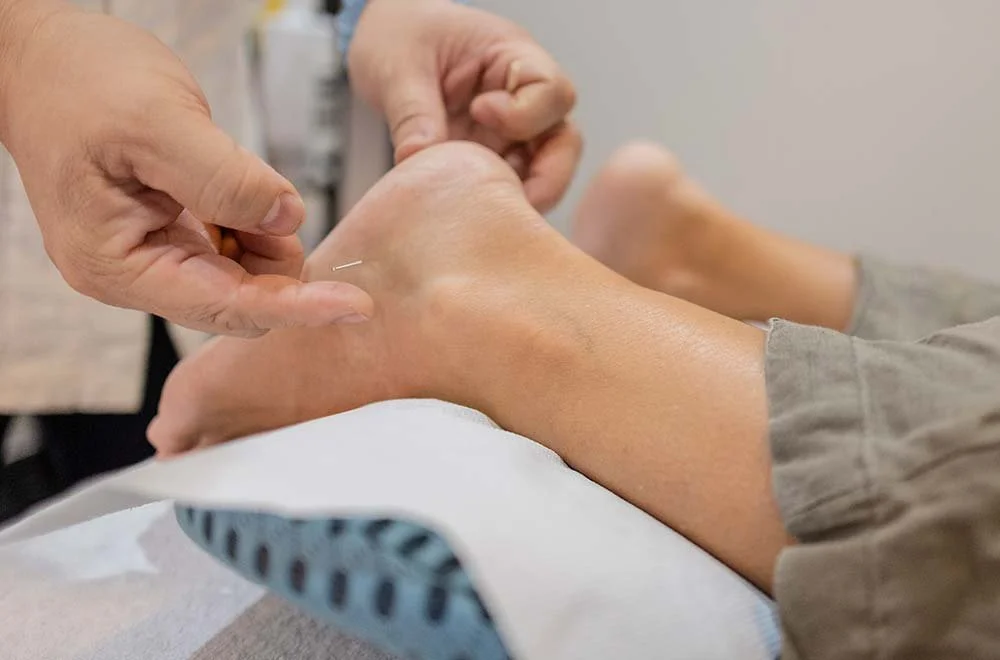
Table of Contents Show
Quick Summary
Pelvic discomfort is more common than many people realize, yet it is often carried quietly for months or even years before someone looks for deeper support. This article explores how reflexology and acupuncture can work together to support pelvic health, particularly when tension, menstrual pain, or chronic pelvic discomfort are involved.
You will learn how these therapies help improve circulation, nervous system balance, and pelvic muscle relaxation, creating better conditions for the body to recover. If pelvic symptoms have been difficult to understand or manage, this guide explains how a combined holistic approach may offer meaningful relief and renewed balance.
TL;DR – Reflexology & Acupuncture for Pelvic Health
Pelvic pain often linked to hormones, stress, posture, or digestion.
Reflexology stimulates foot zones connected to pelvic organs.
Acupuncture improves circulation, reduces inflammation, and regulates nerves.
Combined therapy supports pelvic recovery from multiple physiological pathways.
Together they may ease chronic pelvic tension and menstrual discomfort.
Pelvic health is not something most people talk about openly.
For many, it is the kind of discomfort that gets quietly managed, worked around, pushed through, or accepted as normal. But for the women who come into our clinic on Davie Street, it is often the thing they have been wanting to talk about for a long time.
There was this time, where one patient in particular had been living with a dull, persistent ache in her lower pelvis for close to a year. Some days it was barely noticeable.
Other days it made sitting at her desk uncomfortable, broke up her sleep, and left her with that unsettling feeling that something just was not quite right.
She had mentioned it to her doctor, tried some stretching, and spent more evenings than she could count searching for answers online. Nothing had really landed.
This was not just about the discomfort she was carrying but it was also how long she had been carrying it without feeling like it was serious enough to properly address.
That is something we see often here at West End Wellness. Pelvic pain has a way of being minimised, by the person experiencing it as much as anyone else.
And yet it is far more common than most people realise, and often connected to stress, menstrual health, posture, and the nervous system in ways that make it genuinely worth paying attention to.
In this article, we want to walk through how reflexology and acupuncture may support pelvic health when used together, what each therapy does, and why that combination tends to get better results than either approach on its own.
If any of this sounds familiar, keep reading.
What Is Pelvic Pain and Why Is It So Hard to Diagnose?
Chronic pelvic pain is defined as persistent discomfort in the lower abdomen or pelvis lasting six months or more. That might sound straightforward. Living with it rarely is.
What makes it particularly difficult to navigate is how many different things can contribute to it.
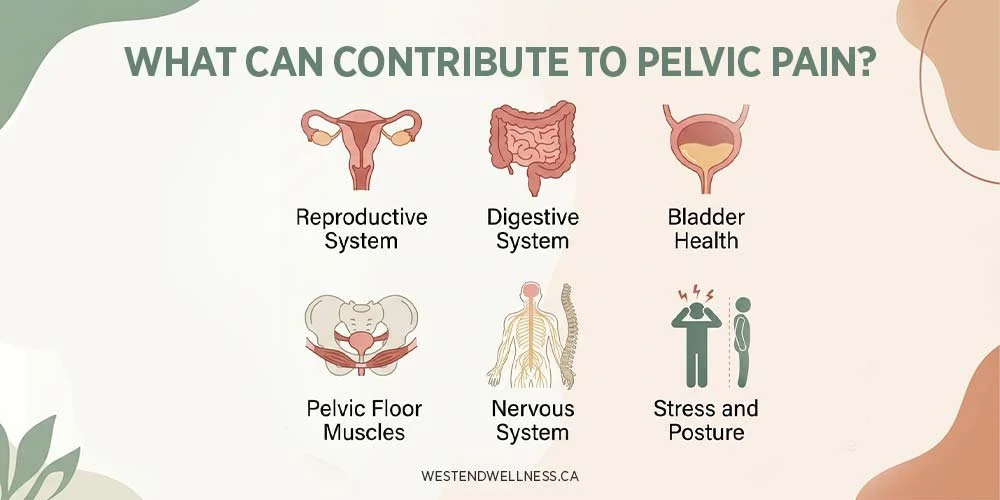
The six most common contributing factors include:
Reproductive system conditions such as endometriosis or fibroids
Pelvic inflammatory disease
Bladder or urinary tract issues
Pelvic floor muscle tension or weakness
Digestive conditions including IBS
Nervous system sensitivity and chronic stress
Sometimes there is a clear diagnosis. Often there is not, and that is where things get frustrating.
At our clinic, we hear this regularly: "Everything came back normal, but something still feels off."
That gap between what shows up on a scan and what someone actually feels in their body is something we take seriously.
Research published in the Journal of Healthcare Engineering confirms that chronic pelvic pain syndrome directly affects the health and quality of life of women, and that its exact causes frequently remain unclear, making it genuinely difficult to treat through conventional means alone.
Pelvic pain also shows up differently from person to person. It might be:
A constant dull ache that is always there in the background
Discomfort that comes and goes with the menstrual cycle
Pain that intensifies under stress or after long hours sitting
That last point is something we notice a lot here in Vancouver. Many of our patients spend the majority of their day seated, at a desk, commuting, or studying. That sustained pressure on the pelvis adds up quietly over time.
The other thing worth saying plainly is that pelvic pain disproportionately affects women, and many suffer with it longer than they should before seeking support. Part of what we try to do at West End Wellness is simply make it easier to have that conversation.
Understanding what is happening in the body is always the first step. And that starts with looking at what kind of support might actually help.

You will learn how targeted massage techniques address common pain areas such as the neck, shoulders, back, and joints, while supporting better mobility and recovery over time.
What Reflexology Actually Does?
Reflexology is a therapy that applies targeted pressure to specific points on the feet, and sometimes the hands or ears, that are believed to correspond to different organs and systems throughout the body.
Think of it as a map. Different zones on the foot connect to different areas internally, and working those points is thought to encourage the body to respond.
If that sounds a little abstract, you are not alone in thinking that. Most people we speak to at the clinic have heard of reflexology but are not entirely sure what it actually involves or how it differs from a regular foot massage.
Here is a simple way to think about it:
For pelvic health specifically, reflexology works with reflex zones in the heel and inner arch of the foot that correspond to the uterus, ovaries, bladder, and lower back.
Applying pressure to these areas is thought to support circulation to the pelvic region, encourage the nervous system to settle, and help the body move out of a state of chronic tension.
This is where it connects directly to pelvic pain.
When the body is under prolonged stress, the nervous system stays in a heightened state. Muscles hold tension they do not need to hold. Circulation to the pelvis can become restricted.
Reflexology, from what we see clinically and what emerging research suggests, may help interrupt that cycle by encouraging the parasympathetic nervous system to take over. That is the part of the nervous system responsible for rest, recovery, and healing.
It is worth being honest here. The research on reflexology specifically is still developing, and we would never overstate what it can do. What we can say is that many patients report feeling a genuine shift after sessions, reduced tension, better sleep, and a noticeable ease in lower abdominal discomfort.
For a fuller picture of how reflexology works and what to expect from a session, our article on reflexology benefits in Vancouver goes into more detail.
Where reflexology tends to work best for pelvic health is not in isolation, but alongside something that works more directly on the body's internal landscape. Which brings us to acupuncture.
What Does Acupuncture Do for the Pelvic Region?
Acupuncture has been used to support pelvic health for a long time. Within Traditional Chinese Medicine, the pelvis is an area where circulation and energy can become stagnant, especially under stress, after hormonal shifts, or following injury. When that happens, discomfort tends to follow.
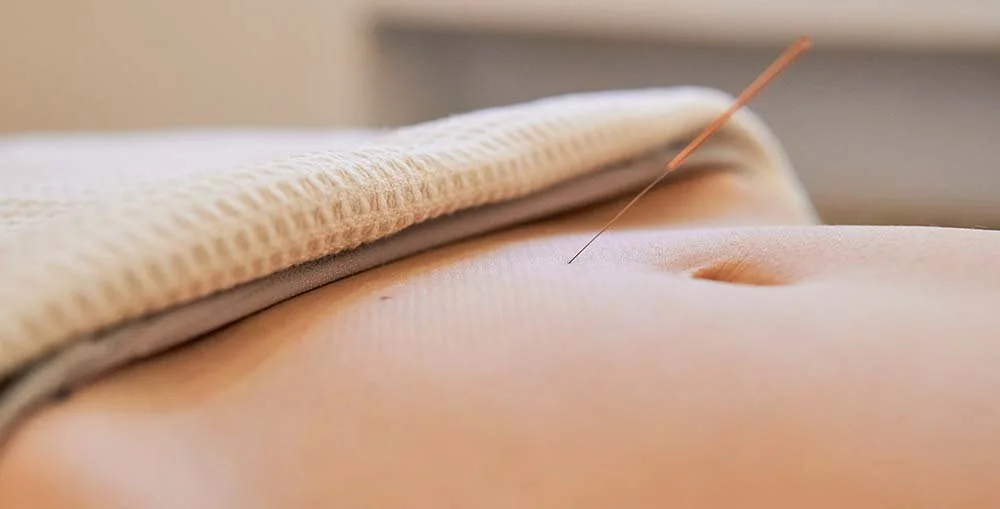
From a clinical perspective, acupuncture works by stimulating specific points on the body to improve circulation, ease inflammation, and help regulate the nervous system. For pelvic pain, those three things matter a great deal.
At our clinic, we use a small number of well established points around the lower abdomen and inner leg that are known to support pelvic and reproductive health. The needles are fine, the process is gentle, and most patients are surprised by how relaxed they feel during and after a session.
What the research supports is encouraging. A meta-analysis reviewing 14 randomised controlled trials found that acupuncture combined with pelvic floor rehabilitation produced significantly better outcomes than either therapy used alone, including reduced pain, improved pelvic function, and fewer complications.
That tracks with what we see in practice. Patients often notice not just a reduction in pelvic discomfort, but improvements in sleep, stress levels, and general tension throughout the body.
The pelvis and the nervous system are deeply connected. Acupuncture works on both at the same time, and that is a big part of why it tends to be effective for this kind of pain.
On the surface, reflexology and acupuncture can seem quite different. One works through the feet. The other uses fine needles at specific points across the body. But when it comes to pelvic health, they are addressing the same underlying picture from two different angles.
Both therapies work with the nervous system, support circulation to the pelvic region, and encourage the body to shift out of chronic tension and into a state where it can begin to recover.
Reflexology works from the outside in. Acupuncture works more directly. Used together, they cover more ground.
At West End Wellness, we often see patients who have been dealing with pelvic discomfort for a long time without finding something that truly shifts it. What we notice with a combined approach is that the body tends to respond more consistently. It is receiving support from two directions at once, and that makes a difference.
Neither therapy is asking the body to do something it cannot do. They are simply creating better conditions for the body to do what it is already designed to do.
For pelvic pain that has been difficult to shift, that is often exactly what is needed.
FAQ for Reflexology and Acupuncture
Can Reflexology Gelp With Period Pain?
It can be a helpful part of managing it. Reflexology works with reflex zones in the feet that correspond to the uterus, ovaries, and lower abdomen.
By encouraging circulation to those areas and helping the nervous system settle, many people find that the intensity of cramping and tension around their cycle becomes more manageable.
It is not a replacement for medical care, but as a supportive therapy it is something we recommend exploring, particularly when period pain is connected to stress or pelvic tension.
Is This Suitable For Postpartum Recovery?
Yes, and it is something we see a lot of at our clinic.
The postpartum body goes through significant change, and the pelvic region in particular needs time and support to recover. Both reflexology and acupuncture can be gentle, effective ways to support that process, helping to restore circulation, ease muscle tension, and support the nervous system during what can be a physically and emotionally demanding time. There is also postpartum massage, which is another great way to help support recovery for new mums.
We always recommend letting your practitioner know your full history so treatment can be tailored appropriately.
Is Acupuncture Safe for Pelvic Pain?
For most people, yes.
Acupuncture is a well tolerated therapy with a strong safety record when performed by a registered practitioner. The needles used are very fine, the process is gentle, and most patients find sessions deeply relaxing rather than uncomfortable.
If you have a specific condition or are unsure whether acupuncture is right for you, the best first step is a conversation with one of our practitioners at West End Wellness.
If you have any further doubts or questions regarding this subject or another treatment, contact one of our experienced Acupuncturists or Registered Massage Therapists here at West End Wellness Clinic. You can either give us a call or make an appointment.
Disclaimer: Please remember this article is for informational purposes only and should not replace professional medical advice. Please consult a healthcare provider or someone with the correct qualifications before starting any new exercise or treatment program.