Benefits of Breathing: How Your Breath Can Reduce Stress & Ease Pain
Table of Contents Show
Quick Summary
If you carry tension in your shoulders, clench your jaw without realizing it, or feel wired at the end of a long day, your breathing pattern is probably part of the problem. This article breaks down what actually happens in your body when you breathe deeply, why it helps with stress, muscle tension, and sleep, and which specific techniques are worth trying.
You'll also learn how conscious breathing supports hands-on therapies like massage and acupuncture, and why combining the two can make a bigger difference than either one alone. Small shifts in how you breathe can change how your whole nervous system responds to pressure.
TL;DR – How Your Breath Can Reduce Stress & Ease Pain
Slow, deep breathing activates your vagus nerve and shifts your body out of fight-or-flight mode
Diaphragmatic breathing can lower cortisol, reduce blood pressure, and ease muscle tension
Techniques like box breathing and 4-7-8 breathing take under five minutes and work almost anywhere
Breathing exercises pair well with massage therapy and acupuncture for deeper, longer-lasting relief
You don't need special equipment or training to start
You've just finished a full day at the desk, your neck feels like concrete, and by the time you hit the Seawall for a walk, you realize you've been holding your breath in shallow little sips all afternoon. Sound familiar?
Most of us don't think about breathing until something goes wrong. A tight chest during a stressful meeting. That shallow, rapid pattern that kicks in when you're stuck in traffic on the Granville Bridge.
We take roughly 17,000 to 28,000 breaths each day, yet most are shallow. A typical breath uses only about 500 mL of air, while the lungs can hold up to 6 litres, meaning we often use less than 10% of our full breathing capacity at rest.
Here's the thing: breathing isn't just about getting oxygen in. The way you breathe directly shapes how your nervous system behaves. Shallow breathing tells your brain there's a threat. Slow, deep breathing tells it you're safe. That signal changes everything, from your heart rate to your muscle tension to how well you sleep.
This article walks through the science behind that signal, a few practical techniques you can try today, and how breathing fits alongside treatments like registered massage therapy and acupuncture.
What Happens in Your Body When You Breathe Deeply
Most people breathe using the muscles in their chest and shoulders. That works fine for staying alive, but it keeps your nervous system on a low simmer of alertness.
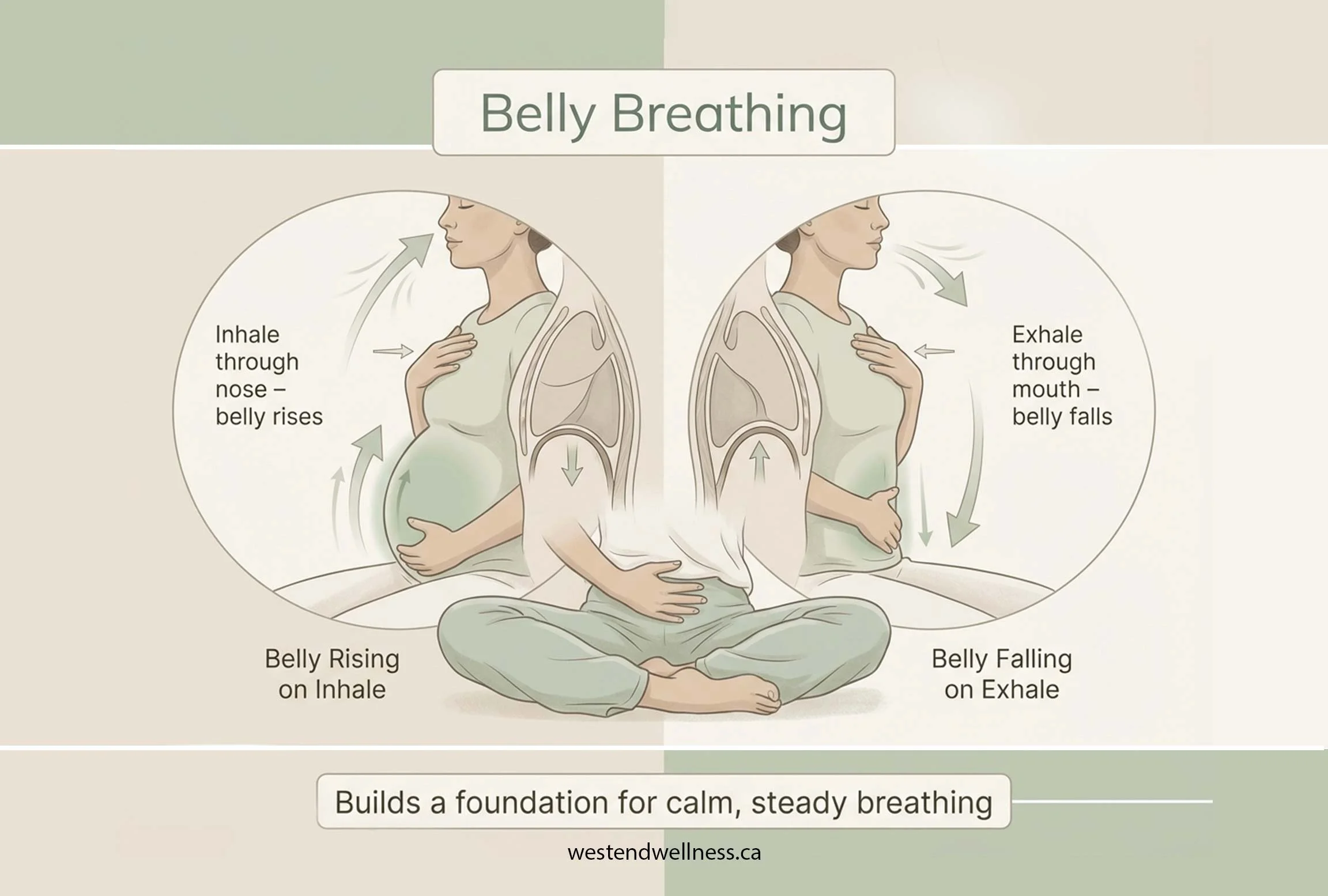
Diaphragmatic breathing changes the game. Your diaphragm is a dome-shaped muscle that sits at the base of your lungs. When you breathe into your belly rather than your chest, the diaphragm contracts downward, pulling air deep into the lower lungs where gas exchange is most efficient. Your blood picks up more oxygen, and your body releases more carbon dioxide.
But the real benefit isn't just about oxygen levels. Deep belly breathing physically stimulates the vagus nerve, the longest cranial nerve in your body. The vagus nerve runs from your brainstem all the way down to your gut, and it acts as a direct line between your brain and your parasympathetic nervous system, the system responsible for rest, digestion, and recovery.
If you want to understand more about how the vagus nerve affects your health, our article on acupuncture and the vagus nerve goes deeper into that connection.
When you exhale slowly, vagus nerve activity increases. Your heart rate drops. Your blood pressure lowers. Cortisol production slows down. Your muscles start to release. According to research published in Frontiers in Human Neuroscience, this respiratory vagal stimulation is one of the main reasons that practices like yoga, meditation, and breathwork produce measurable physical and mental health benefits.
Why Stress Changes the Way You Breathe
When your brain senses danger, real or imagined, your sympathetic nervous system fires up. This is the fight-or-flight response. Your heart beats faster, your muscles tense, and your breathing becomes rapid and shallow.
That response is useful if you're running from an actual threat. It's less useful when the trigger is a packed inbox or a difficult conversation with a colleague.
The problem is that shallow, chest-based breathing feeds the cycle. Rapid breathing tells your brain the threat is still there, keeping cortisol and adrenaline elevated, and your muscles tight and your mind racing. Many people live in this low-grade stress loop for weeks or months without realizing it.
Conscious breathing breaks the loop. When you slow your exhale to be longer than your inhale, you send a clear signal to the vagus nerve: the danger has passed. Your parasympathetic system takes over. Heart rate drops. Muscle tension eases. Your brain shifts from scanning for threats to resting and recovering.
This isn't a placebo effect. A 2023 study published in Cell Reports Medicine found that just five minutes of daily structured breathing (specifically cyclic sighing, where the exhale is longer than the inhale) produced greater improvements in mood and greater reductions in respiratory rate than mindfulness meditation over one month.
Three Breathing Techniques Worth Trying
Not every breathing exercise works the same way. Here are three that are simple, well-studied, and easy to fit into a normal day.
-
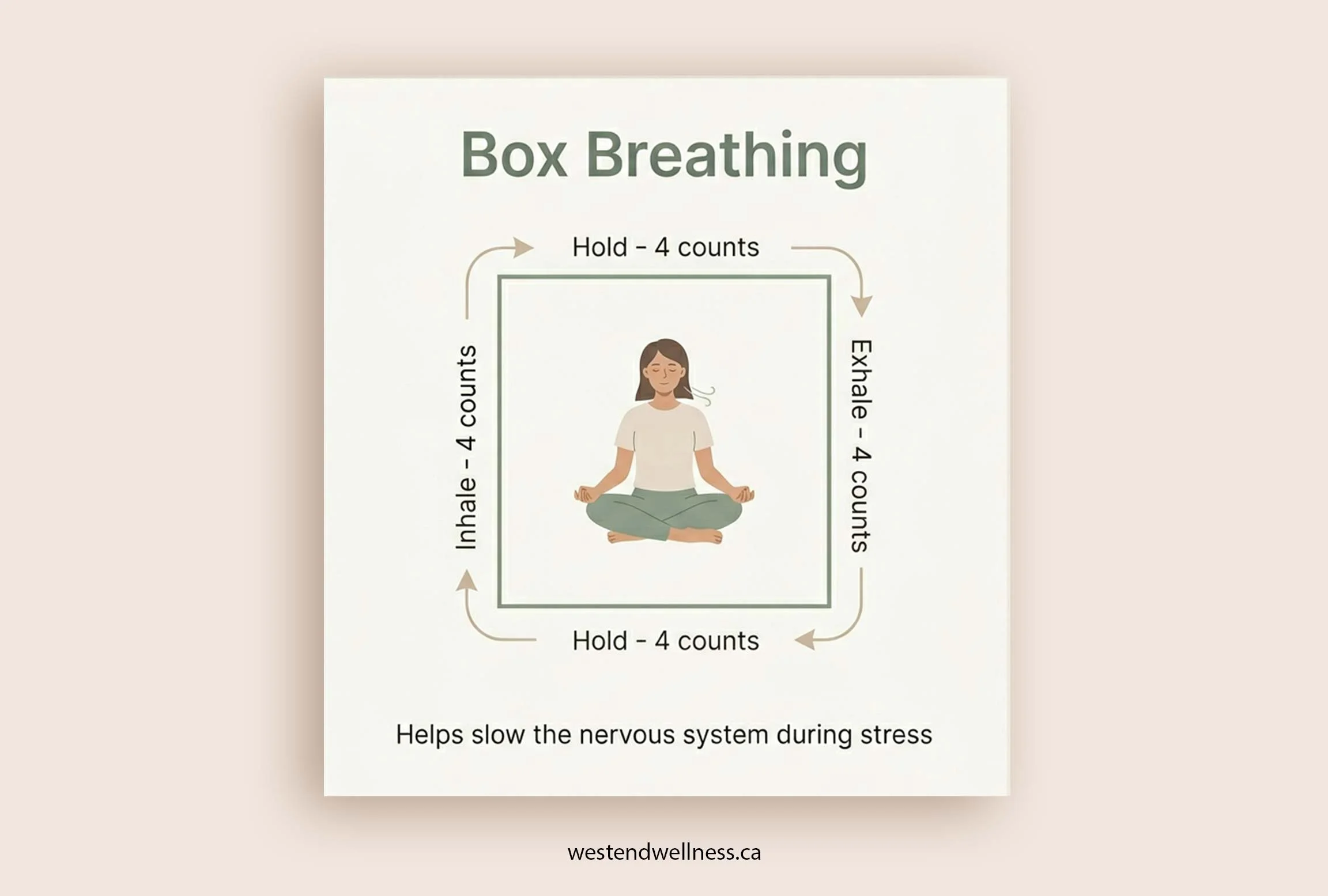
Originally used by Navy SEALs to manage stress in high-pressure situations, box breathing creates a steady, calming rhythm.
Inhale through your nose for 4 counts
Hold for 4 counts
Exhale through your mouth for 4 counts
Hold for 4 counts
Repeat for 4 to 6 rounds
This one works well before a meeting, during a commute, or any time you notice your breathing has become fast and shallow. For a stronger calming effect, try extending the exhale to 6 counts and shortening the second hold to 2.
-
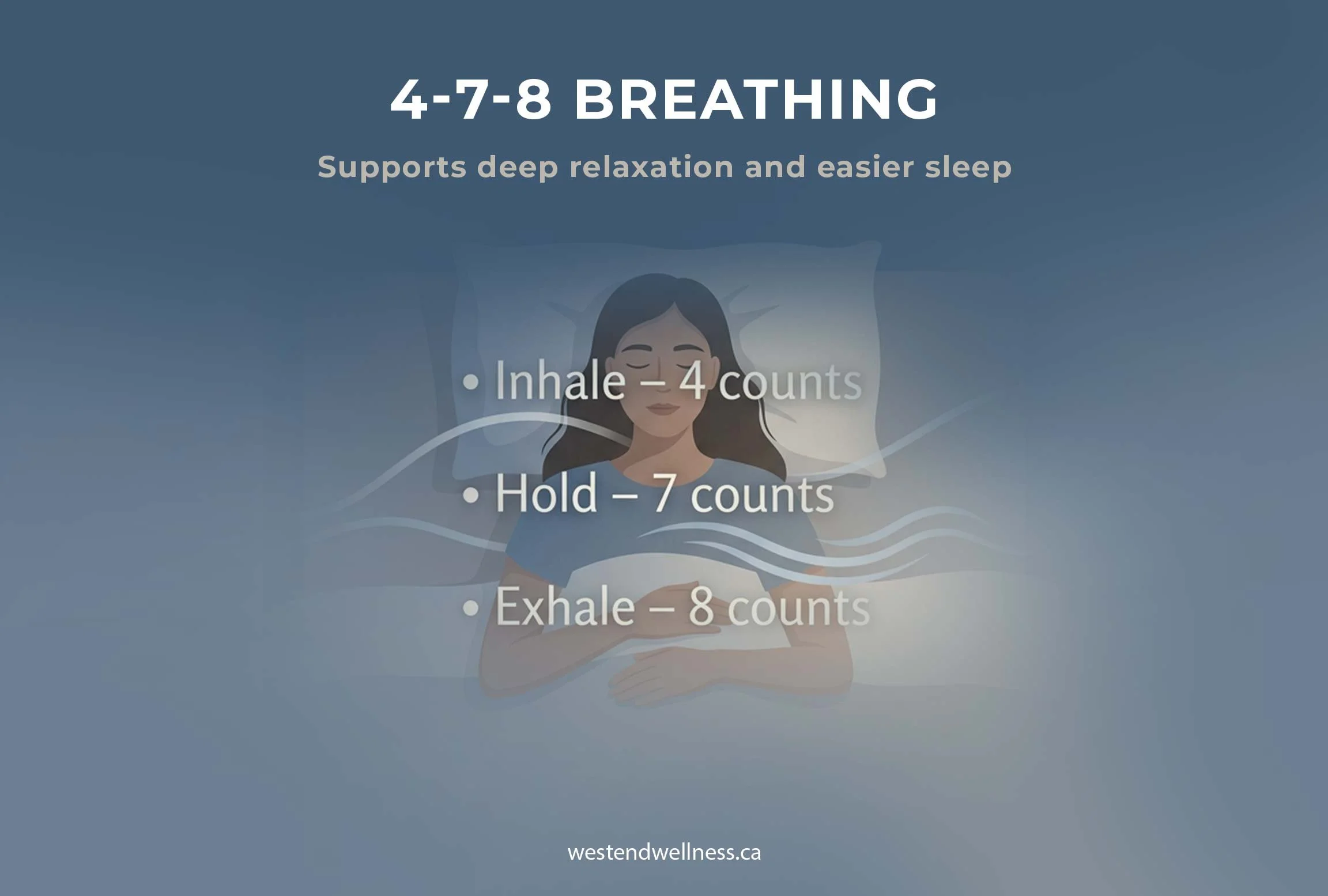
This technique, rooted in the yogic tradition of pranayama, is particularly useful before sleep.
Inhale quietly through your nose for 4 counts
Hold your breath for 7 counts
Exhale completely through your mouth for 8 counts
Repeat for 4 to 8 cycles
The extended exhale activates vagal tone and helps your body transition from alert to restful. If you struggle with falling asleep, doing this in bed with the lights off can make a noticeable difference within a few nights of practice.
-
This is the foundation for all other breathing techniques and the one worth practising most often.
Sit or lie down comfortably
Place one hand on your chest and the other on your belly
Breathe in slowly through your nose, letting your belly rise while your chest stays still
Exhale gently through pursed lips, feeling your belly fall
Continue for 5 to 10 minutes
Cleveland Clinic guidance recommends starting with three to four short sessions per day and gradually building from there. It can feel awkward at first, especially if you've been a chest breather for years. That's normal. It gets easier.
How Breathing Supports Better Sleep
If your mind races the moment your head hits the pillow, your sympathetic nervous system is still running the show. Breathing exercises before bed help shift that balance.
Slow, rhythmic breathing lowers your heart rate and calms the mental chatter that keeps you awake. The 4-7-8 technique is a strong choice here, but even simple belly breathing for five minutes can help signal to your body that it's time to wind down.
One of our clients, Sarah, a barista in Vancouver, had been dealing with sleep issues for years. Her mind raced every night. After a few acupuncture sessions focused on sleep, combined with breathing exercises between appointments, she noticed she fell asleep faster and stayed asleep longer. The combination of nervous system support during treatment and self-care at home made the difference.
Breathing won't replace professional help if you're dealing with chronic insomnia, but it's one of the simplest tools you can add to your wind-down routine.
Breathing and Bodywork: Why They Work Better Together
Breathing exercises are powerful on their own. They become even more effective when paired with hands-on therapies like registered massage therapy or acupuncture.
Here's why massage and acupuncture both influence the same nervous system pathways that breathing targets.
Massage reduces muscle tension, increases circulation, and stimulates parasympathetic activity.
Acupuncture works with the body's meridian system to regulate energy flow and calm the nervous system.
When you add conscious breathing to those treatments, either during the session or as a daily practice between visits, the effects compound. Our article on the science behind massage therapy explains more about how these nervous system pathways work.
Think of it this way. If your nervous system is a dial stuck on high, breathing turns it down a few notches. Massage or acupuncture can further reduce it. Doing both consistently keeps the dial from creeping back up as quickly.
Mark, a 43-year-old office worker who came to West End Wellness for chronic back pain, found that his sessions with his RMT were more effective once he started doing breathing exercises on his own between appointments. The combination of deep-tissue work and daily nervous-system regulation helped him recover faster than either approach alone.
What You Can Do Today?
You don't need to overhaul your routine. Start with one small change and build from there.
A few practical entry points:
Belly Breathing
Box Breathing
4-7-8 Breathing
Deep Breathing
Consistency matters more than duration. Five minutes a day will do more than 30 minutes once a week.

We share five simple ways to help your body settle, from slow breathing and gentle movement to stepping outside for natural light. These small shifts can help calm your nervous system and make it easier for your body to relax again.
Frequently Asked Questions
Can breathing exercises actually reduce pain?
They can help. Deep breathing lowers cortisol and relaxes tight muscles, which reduces the intensity of pain signals reaching your brain. It won't replace treatment for a specific injury, but it supports recovery and can make pain more manageable day to day.
How long before I notice a difference?
Most people feel calmer within the first session. The longer-term benefits, like better sleep and lower baseline stress, typically show up after one to two weeks of daily practice. Even five minutes a day counts.
Is there a wrong way to breathe?
Not exactly, but shallow chest breathing keeps your stress response active. The goal is to breathe slowly into your belly using your diaphragm. If it feels forced or makes you lightheaded, slow down and let the rhythm come naturally.
Can I do breathing exercises alongside massage therapy?
Yes, and they complement each other well. Breathing activates the same parasympathetic pathways that massage and acupuncture target. Practising between sessions helps your nervous system hold onto the benefits longer.
Do I need an app or special equipment?
No. All you need is a quiet moment and your lungs. Apps can help with pacing and reminders if you prefer guided sessions, but they're not required.
Final Thoughts
Breathing is something we all do without thinking. But when you bring a little intention to it, even a few minutes a day, the effects on your stress levels, sleep, and overall recovery can be surprisingly real.
If you've been carrying tension that doesn't seem to let go, or you're looking for a simple way to support the work you're doing with your massage therapist or acupuncturist, conscious breathing is a good place to start. It costs nothing, it takes almost no time, and it works with your body rather than against it.
Our team at West End Wellness can help you build a recovery plan that includes both hands-on treatment and practical self-care strategies. Book online or reach out directly if you have questions.
If you have any further doubts or questions regarding this subject or another treatment, contact one of our experienced Acupuncturists or Registered Massage Therapists here at West End Wellness Clinic. You can either give us a call or make an appointment.
Disclaimer: Please remember this article is for informational purposes only and should not replace professional medical advice. Please consult a healthcare provider or someone with the correct qualifications before starting any new exercise or treatment program.