
Posture at Work: Clinical Recovery and RMT in Vancouver

Table of Contents Show
Quick Summary
Navigating a career in the downtown core often means adapting to an environment that prioritizes screens over spinal health. While ergonomic tools like adjustable chairs and monitor stands provide a vital foundation, they are only one part of the recovery process.
True relief from workday fatigue requires a combination of mindful movement, environmental adjustments, and professional clinical care to address soft tissue memory. By identifying the mechanical patterns of your day and introducing intentional resets, you can move away from the cycle of static loading. This proactive approach allows you to reclaim your energy and maintain a state of supported, effortless performance throughout your week.
TL;DR – The Clinical Case for Postural Recovery
The Mechanical Burden: Prolonged office work forces the spine into a state of "static loading," where blood flow decreases and metabolic waste builds up in the muscles.
The Structural Limit: Even the best ergonomic workstation cannot fully counteract soft-tissue memory, in which your fascia physically shortens to accommodate a slouch.
The Active Reset: Interrupting the cycle of tension requires specific resets, such as the 90-90-90 rule, to maintain a neutral spine and reduce joint compression.
Clinical Intervention: Professional care from an RMT or Acupuncturist provides the necessary reset, manually breaking the tension patterns that self-care alone cannot reach.
It often starts quietly. A tightening across the shoulders that was not there during your morning walk from Burrard Station. A dull pull in the low back that grows heavier as the afternoon light reflects off the downtown glass towers. In Vancouver, where long screen hours are part of daily life, posture strain rarely feels dramatic. It builds gradually.
For professionals working in Coal Harbour offices or from a West End home setup, the body is constantly negotiating gravity. Laptops, phones, and sustained meetings ask you to lean slightly forward for hours at a time. What we call “bad posture” is rarely a conscious decision. It is a physical adaptation to static demands.
Over time, this forward drift creates what research describes as static muscle loading, a state where certain muscles stay activated without adequate circulation. Studies examining the effects of prolonged static loading on muscle fatigue show that reduced blood flow plays a significant role in discomfort and tension buildup. This is not just stiffness. It is a shift in how your tissues are being supplied and supported.
When posture moves away from neutral alignment, the body compensates. Chest muscles tighten. Upper back muscles overwork. Breathing becomes shallower. Energy dips earlier in the day. What feels like mental fatigue is often physical strain layered underneath.
At West End Wellness, we frequently see how hands-on care through Registered Massage Therapy in Vancouver and targeted approaches like Myofascial Release Therapy can help interrupt this cycle. But the first step is awareness. Once you understand why workday fatigue shows up in your shoulders, neck, and low back, you can move beyond quick posture reminders and toward meaningful recovery.
This article will explore what desk posture is really doing to your body, how it affects performance and focus, and what practical shifts can help you feel more supported throughout your day in Vancouver.
The Mechanics of the Modern Workstation
Ergonomic injuries are a significant physical burden for the modern professional, with an estimated 40% of office workers suffering from repetitive strain or postural illnesses. As the transition to home offices and laptop-based work has accelerated, so has the frequency of these injuries. Correcting your posture at work is no longer just about comfort; it is a vital step in preventing long-term structural damage.
The 90-90-90 Foundation
To support the body's natural curvature and spine, you should aim for a position known as 90-90-90. This requires adjusting your chair and workstation until your elbows, knees, and feet are all resting at 90-degree angles. This set position provides a stable base that minimizes the need for your muscles to "brace" against the pull of gravity throughout the day.
Centering Your Focus
Maintaining your center is a game of inches. A helpful rule of thumb is to ensure the "G" key on your keyboard is aligned directly with your belly button. This prevents overextension and keeps your shoulders from shrugging or rotating forward. Similarly, your mouse should remain in close proximity to the keyboard to avoid reaching, which is a common cause of shoulder knots and neck spasms.
Elevating the Screen
While shoulder tension often comes from the desk surface, neck pain is frequently driven by the height of your monitor. If you are working from a laptop, using a dedicated stand can heighten your screen so that your head remains at a 90-degree angle relative to your spine. This small adjustment prevents the "forward-head drift" that leads to chronic fatigue by the end of your workday.

Investing in Your Foundation: The Ergonomic Essentials
While expensive equipment is no substitute for mindful movement, your physical environment sets the stage for your recovery. To break the cycle of static loading, your workspace requires a foundational set of tools that allow for a neutral spine.
The Non-Negotiables
To achieve a sustainable 90-90-90 position, three core elements are essential:
A dedicated desk to provide a stable, level surface for your arms.
A height-adjustable office chair to ensure your feet are grounded and your lumbar curve is supported.
A laptop stand or external monitor to bring your visual focus to eye level, preventing the "forward-head drift" that leads to neck strain.
Supportive Enhancements
Once your foundation is set, additional accessories can further customize your space to your specific needs. While items like ergonomic keyboards, monitor arms, and footrests require an initial investment, they provide long-term insurance against repetitive strain. Choosing the right equipment is a matter of personal preference, but the goal remains the same: reducing the mechanical demand on your joints and soft tissues.
Beyond the Chair: The Role of Active Recovery
Even with the highest-quality equipment, the human body was not designed for prolonged stillness. Furniture provides support, but movement provides life. Suffering in the long term becomes inevitable if we rely solely on our chairs without addressing our internal habits.
The Power of the Micro-Break
To ease your back and neck muscles, aim to incorporate a mindful stretch every 30 to 60 minutes. These brief intervals of movement serve as a "reset" for your nervous system. Including targeted exercises in your daily regimen, such as Downward Dog or Child’s Pose, specifically addresses the compression that builds in the lower back after hours of sitting.
Practicing yoga or regular stretching is not just a secondary activity; it is a vital practice for your well-being. Since the shift to remote work, back pain has become the primary workplace injury. By combining a professional ergonomic setup with active, intentional movement, you can navigate your workday with clarity and ease.

If you are experiencing acute back pain and require immediate relief, a heat patch can be an effective tool to soothe local discomfort. For more intense pain, over-the-counter options may provide temporary relief, though these should be used in conjunction with structural changes to your workstation.
Correcting your posture is a long-term process with multiple paths to success. It is important to evaluate which ergonomic shifts fit your specific daily routine and environment.
Regular exercise is one of the most effective ways to reduce lumbar strain. Beyond the physical benefits of a stronger core, a consistent routine improves your confidence and overall vitality.
Your nutritional choices also play a role in how your body manages discomfort. Leafy greens like kale, spinach, and broccoli contain natural anti-inflammatory properties that can help manage chronic aches. Other options such as nuts, salmon, and even red wine in moderation can support your recovery.
Maintaining a healthy weight is another critical factor for postural health. Carrying extra weight in the midsection can shift your center of gravity forward, placing undue stress on the lower spine. By making these intentional changes to your lifestyle and workspace, you can move toward a more comfortable, pain-free work experience.
The Biological Barrier: Understanding Soft Tissue Memory
Even with the highest quality ergonomic chair, you may find your body naturally drifting back into a slouch after only a few minutes. This occurs because your fascia and muscles have developed what is known as soft tissue memory. When the body is held in a static position for years, the connective tissues physically shorten and thicken to accommodate that shape.
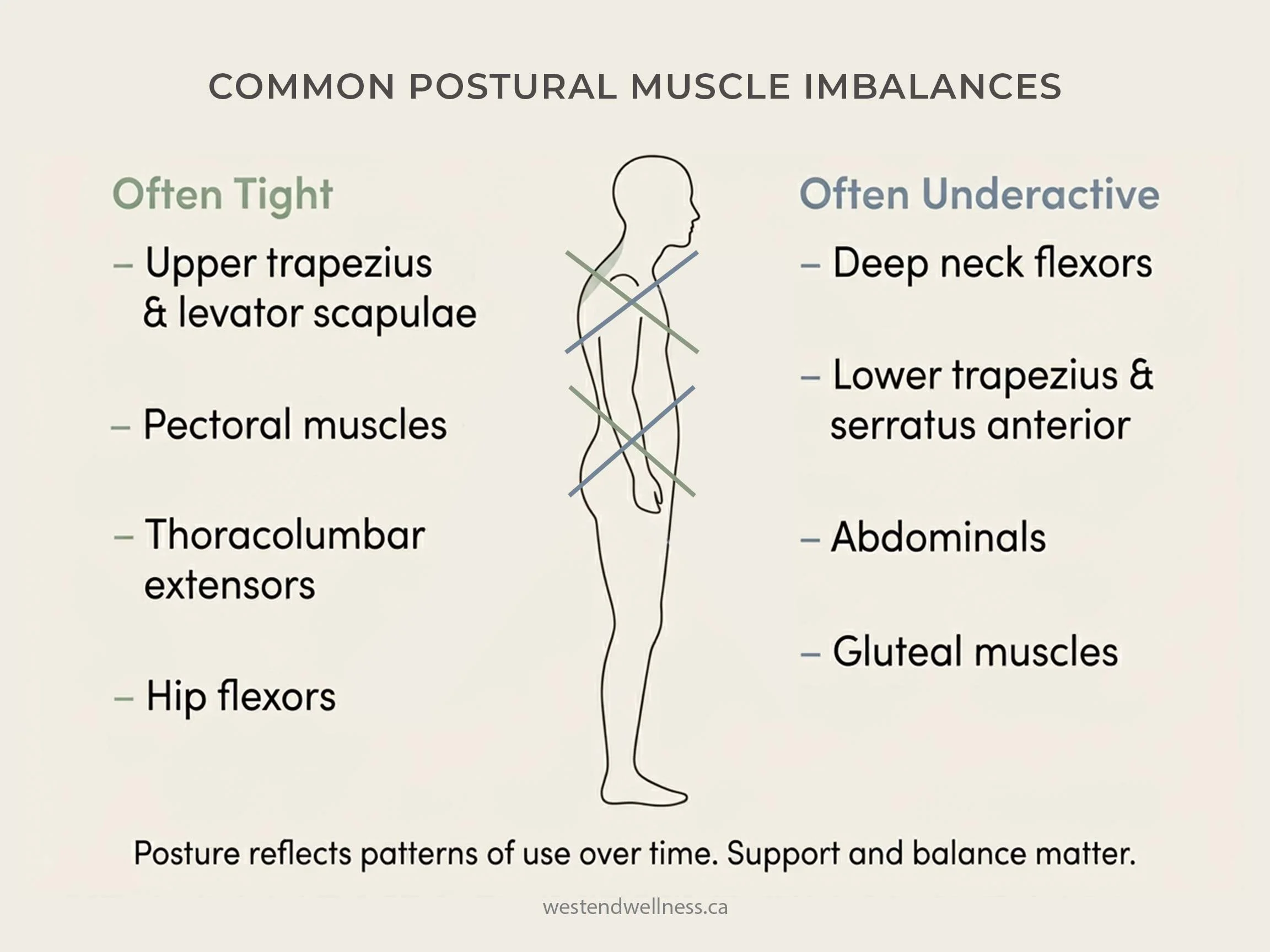
This structural adaptation means that "sitting up straight" requires constant conscious effort and muscle strain. To truly change your posture, these shortened tissues must be manually released. This is where clinical intervention becomes essential.
Techniques used in Registered Massage Therapy and Acupuncture help break these tension patterns, allowing your nervous system to adopt a more neutral, supported alignment.
The Stress-Posture Loop
There is a powerful connection between your mental state and your physical frame. When deadlines loom in a high-pressure environment, the body naturally enters a protective state, shrugging the shoulders and shallowing the breath. This mechanical shift increases cortisol levels, which in turn makes you feel more fatigued and less resilient to stress.
Breaking this loop requires a dual approach. While you optimize your desk height and find your neutral spine, incorporating mindful breathing can lower the systemic tension that pulls you out of alignment. A relaxed nervous system is the foundation of a relaxed posture.

Struggling with nagging shoulder pain that just won’t go away? This article explores how Chinese medicine offers effective relief through treatments like acupuncture, cupping, and herbal therapy.
Frequently Asked Questions
How long does it take to fix years of bad posture?
Correcting long term postural habits is a gradual process. While ergonomics provide immediate relief, it often takes several weeks of consistent movement and clinical treatment to retrain soft tissue memory and adjust how your body naturally holds itself.
Can a single RMT session help with desk job fatigue?
A single session can provide significant relief from acute tension and the "3 PM ache" at the base of your skull. However, to address the underlying structural imbalances caused by years of office work, a series of treatments is usually recommended.
Is a standing desk actually better for my back?
A standing desk is beneficial because it encourages movement and prevents the "seated slouch," but standing still for too long can create its own set of strains in the lower back and legs. The best approach is to alternate between sitting and standing every 30 to 60 minutes.
Why does my neck hurt even if I have a "perfect" chair?
Even with the best equipment, your body is meant for movement. Static loading—holding any position for too long—restricts blood flow to the muscles. Additionally, your body may be fighting against old soft tissue memory that pulls you out of your neutral spine position.
Professional Support for Lasting Change
Correcting years of workday strain is rarely a solo journey. While the right equipment and stretches are vital for daily maintenance, professional clinical care provides the reset your body needs to make those changes permanent.
At West End Wellness, our team of practitioners is dedicated to helping you navigate the physical demands of your career. By addressing the deep-seated tension in soft tissue memory, we help you return to effortless, pain-free performance.
If you have any further doubts or questions regarding this subject or another treatment, contact one of our experienced Acupuncturists or Registered Massage Therapists here at West End Wellness Clinic. You can either give us a call or make an appointment.
Disclaimer: Please remember this article is for informational purposes only and should not replace professional medical advice. Please consult a healthcare provider or someone with the correct qualifications before starting any new exercise or treatment program.