
Is Your Body Trying to Tell You Something? The Benefits of Therapeutic Massage

Table of Contents Show
Quick Summary
Therapeutic massage offers more than relief for sore muscles. It is a vital tool to calm a busy nervous system, improve sleep, and ease tension headaches caused by screen time and stress. By helping your body move out of "fight or flight" mode, massage creates the space needed for real physical and mental recovery.
This article explores the lesser-known benefits people notice after a session, like improved mental clarity and jaw relief. Read on for an honest look at how therapeutic massage supports your body beyond simple relaxation.
TL;DR – Benefits of Therapeutic Massage You Might Not Know
It is a responsive, honest conversation with your body over time
Many people notice better sleep early on (even before pain fully settles)
It can reduce tension-related headaches and jaw pain
It calms the nervous system to improve mental clarity
It works best as supportive, consistent care rather than a "quick fix"
Most people book a massage because something feels off.
Maybe it is the tight neck that shows up halfway through the workday or the shoulders that never quite drop. It might be that wired but tired feeling where you are exhausted at night but still cannot fall asleep. At some point, you start wondering if massage does more than just help things feel less tight.
That question usually comes from experience. You have had a session before and noticed something unexpected. You slept better. Your jaw felt softer. You handled stress differently the next day. And now you are curious why.
This article discusses the quieter and less obvious benefits of therapeutic massage. These are the shifts people do not always expect but often mention after a few sessions. We will explore things like nervous system calm, sleep support, mental clarity, and how your body recovers from long days of sitting, thinking, and holding it all together.
There is no medical jargon or overpromises here. This is just an honest look at how therapeutic massage can support your body in ways that go far beyond sore muscles.
Why Massage Often Helps More Than Just Sore Muscles
A lot of people walk into their first massage thinking very practically.
“My shoulders are tight.”
“My lower back feels off.”
“I’ve been sitting too much.”
Those are real reasons. And yes, therapeutic massage can help with all of that. But what surprises many people is how much else changes afterward.
They leave feeling calmer than expected. Their breathing feels deeper. Their jaw isn’t clenched on the walk home. That familiar tightness in the chest or upper back doesn’t rush back the next morning like it usually does.
That’s because therapeutic massage doesn’t just work on muscles. It works with your nervous system.
When the body has been under steady pressure from long workdays, deadlines, screens, and constant mental load, it adapts. Muscles stay guarded. Breathing becomes shallow. The body stays slightly braced, even at rest.
Massage helps interrupt that pattern. Through touch, pressure, and rhythm, the body gets a signal that it’s safe to soften. Blood flow improves. Muscles release, yes, but so does the underlying holding that keeps them tight in the first place.
This is why people often notice subtle yet meaningful changes. Less reactivity. A sense of ease that lasts beyond the session. A feeling that their body is working with them again instead of against them.
Understanding this bigger picture helps explain many of the benefits people don’t expect from therapeutic massage. And it sets the stage for what we’ll talk about next.
Is Therapeutic Massage Right For You?
Sometimes the answer is obvious. You’re in pain, you feel tight, and you want relief.
But often it’s more subtle than that.
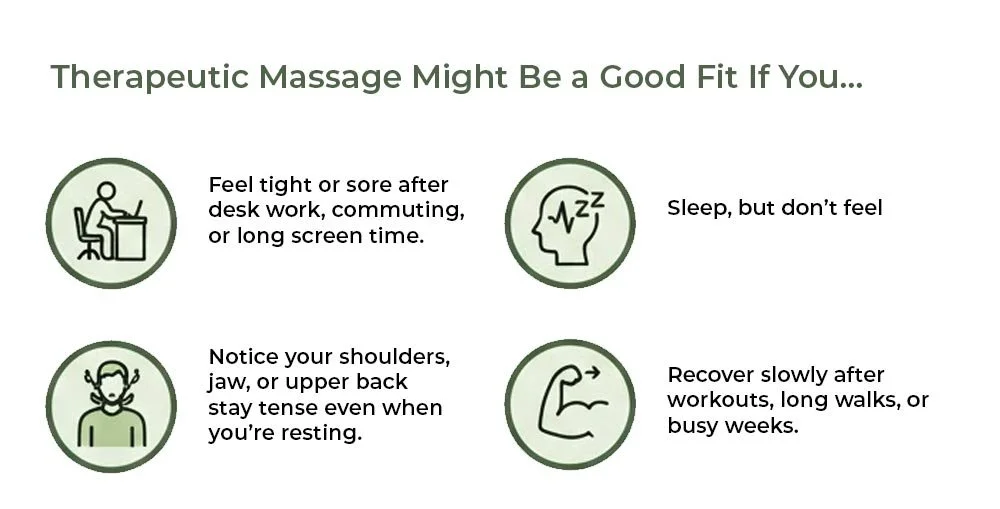
You’re not in a full-blown crisis. You’re just carrying a lot. You wake up already tense. Your shoulders live somewhere near your ears. You get through your workday, but your body feels like it’s bracing the whole time. By the time you finally stop moving, you’re too wired to properly rest.
If that sounds familiar, therapeutic massage might be less about fixing one sore spot and more about helping your body feel like a better place to live in.
A good way to think about it is this: if your nervous system has been running overtime, your muscles usually follow. Massage can help you step out of that pattern, even if you can’t change your schedule overnight.
A Gentle Way To Check In With Yourself
Ask yourself:
When was the last time my body felt truly relaxed, not just distracted?
Do I notice tension after work, or only when it becomes pain?
Does my sleep feel restorative, or am I always recovering from being tired?
Do I feel like my body is keeping up with my life, or dragging behind it?
If any of those hit a nerve, you’re not alone. Most downtown Vancouver professionals live with low-grade tension for so long it starts to feel normal. That’s often the moment therapeutic massage starts making sense.
How Massage Helps When You Feel Constantly “On”
A lot of people don’t describe themselves as stressed.
They’re functioning. They’re getting through the day. Work is busy but manageable. Life keeps moving. And yet, their body tells a different story.
Shoulders that never fully drop. A jaw that stays clenched without noticing. Breathing that sits high in the chest. A nervous system that doesn’t really power down, even after work is done.
This is what feeling constantly “on” looks like in the body.
Therapeutic massage helps by giving your nervous system a different experience. One where it doesn’t have to anticipate the next email, meeting, or interruption. One where it’s allowed to settle rather than stay alert.
From a practical standpoint, this matters more than people realize. When your nervous system stays in a low-grade state of tension, muscles recover more slowly. Sleep is lighter. Pain lingers longer. Small stressors feel bigger than they should.
Massage helps shift that baseline. The pressure and pacing encourage the body to move out of fight-or-flight mode and into a more restorative state. Heart rate slows. Breathing deepens. Muscles don’t have to stay braced.
For many downtown Vancouver professionals, this shows up in very tangible ways. They feel less reactive in meetings. Their neck and shoulders don’t tighten as quickly during the workday. They finish the day with more energy left instead of feeling completely spent.
It’s not about zoning out or escaping life. It’s about helping your system reset so it can handle life with a bit more ease.
And that nervous system shift often explains why other benefits start to show up next, sometimes in places people weren’t expecting.
What Therapeutic Massage Realistically Can and Cannot Do
In the wellness world, massage is often sold as a "fix." We talk about it in extremes: either it is a luxury indulgence or a miracle cure for every ache. The truth is much steadier and more personal than that.
Support, Not Force
Therapeutic massage is designed to support your body’s natural rhythm. It helps reduce physical tension, improves movement, and coaxes the nervous system out of "fight or flight" mode. It makes pain feel more manageable and helps the weight of daily stress land a little more softly.
However, a massage cannot force change. It does not override what your body isn't ready to release, and it does not replace medical care. Because everybody is a unique map of sleep habits, workload, and history, the results are rarely a one-size-fits-all reset. For those seeking deeper medical insights, the Registered Massage Therapists' Association of British Columbia offers valuable resources on the clinical standards of practice.
The Body as a Conversation
Think of a massage less like a light switch and more like a conversation.
Each session provides your nervous system with new information. Sometimes that conversation is loud and clear, resulting in immediate relief. Other times, the results are subtler. You might find yourself:
Realizing you are finally sleeping through the night.
Noticing that the tension between your shoulder blades isn’t building as fast.
Becoming aware of exactly when you start clenching your jaw during the workday.
Why Flexibility Matters
This is why therapeutic massage works best when it is responsive rather than rigid. At West End Wellness, we believe the pressure should adjust, and the focus should shift based on how you feel in the moment, not based on a preset routine.
When we work with your body instead of on it, we build something better than temporary comfort. We build trust. This responsive approach allows massage to support both physical and nervous system health in a way that feels safe, sustainable, and truly human.
Can A Massage Affect Your Sleep?
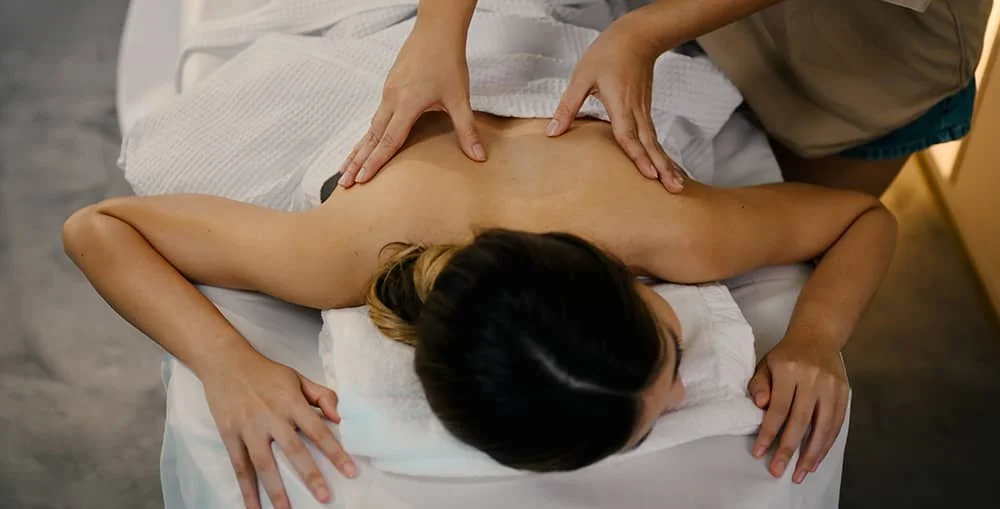
This is one of the most common things people mention to us, even when sleep was not the primary reason they booked their appointment.
Usually, they do not say it right away. It comes up casually at the start of the next session. They might say they slept more deeply than usual, or they might notice they did not wake up as often during the night. Some people find they actually feel rested when their alarm goes off for the first time in weeks.
What is interesting is that these improvements often happen before the physical pain fully settles. That is not a coincidence.
When your nervous system has been running on high alert for a long time, sleep becomes lighter and more fragmented. Your body stays in a state of half-awake, always ready to respond to perceived threats or stressors. Massage helps interrupt that exhausting pattern.
Instead of trying to force sleep, a session helps your body remember how to rest. By calming the "fight or flight" response, massage creates the physical and mental quiet your brain needs to finally drop into a deeper state of recovery.
How therapeutic massage can support sleep?
You might notice changes like:
Falling asleep faster because your body feels calmer
Fewer middle-of-the-night wakeups
Less tossing and turning due to muscle tension
Waking up feeling less wired, even on busy weeks
From a practical standpoint, better sleep creates a ripple effect. Muscles recover more efficiently. Stress feels easier to manage. Pain doesn’t flare as quickly. That’s why massage is often part of care for people who feel tired all the time, even if they’re technically getting enough hours in bed.
If sleep has been an ongoing issue, many people explore massage alongside other supportive strategies. We discuss this connection in our sleep and stress-related blog posts, especially when nervous system overload is a factor.
The key thing to know is this: massage doesn’t knock you out or override your system. It creates the conditions where rest becomes possible again. And once sleep starts to improve, other patterns often shift too.
Connection Between Massage, Headaches, And Jaw Tension
Many people think of a headache as something that happens strictly inside the head. When one strikes, the typical response is to drink more water, adjust the screen brightness, or stretch a bit and hope for the best.
While those things can help, we often miss how much of a typical workday headache actually starts below the skull.
Think about the physical toll of a long day. You might spend hours at a computer with your shoulders creeping upward toward your ears without noticing. You might have a jaw that stays lightly clenched through every meeting, email, and commute. Over time, these repetitive patterns create a constant, physical pull through the neck, the temples, and the base of the skull. This often results in what is known as a tension-type headache, which is one of the most common forms of head pain.
Therapeutic massage helps by addressing the source of the tension rather than just focusing on where the pain shows up. By releasing the muscles in the jaw, neck, and shoulders, we can reduce the pulling sensation that triggers the ache. It is about quietening the areas that are feeding the pain so your body can find a more neutral, relaxed state.
A Quick Self-Check: Try this right now. Part your teeth slightly and let your tongue rest on the floor of your mouth. Did you feel your jaw drop? If you did, you were likely holding tension without realizing it.
If you find that this tension is a recurring part of your life, our Neck and Shoulder Focus sessions are specifically designed to help break that cycle and provide lasting relief.
Common tension patterns linked to headaches
Many people are surprised to learn how often headaches are connected to:
Tight muscles along the upper neck and shoulders
Jaw tension from clenching or grinding
Limited movement through the upper back
Shallow breathing that keeps the chest and neck working overtime
When these areas stay guarded, blood flow is reduced, and nerves become more sensitive. Headaches can feel frequent, dull, or like a constant pressure that never fully clears.
Massage helps release these patterns gradually. Not by forcing muscles to relax, but by giving the body a chance to let go of what it’s been holding all day.
Over time, people often notice their headaches feel less intense, happen less often, or resolve more quickly when they do show up. Jaw tension softens. Neck movement feels easier. That background tightness isn’t always there waiting to flare. For people who live and work at a desk, this connection can be a turning point. It shifts the focus from chasing symptoms to understanding what’s driving them.

Ever wondered what sets a Registered Massage Therapist (RMT) apart? This article breaks down the real benefits of seeing an RMT, including pain relief, stress reduction, improved posture, and better sleep.
Frequently Asked Questions
What five parts of the body are not allowed to be massaged?
While massage is safe for most of the body, there are certain areas where nerves, arteries, or veins are close to the surface and unprotected by muscle. These include:
The Front of the Neck: Specifically, the anterior triangle, where the carotid artery and jugular vein are located.
The Armpit (Axilla): This area contains sensitive lymph glands and major nerves for the arm.
The Inner Elbow: Also called the funny bone area, this region contains the ulnar nerve and the brachial artery.
Behind the Knee (Popliteal Space): This area houses the large popliteal artery and nerves.
The Groin (Femoral Triangle): This contains the femoral nerve and major blood vessels.
Does massage help gout?
Massage is not recommended during an acute gout flare-up. Gout is an inflammatory condition caused by crystal deposits in the joints, and any pressure can significantly increase pain. However, once the flare-up has completely subsided, massage can be helpful for general circulation and relieving muscle tension. For more information on managing inflammatory conditions, the Registered Massage Therapists' Association of British Columbia provides excellent patient resources.
Is massage good for osteoporosis?
Yes, massage can be very beneficial for those with osteoporosis, but it must be performed with caution. The goal is to improve circulation and reduce muscle stiffness without putting excessive pressure on the bones. If you have osteoporosis, please inform your therapist so they can avoid heavy pressure or forceful stretching. We focus on gentle, supportive techniques that prioritize your safety.
What are three instances when a massage is not recommended?
There are times when the body needs medical rest rather than a massage. Three common instances include:
Fever or Contagious Illness: If your body is fighting an infection, a massage can overstimulate your system and make you feel worse.
Blood Clots (DVT): If there is a risk of a blood clot, massage is strictly avoided because it could dislodge the clot.
Acute Inflammation or Injury: This includes new fractures, severe burns, or skin infections that are red, swollen, and hot to the touch. You can read more about massage contraindications to see if a session is right for you today.
What should a massage therapist not do?
A professional therapeutic relationship is built on trust and clear boundaries. A massage therapist should never:
Perform a session without your consent: You have the right to stop or change the treatment at any time.
Provide a medical diagnosis: While we can identify tight muscles, we do not diagnose medical conditions.
Ignore your feedback: If the pressure is too much, your therapist should adjust immediately.
Work outside their scope of practice: This includes performing spinal adjustments or suggesting you stop taking prescribed medications.
If you have questions about a specific condition or want to see how we can tailor a session to your needs, feel free to explore our Services Page or contact us directly.
Final Thoughts
Therapeutic massage is often booked for one clear reason. A sore neck. A tight back. A body that feels worn down after long days.
What many people discover along the way is that the benefits reach further than they expected.
It can support sleep when rest has felt out of reach. It can help your nervous system slow down after spending most of the day in a state of constant alertness. It can ease headaches, jaw tension, and that low-level tightness that quietly builds over time. Not because it forces the body to change, but because it gives the body space to respond differently.
For busy downtown Vancouver professionals, that kind of support matters. Life doesn’t always slow down. Work stays demanding. Stress shows up whether we label it or not.
Therapeutic massage fits into that reality. It’s not about escaping your routine or fixing everything at once. It’s about helping your body handle the load more comfortably and recover more fully between it all.
When massage works well, it feels steady and supportive. Something you notice not just on the table, but in how you move through your day afterward.
And for many people, that’s the benefit that matters most.
If you have any further doubts or questions regarding this subject or another treatment, contact one of our experienced Acupuncturists or Registered Massage Therapists here at West End Wellness Clinic. You can either give us a call or make an appointment.
Disclaimer: Please remember this article is for informational purposes only and should not replace professional medical advice. Please consult a healthcare provider or someone with the correct qualifications before starting any new exercise or treatment program.