
How Often Should You Get Acupuncture? What to Expect Over Time
Table of Contents Show
Quick Summary
How often you should get acupuncture depends on your body, your symptoms, and what you’re hoping to improve. Some people benefit from weekly sessions at the beginning, especially when dealing with stress, pain, or sleep issues, while others need less frequent care.
This article explains how acupuncture frequency works, what most people experience early on, and how treatments often change over time. You’ll also learn what acupuncture can support and how to find a schedule that feels realistic and supportive.
TL;DR – How Often Should You Get Acupuncture?
There’s no one set schedule for acupuncture
Frequency depends on symptoms, stress, and how long issues have been present
Many people start weekly, then space sessions out
Acupuncture often supports sleep, stress, and pain together
Progress is measured by small, meaningful changes over time
If you’ve ever found yourself Googling acupuncture late at night, chances are you were looking for something specific. Maybe your sleep has been off. Maybe stress is sitting heavily in your chest. Or maybe you had one great acupuncture session and thought, OK… now what?
How often am I actually supposed to do this?
We hear this question all the time in our clinic here in Vancouver. People are curious.
They want acupuncture to help, but they also want it to make sense in real life. Between work, family, and everything else pulling at your attention, committing to care needs to feel doable, not overwhelming. You’re not looking for vague answers. You’re looking for clarity.
This article is here to give you exactly that. We’ll talk through how often people typically get acupuncture, why frequency matters, and how it can support things like sleep, stress, and ongoing health concerns. We’ll also clear up some common misconceptions and help you understand what acupuncture can and cannot do.
Think of this as a calm, honest conversation with a practitioner who wants you to feel informed, confident, and supported before you ever step into the treatment room.
How often should you get Acupuncture?
This is usually the moment in the appointment when someone leans back on the table, looks over, and asks, "So how often should I be coming in?" It’s a fair question. Acupuncture isn’t like taking a daily supplement or popping in once a year for a checkup. It works with your body over time, which means frequency actually matters.
The short answer is this. There’s no universal schedule. And that’s not a cop out. It’s one of acupuncture's strengths.
Why Acupuncture Frequency Is Different for Everyone
Your body has its own rhythm. Your nervous system, stress levels, sleep patterns, and how long something has been bothering you all play a role. Someone dealing with a recent issue, like a flare-up of neck pain or a stressful stretch at work, may respond quickly. Another person who has been carrying symptoms for years might need a little more consistency at the start.
From a practitioner’s point of view, acupuncture is less about chasing symptoms and more about helping your system settle, reset, and respond. That process looks different depending on where you’re starting from. It’s also why two people with the same concern can follow completely different treatment plans and both get great results.
Typical Acupuncture Schedules We See in the Clinic
In real life, most people fall into a few broad patterns.
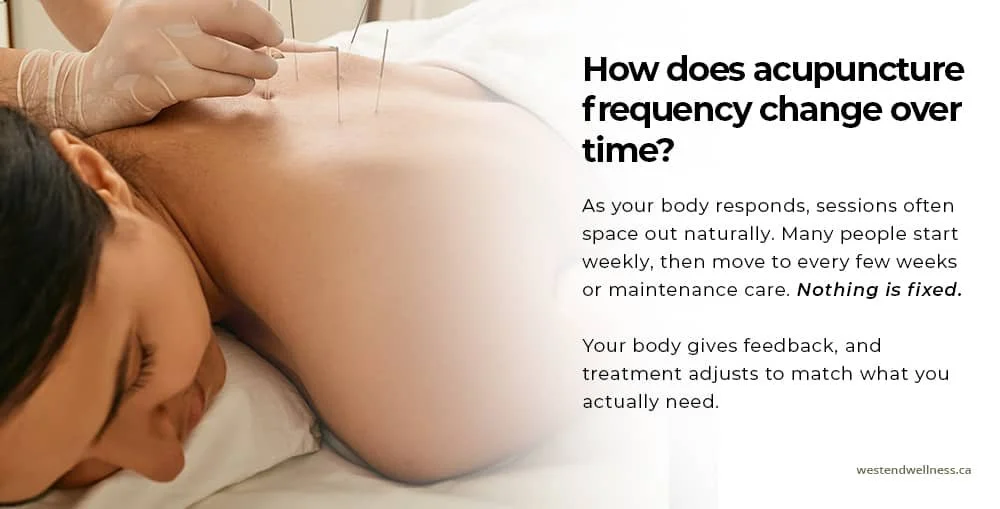
For newer or more intense concerns, we often suggest starting a bit closer together. Think once a week for a short period. This gives your body a chance to build momentum and helps us see how you’re responding without long gaps in between.
For ongoing or longer term issues, consistency still matters, but the plan usually evolves. After an initial phase, sessions often space out to every two or three weeks as things stabilize.
Then there’s maintenance care. This is where people come in because they feel better and want to stay that way. It might be once a month or even less. These visits tend to feel more like tune ups than problem solving.
The key thing to know is that schedules are adjusted as you go. Nothing is locked in. Your body leads the way.
How Long Before You Notice Results?
This is another question we hear a lot, usually paired with a hopeful smile. And the honest answer is that changes can show up sooner than people expect, but they’re often subtle at first.
Some people notice better sleep, a calmer mood, or less tension after a few sessions. Others realize a change when they look back and think, Wait, I haven’t felt that pain in a while. Acupuncture often works quietly in the background, supporting your system before dramatic shifts happen.
What matters most is paying attention to small wins and giving your body enough time to respond. Acupuncture isn’t about forcing change. It’s about creating the right conditions so change can happen naturally.

Acupuncture, Sleep, and the Nervous System: What Science Reveals
Calming the Nervous System for Better Sleep
One way acupuncture may improve sleep is by soothing an overactive nervous system. According to experts at the Cleveland Clinic’s integrative medicine center, acupuncture triggers various neurological responses.
It stimulates the nervous system and causes the release of natural chemicals like endorphins and serotonin, which help us relax and feel good.
In simple terms, those tiny needles cue your body to shift from “fight-or-flight” mode into a more restful, relaxed state, creating a sense of well-being that can last for hours. This deep relaxation response is crucial – when your mind and body are calm, falling asleep and staying asleep becomes much easier.
Evidence of Improved Sleep Quality and Stress Relief
Beyond tradition and theory, modern research is uncovering concrete evidence of acupuncture’s benefits for sleep. In one clinical study, people with insomnia received acupuncture treatments for five weeks; the results were striking.
Their bodies began producing more melatonin at night, a hormone essential for regulating the sleep-wake cycle, and they fell asleep faster and stayed asleep longer. Notably, these patients also experienced reduced anxiety levels. This aligns with many anecdotal reports that acupuncture’s calming effect can ease stress and quiet an anxious mind, which often underlies chronic sleep problems.
Together, the physiological boosts (like balanced hormones and a tuned-down stress response) show how acupuncture can set the stage for more restful, rejuvenating sleep – all achieved in a natural way.
Bringing It All Together
What does this mean for someone struggling with sleepless nights or frazzled nerves? Essentially, acupuncture offers a two-fold approach: it helps regulate the nervous system (so your body can switch into relaxation mode), and it addresses underlying issues like hormone imbalances or anxiety that interfere with sleep.
Major North American health institutions acknowledge these benefits, from the nervous system balance the Cleveland Clinic describes to the improved sleep quality seen in clinical trials. While everyone is different, integrating acupuncture into your wellness routine could be a gentle yet powerful way to support better sleep, reduce stress, and restore the internal balance that underpins healthy rest.
The evidence, both scientific and experiential, makes a hopeful case for acupuncture as a valuable tool in achieving sweet dreams and a calmer mind.

What Diseases Can Acupuncture Cure?
This question comes up a lot, and it’s an important one to answer honestly. Most people asking it are trying to figure out if acupuncture is worth their time, money, and energy. They want real answers, not marketing language.
So let’s be clear and respectful of your intelligence.
What Acupuncture Can and Cannot Do
Acupuncture does not “cure” diseases in the way a medication or surgery might claim to. And any practitioner who promises cures is stepping outside responsible care.
What acupuncture does very well is support the body’s natural ability to regulate and heal itself. It works alongside your nervous system, immune response, circulation, and hormone balance. That means it often helps reduce symptoms, improve function, and support overall well-being, especially when used consistently.
Acupuncture is best seen as supportive care. It complements medical treatment rather than replacing it. Many people use it alongside care from their doctor, physiotherapist, or counsellor, especially when symptoms don’t have a simple fix or keep returning.
That’s not a limitation. It’s actually why acupuncture fits so well into long-term wellness.
Conditions Acupuncture Commonly Supports
We see acupuncture most often used to support patterns rather than labels. People don’t usually come in saying a diagnosis. They come in saying how they feel.
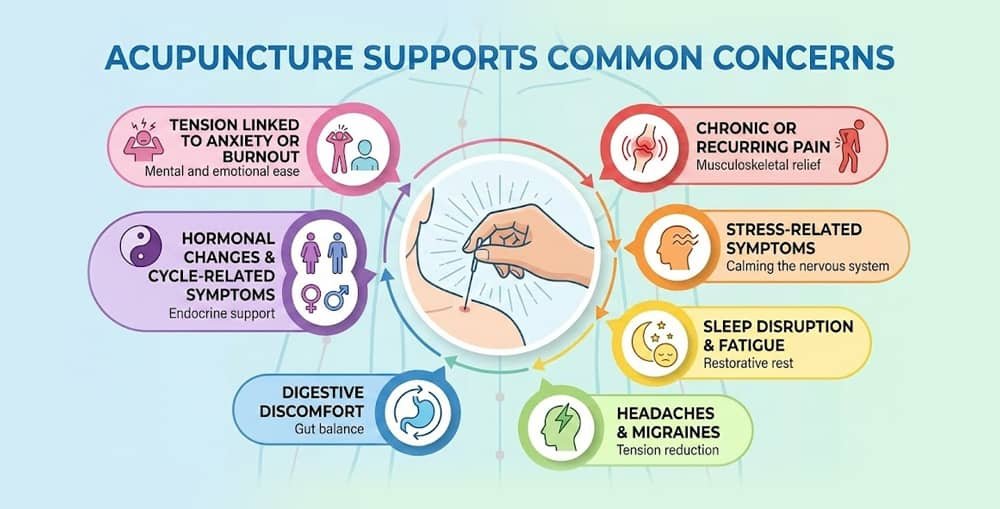
Some of the most common concerns acupuncture supports include:
Chronic or recurring pain
Stress-related symptoms
Sleep disruption and fatigue
Headaches and migraines
Digestive discomfort
Hormonal changes and cycle-related symptoms
Tension linked to anxiety or burnout
What these conditions often share is nervous system involvement. When the body stays in a stressed or reactive state for too long, symptoms tend to linger. Acupuncture helps calm that internal noise, giving the body space to respond differently.
That’s why many people notice improvements that feel broader than expected. Better sleep. More steady energy. Less reactivity to stress. These shifts don’t always happen overnight, but they’re meaningful when they do.
The takeaway here is simple. Acupuncture isn’t about curing you. It’s about supporting you. And for many people, that support makes a real, noticeable difference in how they feel day to day.
How We Decide Frequency at West End Wellness
One of the biggest concerns people have before starting acupuncture is the commitment required. How often will I need to come in? And for how long?
At West End Wellness, we don’t believe in one-size-fits-all plans. Frequency is something we decide together, based on your body, your goals, and how things change over time.
Your First Appointment and Assessment
Your first visit is about understanding the full picture, not rushing into treatment. We take time to talk through what’s been going on, how long symptoms have been present, and what daily life looks like for you right now. Sleep, stress, work demands, and past injuries all matter here.
If you’re new to acupuncture, this is often where people want a bit more context. That’s why we encourage clients to explore our page on acupuncture in downtown Vancouver, which walks through what acupuncture is, how treatments feel, and what to expect when you come in.
Based on your intake and assessment, we’ll suggest a starting frequency that makes sense. For some, that might mean weekly sessions for a short period to help the body settle. For others, especially those coming in for general stress support or sleep concerns, sessions may be spaced out from the beginning.
Adjusting as Your Body Responds
This is where acupuncture really becomes a collaborative process. As treatments continue, we pay close attention to how your body responds. Maybe you start sleeping more deeply. Maybe tension doesn’t build as quickly during stressful weeks. Maybe pain levels shift gradually rather than suddenly.
As those changes happen, frequency often adjusts naturally. Weekly visits may become every two or three weeks. Some people eventually move into maintenance care, coming in when their body feels like it needs a reset rather than because a schedule says so.
We also talk openly about combining care when it feels supportive. Some clients pair acupuncture with registered massage therapy in Vancouver to address both nervous system regulation and muscular tension. Others are curious about gentler approaches, which is where Japanese acupuncture can be a great option to learn more about.
Nothing here is locked in.
You’re never expected to commit beyond what feels right. Your body gives feedback. We adjust. That flexibility is a big part of why acupuncture fits so well into long-term wellness.
Frequently Asked Questions
How often should beginners get acupuncture?
For most people new to acupuncture, starting with once a week is common. This gives your body a chance to respond and helps build momentum early on. That said, beginners don’t all need the same schedule. Some people come in with a specific concern, while others are looking for general stress or sleep support. Your starting point shapes the plan.
Can you get acupuncture too often?
Acupuncture is generally very gentle on the body, especially when performed by a trained practitioner. That said, more is not always better. The body needs time between sessions to process changes. This is why we focus on thoughtful spacing rather than frequent treatments without intention. If your body needs more rest between visits, we adjust.
Is weekly acupuncture too much?
For many people, weekly acupuncture is actually ideal at the beginning. It helps calm the nervous system and allows changes to build gradually rather than starting over each time. Once symptoms begin to improve, sessions are often spaced out. Weekly care is usually a short-term phase, not a long-term expectation.
How do I know it’s working?
Sometimes the signs are obvious, like less pain or better sleep. Other times, they’re quieter. You might notice you’re reacting differently to stress, waking up with more energy, or recovering faster after a long day. We encourage people to pay attention to small shifts. Acupuncture often works subtly before changes feel dramatic.
If you’re unsure, that’s OK. A professional Acupuncturist will want to check in regularly and talk through what you’re noticing. Progress isn’t about perfection. It’s about moving in the right direction, while one person will have their own experience, that is not to say you should expect the same.

This article explains how acupuncture works and what happens in your body during treatment. You’ll learn how acupuncture affects the nervous system, improves circulation, supports pain relief, and helps your body shift out of stress.
Final Thoughts
If you’ve made it this far, the main takeaway is simple. There’s no single right answer to how often you should get acupuncture. The right frequency is the one that fits your body, your goals, and your life.
Acupuncture works best when it feels supportive, not stressful. Whether you’re coming in for sleep, stress, pain, or overall well-being, the process is meant to meet you where you are and adjust as things change. Some people need a little more support at the start. Others find their rhythm quickly. Both are completely normal.
If you’re curious about whether acupuncture could help you, or you’re not sure what a reasonable schedule would look like, you don’t have to figure that out on your own.
We’re always happy to talk things through, answer questions, and help you decide what makes sense.
When you’re ready, you can learn more about our acupuncture services in downtown Vancouver or book an appointment and start the conversation. We’re here to support your wellness in a way that feels calm, informed, and genuinely doable.
If you have any further doubts or questions regarding this subject or another treatment, contact one of our experienced Acupuncturists or Registered Massage Therapists here at West End Wellness Clinic. You can either give us a call or make an appointment.
Disclaimer: Please remember this article is for informational purposes only and should not replace professional medical advice. Please consult a healthcare provider or someone with the correct qualifications before starting any new exercise or treatment program.