
6 Benefits of Post-Workout Massage: Recovery & Pain Relief

Table of Contents Show
Quick Summary
We’ve all experienced that second-day soreness—where even sitting down or walking up a flight of stairs feels like a feat of strength. While many athletes treat this 'DOMS' as a badge of honour, it’s actually your body’s way of signalling for a recovery reset.
At West End Wellness, we view post-workout massage not as a luxury but as a clinical necessity for tissue repair. By addressing the micro-trauma in your muscle fibres and flushing out metabolic waste, we don’t just soothe the ache; we mechanically prepare your body for your next personal best. In this article, we’re looking at the physiological shift that happens on the table and why professional manual therapy is the ultimate tool in any athlete's recovery kit.
TL;DR – Benefits of Therapeutic Massage You Might Not Know
The Goal: To transition the body from a "stressed" state to a "repair" state by boosting circulation and reducing nervous system tension.
The Science: Professional massage interrupts the Ischemic Cycle (the restriction of blood flow) and helps resolve Delayed Onset Muscle Soreness (DOMS).
The Difference: While home tools provide temporary relief, an RMT identifies specific fascial adhesions and "stuck" tissue that a machine cannot reach.
The Timing: For peak results, book your recovery session 24 to 48 hours after your most intense training session.
Have you ever crushed a workout only to be left feeling like you wrestled a bear? Yeah, we've all been there.
Tight muscles, burning soreness, it's enough to make you question if that extra set of squats was worth it. Naturally, massage beckons as a sweet relief.
But is any massage just as good, or are there hidden benefits to seeking a professional?
Science reveals that post-workout massage offers more than just relaxation. Studies suggest it can:
| Benefit | How It Supports You | |
|---|---|---|
| 🩸 | Boost Circulation |
|
| 🧠 | Ease Tension |
|
| 🌿 | Reduce Soreness |
|
But why exactly are massages good after a workout, and why are they so beneficial after exercising?
That is why we created a follow-up article from a previous one that dived into massage therapy for post-workout recovery, which you should read.
This article explores the science behind why a professional massage feels so good after a workout, revealing 6 key benefits that can accelerate recovery and get you back to crushing those goals faster.
By the end, you will have those good feelings about why a registered massage therapist (RMT) might be your secret weapon for post-workout massage.
So, for the time being, ditch the ibuprofen and keep reading—we're about to unlock the power of massage for a happier, stronger you!
Why Are Massages Good After A Workout?
Ever wonder why massages feel so good after a workout? You may not be aware, but it's not just about indulgence.
Post-workout, your body is in a unique state of recovery—muscles are tired, maybe a bit sore, and definitely need some TLC.
Booking with a registered massage therapist and getting a professional massage is the perfect recovery tool. It helps to ease soreness, improve blood flow, and reduce inflammation.
They're like a healing balm for your hardworking muscles, helping you bounce back faster and stronger for your next workout.
So, when you think about it, massages aren't just good after a workout; they're essential.
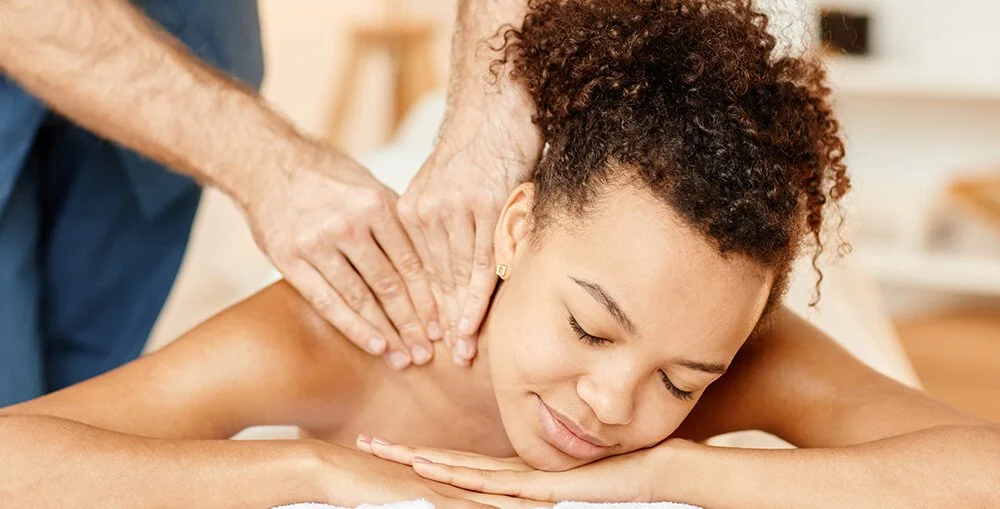
Reduces Soreness: Massage can break down lactic acid for faster muscle recovery.
How A Post-Workout Massage Benefits You
Here at the clinic, we have heard it all, and there are those who, after wrapping up their workout feeling great, have been met with stiffness and soreness the next day; if that is you, then you're not alone.
Moments like these make us question if there's more we could do to help our bodies recover. And there is, through the power of post-workout massage.
It’s easy to think of massage as a luxury, and again we know this to be the case, but when it comes to your fitness routine, it can be a game-changer.
Here we will talk about why adding a massage after your workouts isn't just about feeling good—it's about giving your body the respect and care it deserves to thrive.
Each benefit of post-workout massage unpacks a part of the recovery puzzle, addressing common doubts and showcasing just how much of a difference it can make.
Whether you're a seasoned athlete or just getting into fitness, understanding these benefits can transform how you look at your recovery time.
-
Massages help speed up the recovery process of muscles by flushing out lactic acid and other metabolic wastes. It eases the muscle stiffness and soreness that typically follows a rigorous workout, making it easier for you to move and continue with your daily activities without discomfort.
-
Improved circulation is another significant benefit. By enhancing blood flow, massages ensure that your muscles receive more oxygen and nutrients. This not only speeds up recovery but also improves overall muscle health and function.
-
A good massage can also boost your mood. It does this by increasing levels of serotonin, a hormone that helps you feel good. This boost in mood can be particularly beneficial after a workout, helping you feel more satisfied and relaxed.
-
Massages have been shown to reduce inflammation in the muscles. This not only helps in quicker recovery but also minimizes pain, allowing you to return to your workout routine sooner.
-
Directly linked to its ability to reduce inflammation, massage also serves as an effective method for pain relief, addressing both muscle soreness and acute pain points that may arise from exercising.
-
For those who sit all day, a post-workout massage can help counteract the effects of prolonged sitting, such as bad posture and back soreness, making it an excellent tool for anyone looking to improve their overall posture and well-being.
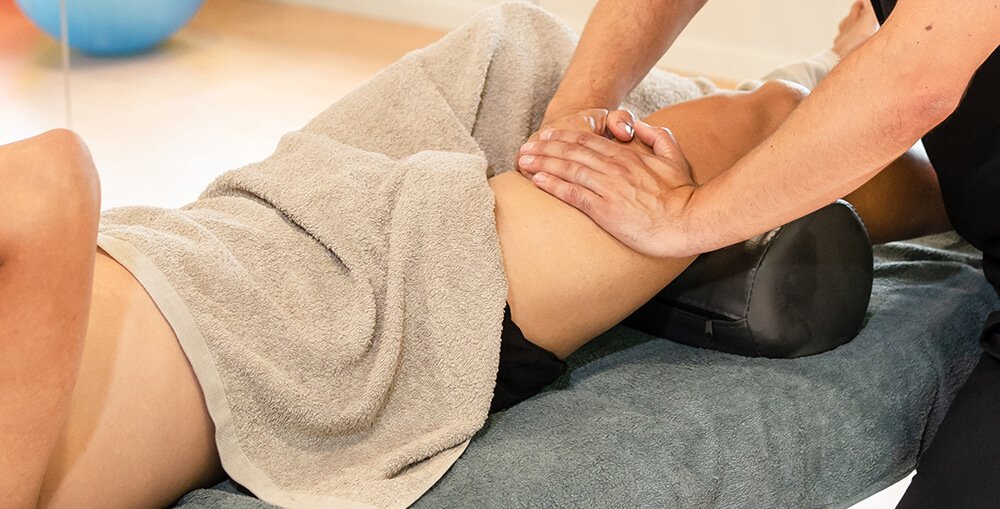
Massage therapy is an umbrella term that includes a variety of techniques and styles, here we break them down.
The Deep Dive: Massage Gun vs. RMT
"It’s the most common question we hear in the clinic: 'Does my massage gun do the same thing as a session with you?' While percussive therapy tools are excellent for a quick pre-workout 'wake-up' or temporary relief at home, they operate on a different level than clinical manual therapy.
The Massage Gun: A Surface Vibration.
Massage guns work primarily through the Gate Control Theory of Pain. They vibrate the surface tissue so rapidly that they 'distract' the nervous system, providing temporary relief from soreness.
However, a machine cannot distinguish between a healthy muscle and a dense fascial adhesion. It provides a generalized, one-size-fits-all pressure that stays on the surface layers.
The RMT: A Clinical Solution
A Registered Massage Therapist provides proprioceptive feedback. We can feel exactly where the tissue has become 'stuck' or ischemic. By using techniques like Myofascial Release or Trigger Point Therapy, we can navigate the deeper layers of the muscular system, applying pressure in the specific direction that the muscle fibres need to release.
More importantly, an RMT can assess why a certain area is tight, often identifying a postural compensation that a massage gun would simply ignore. For true injury prevention and structural repair, the human hand remains the superior clinical tool.
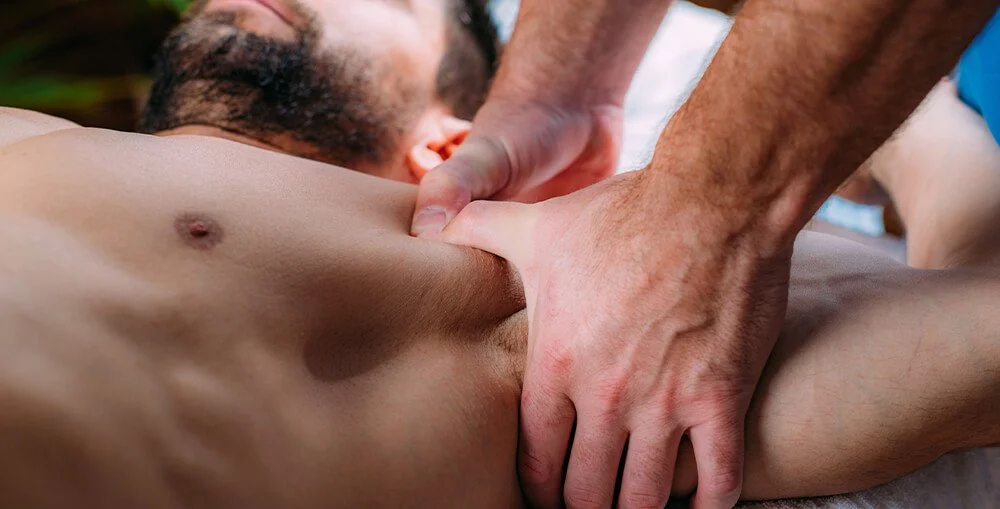
Boosts Recovery: Massage aids circulation to help muscles flush out toxins.
FAQ
How long should you massage your muscles after a workout?
A quick 5 to 10-minute massage immediately after a workout can offer immediate benefits, but a longer, more thorough session of 30 minutes to an hour once or twice a week can significantly enhance recovery and performance.
Is massage necessary if you work out?
While not absolutely necessary, incorporating massage into your recovery routine can greatly enhance your body's ability to recover and perform, making it a worthwhile addition.
Is massage good immediately after a work out?
Yes, a light massage can be beneficial immediately after a workout to start the recovery process, though a deeper massage might be more effective after a 24-48 hour period to allow for initial muscle recovery.
Do muscles get stronger after massage?
Massage can aid in the recovery process, which is crucial for muscle growth and strength gains. Directly, it doesn't make muscles stronger, but it supports the conditions needed for strength improvement.
Incorporating massage into your post-workout routine is a smart way to enhance recovery, improve health, and ensure your body is in optimal condition to tackle the next challenge.
If you have any further doubts or questions regarding this subject or another treatment, contact one of our experienced Acupuncturists or Registered Massage Therapists here at West End Wellness Clinic. You can either give us a call or make an appointment.
Disclaimer: Please remember this article is for informational purposes only and should not replace professional medical advice. Please consult a healthcare provider or someone with the correct qualifications before starting any new exercise or treatment program.