
Beyond the Grind: Clinical Recovery for North Shore Hikers
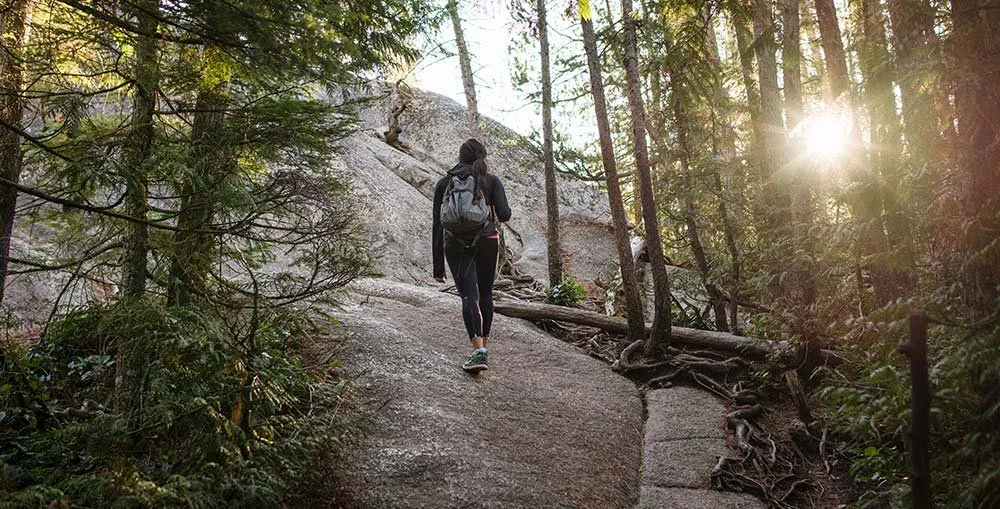
Table of Contents Show
Quick Summary
We’ve all been there. You reach the top of the Grouse Grind, the adrenaline is pumping, and that view over the Burrard Inlet feels like a well-earned reward. But then, as you start the descent or board the gondola for the ride down, a different sensation creeps in. Your quads feel like lead, your calves start to twitch, and you feel that familiar, sharp tweak on the outside of your knee.
In the clinic, we see this constantly. While the climb up Mother Nature’s Stairmaster tests your lungs, the journey back down is what actually creates micro-trauma in your muscle fibres. Today, we’re breaking down the physics of the peak, identifying the 'North Shore Trio' of muscle tension, and showing you why a clinical reset is the key to staying on the trails season after season. Let’s get you ready for your next adventure.
TL;DR – Benefits of Therapeutic Massage You Might Not Know
The Problem: Going down the mountain (eccentric loading) causes more muscle damage than climbing up, leading to "shaky legs" and knee tweaks.
The Science: Repeated vertical climbs without a "reset" trigger the Ischemic Cycle, in which reduced blood flow creates stubborn fascial adhesions.
The Solution: While stretching is a general tool, Clinical Massage (MFR and Trigger Point Therapy) provides a precise neurological and mechanical reset.
The Timeline: The "Sweet Spot" for a recovery treatment is 24 to 48 hours after your hike.
There is a specific kind of silence at the top of the Grouse Grind.
You’ve just conquered Mother Nature’s Stairmaster, your heart rate is finally settling, and the view of the Burrard Inlet feels like a well-earned reward.
But as the adrenaline fades and you begin the trek back down, or board the gondola for the descent, a different sensation sets in. It starts as a tightness in the calves, a slight 'tweak' in the front of the knee, or a heavy, lead-like feeling in the quads.
For many Vancouver hikers, this is the moment the 'Grind' actually begins.
While the ascent tests your lungs, the descent and the hours that follow test your physiology. At West End Wellness, we see many hikers who treat this stiffness as a badge of honour, but from a clinical perspective, that lingering ache is often a sign of eccentric loading fatigue and fascial restriction.
We have written this article to help you understand the specific physical demands of the North Shore terrain. We will highlight the physiological difference between the climb and the descent, provide targeted recovery tactics for your muscle groups, and explain how clinical massage therapy can reset your body for your next adventure."
The Physics of the Peak: Ascent vs. Descent
When you tackle a trail like the Grouse Grind or the BCMC, your muscles are performing two very different types of mechanical work. Understanding the difference between these movements is the first step in understanding your recovery needs.
The Ascent: Concentric Power
As you climb up those 2,830 stairs, your muscles are primarily performing concentric contractions. This means the muscle is shortening as it generates force, like your quads lifting your body weight to the next step.
While this is incredibly taxing on your heart and lungs, concentric movement is actually less damaging to the muscle fibres themselves. This is why you feel "out of breath" on the way up, but the deep muscle soreness often hasn't set in yet.
The Descent: Eccentric Strain
The trip down—whether you are hiking the Lynn Peak trail or even just navigating the stairs—is where the most significant "micro-trauma" occurs. This is known as eccentric loading. In this phase, your muscles lengthen under tension to act as brakes on your body weight.
Because your muscles are fighting against gravity to slow your descent, eccentric movements create more microscopic tears in the muscle fibers and connective tissue. This is the primary cause of Delayed Onset Muscle Soreness (DOMS) and that specific "shaky leg" feeling you experience at the trailhead.
Identifying the "North Shore Trio" of Tension
The rugged terrain of the North Shore—characterized by high-step ups, loose rock, and steep declines—targets three specific areas of the lower body. If you are feeling a "tweak" or persistent stiffness, it is likely localized in one of these three zones.
1. The Knees: Patellar Stability and the IT Band
The constant "braking" required during a descent puts immense pressure on the patellar tendon and the Iliotibial (IT) Band. When the glutes fatigue, the IT Band often tightens to compensate, pulling on the outside of the knee. This is why many hikers experience a sharp pain in the outer knee after the first 30 minutes of a descent.
Clinical Reset: Our therapists often use Myofascial Release to address these lateral tensions and restore proper tracking to the knee joint.
2. The Calves: The Gastroc-Soleus Complex
The "stairs" of the Grouse Grind keep your ankles in a state of near-constant dorsiflexion (toes pointed up). This places an enormous load on the gastrocnemius and the deeper soleus muscle. Over-tightening here doesn't just cause cramps; it can lead to Achilles Tendonitis if the fascia isn't properly released post-hike.
3. The Hips: Glute Medius and Power Output
Your glutes are the "engine" of your hike. On a steep ascent, the gluteus maximus provides the power, while the gluteus medius stabilizes your hips on uneven ground. When these muscles "lock up" after a hike, it can lead to referred lower back pain.
Research into post-exercise recovery suggests that manual therapy is one of the most effective ways to reduce this specific type of localized muscle soreness and inflammation.
The Cumulative Strain: When Soreness Becomes Chronic
We often hear from hikers who tell us, "I’ve been doing the Chief every weekend for a month, and the pain just isn't going away as it used to." This is the hallmark of Cumulative Strain. In the clinic, we recently worked with a local trail runner who was preparing for a North Shore race.
What started as "normal" post-hike stiffness eventually turned into a persistent ache that kept them from finishing their training runs. Upon assessment, we found that their muscles had entered the Ischemic Cycle.
The Science of "Stuck" Muscles
When you push through high-intensity vertical climbs without proper recovery, your muscles stay in a state of semi-contraction. This chronic tension acts like a clamp on your capillaries, reducing blood flow to the area.
Without fresh oxygen and the removal of metabolic waste, the tissue begins to thicken, creating fascial adhesions, or what most people call "stubborn knots."
How We Break the Cycle
For our trail runner client, "walking it off" wasn't an option anymore because the tissue had physically adapted to the stress. We utilized a combination of deep tissue work and Trigger Point Therapy to manually interrupt that cycle.
By physically breaking down those adhesions and encouraging fresh blood flow to the glutes and IT Band, we were able to restore their range of motion in just a few sessions.
Research on myofascial pathways shows that once these adhesions form, they rarely resolve on their own through rest alone. They require the skilled hands of a Registered Massage Therapist to "reset" the tissue to its natural, pliable state.
Clinical Reset: Why RMT is More Than Just Stretching
Many of our clients come in after trying every "foam roller" hack on YouTube, only to find the tension returns the moment they hit the trail again.
This is because stretching is a general tool, while Clinical Massage is a precise one. When a muscle is locked in a protective state, stretching it can sometimes trigger the nervous system to tighten it further to prevent a tear.
Case Study: The "Locked" Calf
We recently saw a hiker who was experiencing sharp heel pain after completing the Lynn Peak loop. They had been stretching their calves daily, but the pain was actually coming from a deep "trigger point" in the soleus muscle that was too deep for a foam roller to reach.
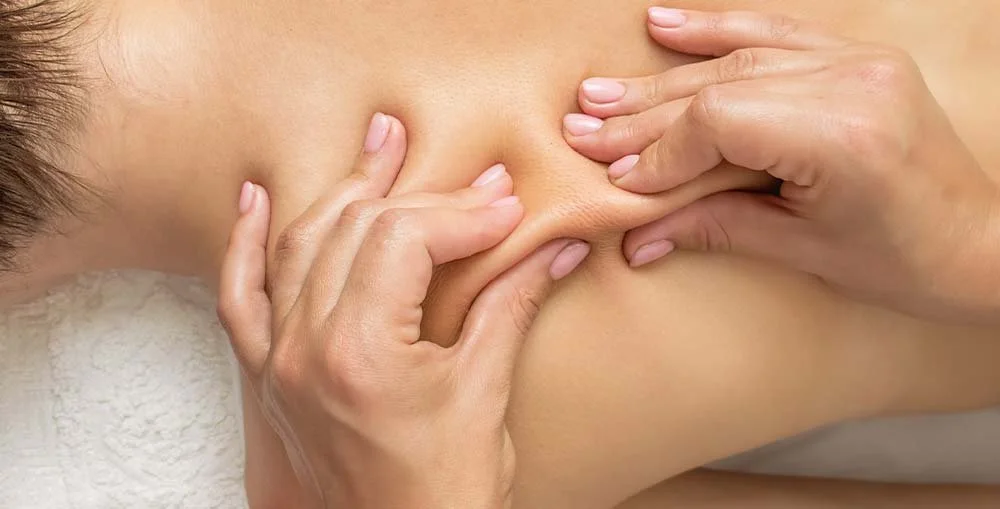
Using Trigger Point Therapy, we applied precise, sustained pressure to that specific knot. This signals the brain to "release" the contraction, providing immediate relief that weeks of stretching couldn't achieve.
Our Clinical Toolkit for Hikers
At West End Wellness, we don't just "rub the sore spot." We choose the tool that matches your specific tissue dysfunction:
Myofascial Release (MFR): We use this to address the "plastic wrap" around your muscles (fascia). For hikers with IT Band issues, MFR helps the lateral leg muscles slide freely again.
Active Engagement Techniques: We may have you slowly flex your foot while we apply pressure to the calf. This "pins and stretches" the tissue, helping to break down internal scar tissue from previous seasons of hiking.
Neural Down-Regulation: High-intensity hikes keep your sympathetic nervous system (fight or flight) on high alert. Our clinical approach helps shift you into a parasympathetic state, which is the only state where true muscle repair and recovery can happen.
By combining these techniques, we don’t just soothe the muscles; we mechanically and neurologically reset them for your next North Shore adventure.

Take a moment to learn about post-workout massage therapy. This holistic approach addresses physical discomfort and supports overall well-being, making it a crucial component of a balanced fitness regimen.
Post-Hike FAQ
Should I use ice or heat after a strenuous hike like the Grind?
In the first 24 hours, if you have acute swelling or a "hot" tweak in a joint, ice can help manage inflammation. However, for general muscle stiffness, we typically recommend moist heat or a warm soak.
Heat encourages blood flow to the ischemic (tight) tissues, helping to flush out metabolic waste and prepare the muscles for manual release.
How soon after a hike should I book a therapeutic massage?
If you are looking for deep recovery, the "sweet spot" is usually 24 to 48 hours after your hike.
This allows the initial acute inflammation from those "micro-tears" to settle, making it easier for our therapists to work into the deeper layers of tissue without causing discomfort.
Why do my knees hurt on the way down, even though I feel strong on the way up?
This is due to eccentric loading. Your quads and calves act as brakes to slow your descent against gravity. This puts significantly more mechanical stress on the patellar tendon and the connective tissue around the knee than the upward climb does.
Final Thoughts
At West End Wellness, we believe that the North Shore mountains are one of the greatest perks of living in Vancouver. But to enjoy them season after season, your body requires the same level of maintenance that you give your hiking gear.
Whether you are dealing with the 'shaky leg' syndrome after a weekend at the Chief or a persistent knee tweak that won't go away, you don't have to just 'push through' the pain.
By understanding the science of your movement and utilizing targeted clinical therapy, you can recover faster, move more efficiently, and get back to the trailhead with confidence.
Are your legs still feeling the effects of your last hike? Book a Clinical Recovery Session with one of our Registered Massage Therapists today and let’s get you ready for your next peak.
If you have any further doubts or questions regarding this subject or another treatment, contact one of our experienced Acupuncturists or Registered Massage Therapists here at West End Wellness Clinic. You can either give us a call or make an appointment.
Disclaimer: Please remember this article is for informational purposes only and should not replace professional medical advice. Please consult a healthcare provider or someone with the correct qualifications before starting any new exercise or treatment program.